Mar. 9, 2026
High Blood Pressure Headache: What It Feels Like, Warning Signs, and How to Treat It

Poushali Bhattacharjee, MD

Jump to
Book a visit
$25 typical copay
$50 without insurance
Think you might be experiencing high blood pressure headaches? Get expert care for your pain today.
If you have a headache and notice a high blood pressure reading, it’s natural to worry about a high blood pressure headache. Most of the time, though, headaches aren’t caused by mild or moderate hypertension. Still, very high readings or certain symptoms do need quick attention. This guide will help you tell the difference, check your blood pressure correctly, and decide whether self-care, virtual care, or urgent help is the right next step.
It usually starts with a headache. Then you check your blood pressure, and the number is higher than you expected. Now you’re stuck wondering: Is this a high blood pressure headache, or just bad timing?
Headaches are common. Blood pressure also rises easily from pain, stress, anxiety, caffeine, or even checking your BP too many times in a row. So seeing a high reading during a headache doesn’t always mean your blood pressure caused it. At the same time, very high blood pressure—especially when it shows up with certain symptoms—can be serious and shouldn’t be ignored.
This article breaks it down without the panic: what a high blood pressure headache can feel like, why most hypertension is symptom-free, how to check your BP the right way, and which warning signs actually matter. We’ll also cover what helps in the moment, what doesn’t, and how virtual care can give you clarity without the wait.
Does high blood pressure cause headaches? What we know
Short answer: Sometimes…but not usually.
On the contrary, most people with mild or moderate high blood pressure don’t have symptoms at all. That’s why hypertension is often called a “silent” condition. In fact, many people live with elevated readings for years without headaches or other warning signs.
And here’s the plot twist: The relationship often runs in reverse. Pain, stress, caffeine, and poor sleep—all common headache triggers—can temporarily raise your blood pressure. In other words, the headache may be pushing the numbers up, not the other way around.
Headaches become more concerning when blood pressure is very high, rises quickly, or shows up alongside symptoms like confusion, vision changes, chest pain, or shortness of breath. This can happen during a hypertensive crisis, especially when readings approach or exceed 180/120.
That’s why one high reading during a headache isn’t a diagnosis. Patterns over time, symptom context, and repeat readings after rest tell a much more reliable story than one stressful moment.
What a blood pressure headache might feel like (common descriptions)
If you’re hoping for a dead giveaway that your headache is a sign of high blood pressure… unfortunately, there isn’t one. Headache type alone can’t diagnose a blood pressure problem, and there’s no signature sensation that seals the deal.
However, headaches can show up alongside very high blood pressure.
“Patients often describe it as a pulsing or throbbing sensation, usually affecting both sides of the head. It’s common to feel pressure at the back of the head or behind the eyes,” says Marjory Bravard, MD, an internal medicine physician and co-founder of General Medicine. “When blood pressure gets significantly elevated—typically above 180/120—the headache may come with other symptoms like dizziness or visual changes.”
As for location? Not helpful. A blood pressure headache can affect any part of your head. It doesn’t reliably pick a side or stick to a pattern, which is why guessing based on where it hurts usually leads nowhere.
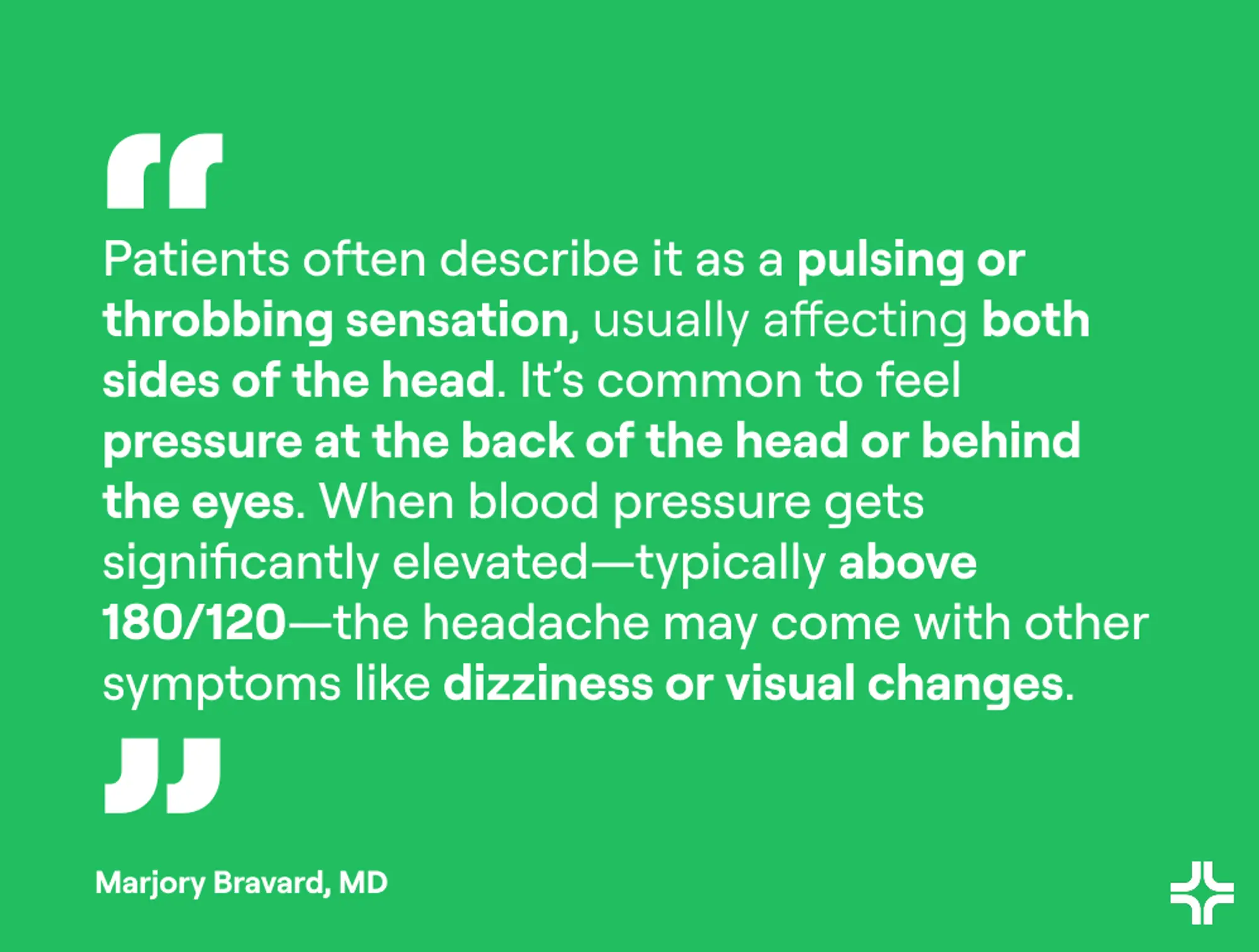
How patients describe a high blood pressure headache
The takeaway: Your headache can’t diagnose itself. How the headache feels matters—but your blood pressure numbers, how fast they changed, and what else your body is doing at the same time matter a whole lot more.
High blood pressure and headaches: What else could be going on?
Before pinning a headache on high blood pressure, it helps to zoom out. Headaches have a lot of possible causes, and many of the most common ones can also nudge your blood pressure up temporarily, including:
- Tension headaches: These are the most common headaches and often feel like a tight band or dull pressure around your head. Stress, long workdays, poor posture, and tight neck or shoulder muscles are classic triggers. Stress alone can raise blood pressure, which makes this combo especially misleading.
- Migraine: Migraines are usually throbbing, often one-sided, and may come with nausea, light or sound sensitivity, or visual changes. If you get migraines, the pattern usually feels familiar—even if the headache itself feels worse than usual.
- Dehydration or missed meals: Not drinking enough water or skipping meals can easily trigger headaches. Both can also make you feel shaky or unwell, which can drive temporary blood pressure spikes.
- Caffeine issues (too much or too little): Caffeine is a double-edged sword. Too much can raise blood pressure and trigger headaches, while cutting back suddenly can cause withdrawal headaches that feel surprisingly intense.
- Poor sleep: Short or disrupted sleep can make headaches more likely and push blood pressure higher the next day. When you’re overtired, your body tends to be louder about it.
- Medication or supplement effects: Decongestants, stimulant medications, energy drinks, and some supplements can raise blood pressure and contribute to headaches, especially when combined or taken without food.
- Sinus pressure or infection: Sinus-related headaches usually come with facial pressure, congestion, fever, or nasal symptoms. When those signs are present, blood pressure is rarely the main issue.
The big picture: High blood pressure and headaches often show up together without one causing the other. Looking at timing, triggers, and patterns helps you figure out what’s actually behind the pain and what kind of care will help most.
Check your blood pressure correctly (this changes the answer)
Before you read too much into a high number, make sure the reading itself is solid. How you check your blood pressure can dramatically change the result, and small mistakes can turn a normal day into an unnecessary scare.
Here’s how to get a more reliable home reading:
- Avoid blood pressure-spiking activities for 30 minutes: Skip smoking, exercising, and drinking caffeine in the half hour leading up to your reading.
- Rest for five minutes first: Sit quietly before checking. No pacing, no doom-scrolling, no rapid cuff inflation while standing in the kitchen.
- Sit the right way: Keep your back supported, feet flat on the floor, and (unclothed) arm supported at heart level. Letting your arm dangle or crossing your legs can push numbers up.
- Use the correct cuff size: A cuff that’s too small can overestimate your blood pressure. This is especially common and often overlooked.
- Stay still and silent: Talking—even casual conversation—can raise your reading. This is one of those moments where silence is genuinely helpful.
- Take two readings, one minute apart: Record both numbers along with the time and how you’re feeling. The second reading is often lower once your body settles.
- Avoid rapid-fire rechecks: Rechecking every few minutes out of anxiety can backfire. Stress alone can raise blood pressure, turning the process into a feedback loop.
If you’re seeing frequent high readings despite careful technique, it’s worth confirming that your cuff is accurate and properly calibrated, and bringing those readings to a clinician. Good data leads to better decisions, and better decisions lead to less panic and more control.
How to get rid of high blood pressure headache instantly: safer immediate steps
Let’s set expectations first: there’s no guaranteed “instant” fix for a hypertension headache, despite what the internet promises. The goal in the moment is safety, symptom relief, and figuring out whether this is something you can manage calmly at home or something that needs medical attention.
Ultimately, “the most important thing is addressing the blood pressure itself,” says Bravard. “If you’re on medication, make sure you’re taking it as prescribed.”
Here are some of her other recommendations:
- Pause and recheck your blood pressure correctly: Sit down, rest for five minutes, and take a proper reading. If the number drops after rest, that’s useful information. If it stays very high, that matters too.
- Pay attention to how you feel, not just the number: New confusion, vision changes, chest pain, shortness of breath, weakness, or severe nausea raise the urgency, regardless of the exact reading.
- Don’t double-dose medications on your own: If you missed a blood pressure medication, follow your clinician’s instructions. Taking extra doses “just in case” can be dangerous.
- Reduce obvious triggers: Stop exertion, hydrate if you’ve been low on fluids, and avoid alcohol, nicotine, and more caffeine for the moment. Your nervous system doesn’t need extra stimulation right now.
- Use basic headache relief carefully: Rest in a quiet, dark space and consider simple headache strategies that are safe for you. If you’re unsure which medications are appropriate with your blood pressure meds, a clinician can help you choose.
- Treat very high readings as urgent when symptoms are present: If your blood pressure is extremely high—especially near or above 180/120—and you feel unwell, this isn’t a wait-it-out situation.
Diagnosis and testing: how clinicians evaluate this
When a headache and high blood pressure show up together, clinicians aren’t just reacting to a number on a screen. They’re looking for patterns, context, red flags, and trying to answer one main question: Is this a headache with elevated blood pressure, or a blood pressure emergency showing up as a headache?
Here’s what that evaluation usually includes:
- The symptom story: Timing matters. Clinicians will ask when the headache started, how fast it came on, how severe it is, and whether it’s different from your usual headaches. A sudden “worst headache of my life” or new neurologic symptoms change the urgency immediately.
- Blood pressure patterns, not one-off spikes: A single high reading during pain or stress is less informative than a trend of elevated readings over days or weeks. Home logs—especially readings taken correctly at rest—are extremely helpful here.
- Medication and substance review: This includes blood pressure medications (and whether you missed any doses), pain relievers like NSAIDs, decongestants, stimulants, energy drinks, supplements, and caffeine intake. Some combinations quietly push blood pressure up.
- Risk factors that raise the stakes: Conditions like kidney disease, diabetes, pregnancy or postpartum status, prior stroke, or heart disease all affect how aggressively symptoms are evaluated.
- Targeted testing when needed: If red flags are present, clinicians may recommend labs, an EKG, or urgent in-person evaluation to rule out complications. If not, testing is often minimal and focused (because more tests aren’t always better tests).
Treatment options: what helps (short-term and long-term)
Treatment depends on the big picture—not just the headache, and not just the blood pressure number. The first step is always figuring out whether this is a true blood pressure emergency or a headache happening alongside elevated readings.
Here’s how care typically breaks down:
- Start by ruling out an emergency: If blood pressure is extremely high and you have red-flag symptoms, this is an urgent-care situation. In those moments, the headache isn’t the main problem—your body needs immediate attention.
- If blood pressure is high but not dangerous: Care is usually more measured. A clinician may suggest adjusting medications, improving consistency, or monitoring trends rather than making sudden changes. Small tweaks often make a bigger difference than people expect.
- Support the headache itself: The basics still count. Rest, hydration, sleep, and stress reduction can noticeably improve symptoms. When medication makes sense, it’s important to choose options that fit safely with your blood pressure and other meds.
- Lean on habits that steady blood pressure over time: You don’t need perfection here. Being mindful of sodium, moving regularly, sleeping consistently, and moderating alcohol all help smooth out the spikes that make headaches and readings feel scarier.
- Create a repeatable home monitoring routine: Checking your blood pressure at the same times, under the same conditions, gives you useful data. Rechecking during stress or pain mostly creates noise.
- Have a plan for the next spike: Knowing when to rest and recheck, when to book virtual care, and when to seek urgent help removes guesswork and lowers anxiety the next time symptoms show up.
Working with a healthcare provider
When headaches and blood pressure readings keep colliding, having a clinician in your corner can take a lot of pressure off (literally and mentally). You don’t need to have everything figured out before asking for help. You just need a clear snapshot of what’s been happening.
Here’s how to make those conversations more useful (and less stressful):
- Bring your real data, not just the scariest reading: A simple blood pressure log goes a long way. Include dates, times, readings, and how you felt. Note what was happening around the reading—stress, pain, caffeine, poor sleep. Patterns matter more than outliers.
- List medications and supplements honestly: This includes blood pressure meds, pain relievers, decongestants, stimulants, energy drinks, and supplements. Even “occasional” use can be relevant.
- Explain how this feels for you: Is this headache new? Worse than usual? Different from your typical headaches? Are you checking your BP repeatedly because you’re anxious, or because something feels truly off? That context helps guide care.
- What a clinician can do virtually: Virtual care at General Medicine can help assess symptom severity, review your readings and meds, adjust treatment when appropriate, and set clear thresholds for what to do next. For many people, this is enough to create a safe, effective plan without an in-person visit.
- How follow-up usually works: You’ll often be asked to monitor blood pressure for a set period—like one to two weeks—then reassess. If readings stabilize or symptoms improve, great. If not, the plan can be adjusted.
- Build a “what if” plan together: One of the most valuable outcomes is knowing what to do next time. When to rest and recheck. When to message or book care. When to seek urgent help. Having that roadmap lowers anxiety and prevents overreacting (or underreacting).
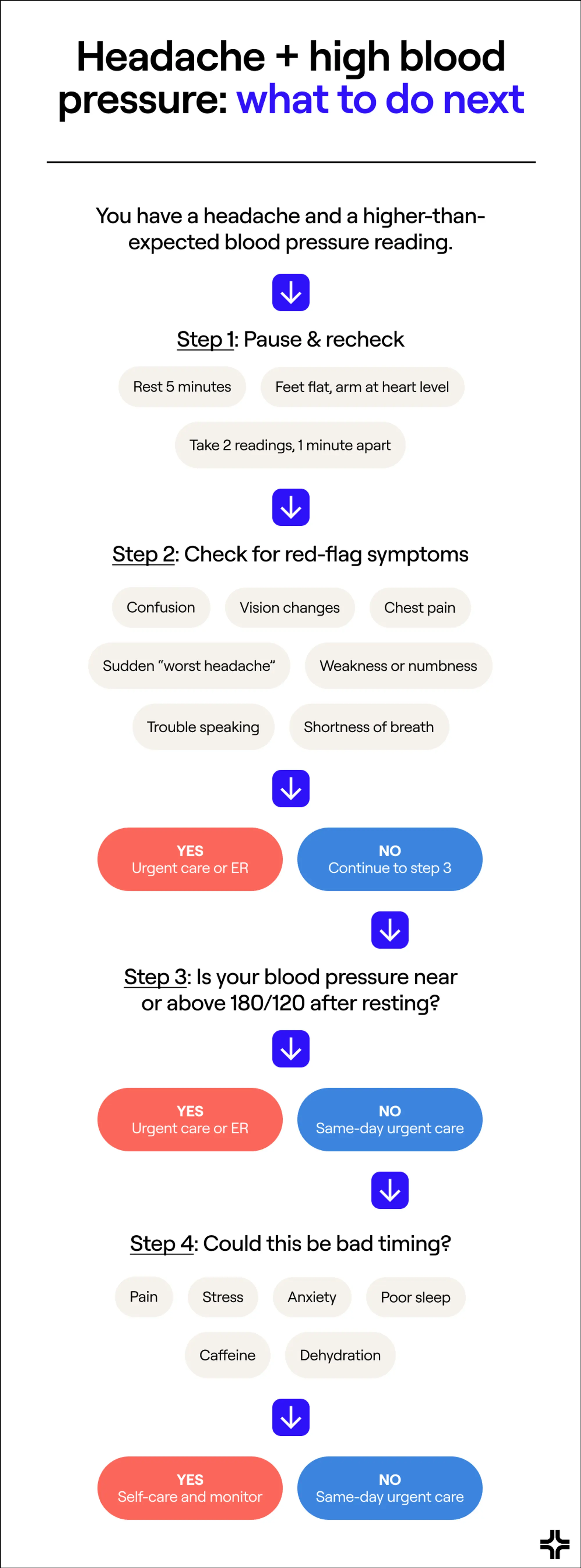
High blood pressure headache: What to do next
If worry itself is driving frequent checks and headaches, that’s worth addressing too. Good care looks at both the numbers and how they’re affecting your life.
When to seek care (red flags)
Most headaches with mildly elevated blood pressure aren’t emergencies, but some combinations should never be ignored. If any of the situations below apply, don’t try to tough it out or troubleshoot at home. According to Bravard, these red flags mean it’s time for urgent, in-person evaluation:
- Blood pressure around 180/120 or higher with symptoms: If you have a severe headache, chest pain, shortness of breath, confusion, weakness, or vision changes, it’s a sign of a hypertensive crisis that needs urgent evaluation.
- A sudden “worst headache of my life”: A headache that comes on abruptly and feels unlike anything you’ve had before—especially if it peaks quickly—should be treated as an emergency.
- New neurologic symptoms: Trouble speaking, facial drooping, numbness or weakness on one side, confusion, difficulty walking, or fainting are not wait-and-see symptoms.
- Severe headache with fever, stiff neck, or persistent vomiting: This combination raises concern for infection or other serious causes that need prompt care.
- Pregnant or postpartum with headache and high readings: Severe headache during pregnancy or after delivery—especially with high blood pressure—needs immediate medical attention.
- Rapidly worsening symptoms or feeling unsafe at home: If things are escalating, or your gut says something isn’t right, trust that instinct and seek care.
Key takeaways
- Most headaches are not caused by high blood pressure, and most people with hypertension don’t have symptoms at all. A headache plus a high reading doesn’t automatically mean danger.
- Very high blood pressure or rapidly rising numbers—especially with other symptoms—are a different story. That’s when headaches become more concerning and need prompt evaluation.
- How you check your blood pressure matters. Proper technique, rest, and repeat readings tell you far more than a single number taken during pain or stress.
- Headaches and high BP often overlap without being the cause and effect. Stress, dehydration, poor sleep, caffeine, and medications can trigger both at the same time.
- There’s no instant fix, but there is a safer way to move forward. Slow down, recheck your blood pressure correctly, avoid double-dosing medications, and focus on symptom context.
- Virtual care can help you sort signal from noise. Reviewing readings, symptoms, and medications with a clinician can give you clarity, reassurance, and a clear next step without guessing.
Frequently asked questions (FAQs)
What does a blood pressure headache feel like?
When headaches do occur alongside very high blood pressure, people often describe them as intense, pressure-like, or pounding, sometimes with a sense of fullness or tightness in the head. They may come with other symptoms like blurred vision, nausea, dizziness, or confusion. Still, the way a headache feels alone can’t confirm that blood pressure is the cause.
How do you get rid of a high blood pressure headache?
There’s no guaranteed instant fix. The safest first steps are to stop what you’re doing, rest for a few minutes, and recheck your blood pressure correctly. Avoid double-dosing medications without guidance, hydrate if appropriate, and reduce triggers like caffeine or stress. If headaches keep happening with elevated readings, a clinician can help adjust your plan safely.
Does high BP cause headaches?
Usually, no. Most people with mild or moderate high blood pressure don’t have headaches or other symptoms. Headaches become more concerning when blood pressure is very high, rises quickly, or comes with other warning signs. Just as often, pain or anxiety from a headache can raise blood pressure temporarily.
How to bring down blood pressure?
In the moment, rest, slow your breathing, and remove obvious triggers like exertion, caffeine, or nicotine. Long-term control usually involves consistent medication use when prescribed, regular movement, sodium awareness, good sleep, and follow-up with a healthcare provider to fine-tune treatment.
What are the 10 warning signs of high blood pressure?
High blood pressure often has no symptoms, but concerning signs can include severe headache, vision changes, chest pain, shortness of breath, confusion, dizziness, nausea or vomiting, weakness, nosebleeds, and anxiety when readings are very high. Any of these—especially with numbers near or above 180/120—should prompt urgent medical evaluation.
Our editorial standards
At General Medicine, we cut through the clutter to make health care clearer, faster, and easier to navigate. Every article is grounded in evidence-based research and peer-reviewed journals, reviewed by medical professionals, and written in accessible language that helps you make health decisions with confidence. We’re committed to ensuring the quality and trustworthiness of our content and editorial process by providing information that is up-to-date, accurate, and actually useful. For more details on our editorial process, see here.