Jan. 7, 2026
Can Men Get UTIs? Causes, Symptoms, and the Best Treatments for Male Urinary Infections

Brian R. Wood, MD
Jump to
Book a visit
$25 typical copay
$50 without insurance
Experiencing symptoms that may signal a UTI? Get expert care for your pain today.
Contrary to popular belief, yes, men can get UTIs. While urinary tract infections are more common in women, they do show up in men, especially as they age. The clue that something’s off? Burning when you pee, needing to go all the time (even when nothing happens), pelvic or low-back discomfort, or urine that suddenly looks cloudy or smells bad. The good news: UTIs are very treatable once you know what you’re dealing with.
A urinary tract infection (UTI) happens when bacteria enter the urinary system—the urethra, bladder, prostate, or kidneys—and begin multiplying where they shouldn’t. Even though UTIs are often labeled a “women’s issue,” men aren’t off the hook. Changes like prostate enlargement, blocked urine flow, dehydration, catheter use, or certain medical conditions can all raise the risk of developing a UTI in men.
But how do men get UTIs—is it from sex, hygiene habits, or something as simple as holding it too long? Others worry about whether what they’re feeling could be an STI or prostatitis instead. That confusion makes sense, since UTI symptoms men notice (like burning while peeing, frequent or urgent trips to the bathroom, pelvic pressure, or cloudy, foul-smelling urine) can overlap with other conditions.
This guide breaks it all down. We’ll cover common causes, symptoms, treatments, and when it’s smart to talk to a doctor.
Can men get UTIs? Understanding UTIs in men
A urinary tract infection is exactly what it sounds like: an infection anywhere along the urinary system. In men, this includes four main areas:
- Urethra: The tube that carries urine out of the body
- Bladder: The storage tank for urine
- Prostate: The gland surrounding the urethra and involved in semen production
- Kidneys: The filtration system that makes urine in the first place
Most UTIs start in the lower part of the tract (the urethra or bladder). But in men, infections can also affect the prostate. And when bacteria reach the kidneys, the situation becomes more serious and needs immediate medical care.
UTIs are less common in men than women, largely because the male urethra is longer. That extra distance makes it harder for bacteria to reach the bladder. However, when a UTI does happen in men, it often signals that something else may be slowing or blocking the normal flow of urine, giving bacteria extra time to grow rather than getting flushed out naturally.
“Most urinary tract infections in men occur when bacteria such as E. coli, which normally live in the gut, accidentally enter the urinary tract,” says Adam Carewe, MD, a physician at General Medicine. “If these bacteria travel up the urethra and reach the bladder, they can multiply quickly, especially if urine is not emptying well. This overgrowth triggers inflammation and the classic symptoms of a UTI.”
Sex can sometimes introduce bacteria into the urinary tract, but a UTI itself isn’t a sexually transmitted infection (STI). Because symptoms can overlap with chlamydia, gonorrhea, or prostatitis, clinicians often check for those conditions too—especially in younger men or those with new or multiple sexual partners.
Age and health also play a role. Men over the age of 50, men with prostate enlargement, urinary tract blockages, diabetes, immune system issues, or a history of kidney stones are all more likely to develop UTIs.
UTI causes in men: How do you get a UTI?
So, how do you get a UTI if you’re a guy? They almost always start when bacteria—usually from the gut or skin—enter the urethra and travel upward into the urinary tract, says Carewe. If those bacteria aren’t quickly flushed out, they can multiply and trigger infection.
UTI causes in men
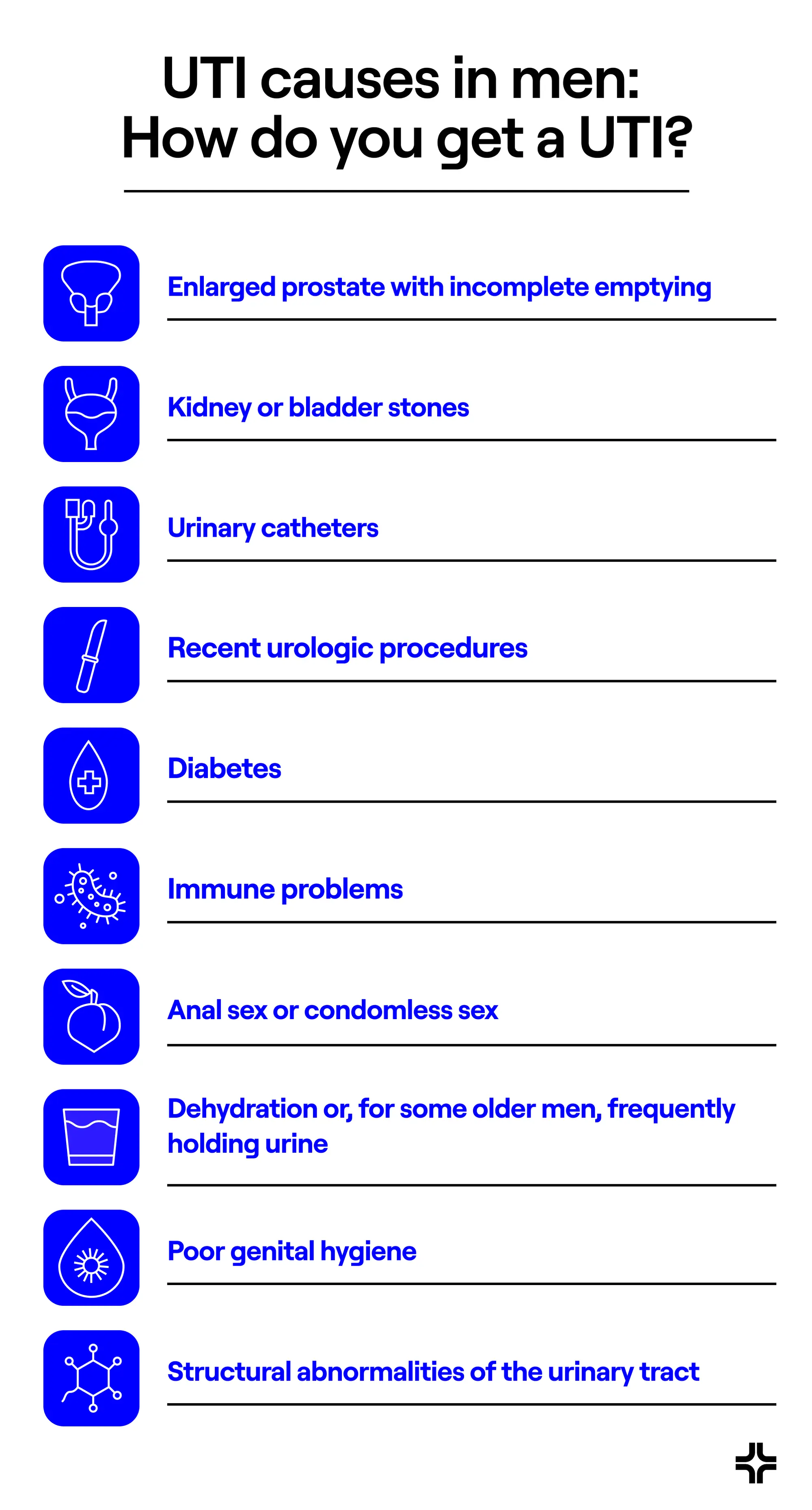
Here are the most common 10 causes of male UTIs:
- Enlarged prostate with incomplete emptying: As men age, the prostate often grows and presses on the urethra. This can prevent the bladder from fully emptying, leaving behind small pools of stale urine where bacteria can thrive.
- Kidney or bladder stones: Stones can block urine flow or create tiny rough surfaces where bacteria “stick.” Even after you urinate, bacteria may remain sheltered behind a stone and continue growing.
- Urinary catheters: Catheters can introduce bacteria directly into the urinary tract and bypass many of the body’s natural protective barriers. The longer a catheter is in place, the higher the infection risk becomes.
- Recent urologic procedures: Tests or surgeries involving the urinary tract (like a cystoscopy or prostate procedures) can temporarily raise the risk of infection by introducing bacteria or irritating urinary tissues.
- Diabetes: Elevated blood sugar weakens immune function and also increases sugar levels in urine, which bacteria find very appealing. Diabetes can also affect bladder nerves, leading to incomplete emptying.
- Immune problems: Conditions or medications that suppress the immune system (like chemotherapy, autoimmune disorders, or steroids) make it harder for the body to fight off bacteria before an infection takes hold.
- Anal sex or condomless sex: Bacteria from the rectal area can be introduced into the urethra during sexual activity. While UTIs are not STIs, condomless sex also raises the chance of an STI, which can cause very similar symptoms and needs to be ruled out.
- Dehydration or, for some older men, frequently holding urine: When you don’t drink enough fluids or hold your bladder for long periods, you urinate less often. This gives bacteria more time to settle and multiply instead of getting flushed out.
- Poor genital hygiene: Infrequent washing or improper cleaning can allow bacteria to accumulate around the urethral opening, increasing the odds they’ll find their way into the urinary tract.
- Structural abnormalities of the urinary tract: Some men are born with differences in urinary anatomy, or develop changes after injury or surgery. These can alter urine flow or create pockets where urine pools, increasing infection risk.
Risk factors and who is more likely to get a UTI in men
UTIs are equal-opportunity annoyances, but they do tend to pick on certain groups of men more than others. According to Carewe, here are the factors that can raise your risk of infection:
- Age: UTIs are uncommon in younger men, but the risk rises after age 50 as prostate enlargement becomes more common.
- Recent devices or procedures: Catheters or recent urologic testing or surgery can temporarily raise infection risk by disrupting normal urinary defenses.
- Physical blockages: Kidney stones or narrowed areas of the urinary tract slow urine flow, creating conditions that allow bacteria to linger and multiply.
- Chronic health conditions: Diabetes and immune-suppressing illnesses or medications reduce the body’s ability to fight off bacteria effectively.
- Sexual habits: Condomless sex, anal sex, or new partners increase exposure to bacteria and STIs, whose symptoms often overlap with UTIs and need to be ruled out.
If UTIs keep showing up uninvited, consider it your body’s not-so-subtle reminder that something —like bladder emptying, kidney stones, or blood sugar control—needs extra attention. Knowing your risk factors helps you stop guessing and start preventing.
UTI symptoms in men: What it feels like
UTI symptoms in men usually start as subtle irritation or pressure when you pee, and then gradually progress from “huh, weird” to “okay, something is definitely off.”
Common UTI symptoms in men include:
- Burning or stinging with urination that can range from mildly annoying to sharply uncomfortable
- Frequent urination, even when only a small amount comes out
- Sudden urinary urgency, that “drop everything and go” feeling
- Difficulty starting the urine stream or weak flow
- Cloudy urine or strong, unpleasant odor
- Blood in the urine, which may look pink, red, or cola-colored
- Pelvic or lower abdominal discomfort, sometimes described as pressure or aching
- Low back pain, especially across the lower spine
When the prostate is involved (prostatitis), symptoms may feel deeper or more centralized:
- Pain or pressure between the scrotum and anus
- Deep pelvic pain or rectal discomfort
- Feeling unable to completely empty the bladder, even right after urinating
If the infection has moved into the kidneys or become more serious, symptoms escalate quickly and may include:
- Fever and chills
- Nausea or vomiting
- Sharp flank or upper back pain (near the ribs)
- Marked fatigue or feeling generally very unwell
One important reality check: UTI symptoms often overlap with sexually transmitted infections, prostatitis, and even kidney stones. That means reading symptoms alone usually isn’t enough to self-diagnose your way to the right answer. Testing is what separates a potential UTI from something else entirely, and getting that distinction right keeps you on the fastest path to feeling better.
Diagnosis and testing: How clinicians confirm a UTI in men
When it comes to diagnosing a UTI in men, guessing games don’t help—testing does. Because UTIs are less common in men and symptoms often overlap with conditions like STIs or prostatitis, clinicians take a careful, step-by-step approach to make sure they treat the right problem the right way.
Your visit—whether virtual or in-person—usually starts with a detailed symptom rundown. Your provider will ask about:
- Your symptoms and when they started
- Fever, chills, or back pain
- Your medical history (including diabetes or prostate issues)
- Recent procedures, catheter use, or urinary devices
- Medications you’re taking
- Sexual history that might point toward an STI
The cornerstone of diagnosis is urine testing, including:
- Urinalysis (dipstick test): This is a fast screening test that looks for white blood cells, blood, or chemicals called nitrites that suggest bacteria are present.
- Urine culture: This is the gold standard test. This grows any bacteria found in your urine so the lab can identify the exact culprit and determine which antibiotics will work best.
“Doctors diagnose a UTI by combining symptoms with urine testing,” explains Carewe. “A urine dip test can give quick clues, but a urine culture is essential in men because it shows the exact bacteria causing the infection and which antibiotics will work. This ensures the treatment is targeted rather than based on guesswork.”
Depending on your symptoms and risk factors, your clinician may also recommend additional testing, such as:
- STI screening, especially for younger or sexually active men
- Prostate evaluation if pelvic pain or incomplete emptying is prominent
- Imaging studies (like ultrasound or CT scans) if kidney stones or blockages are suspected
- Cystoscopy (a scoped look inside the bladder and urethra) for recurrent or complicated infections
Because UTIs in men are less routine, the most comprehensive providers (like those at General Medicine) don’t usually stop at “here’s an antibiotic, good luck.” They look for underlying causes so they can help prevent repeat infections, not just stamp out the current one.
Treatment options for male UTIs (non-surgical first line)
Once testing confirms a UTI in men, treatment is usually straightforward, and most infections clear up quickly with the right plan.
The go-to treatment is prescription antibiotics, according to Carewe. “The choice of antibiotic depends on the urine culture results,” he explains. “Simple bladder infections usually respond well to a short course of medication. Infections that reach the kidneys or involve the prostate require stronger antibiotics and longer treatment because the bacteria can hide deeper within tissues.”
Treatment options for male UTIs
In practice, most uncomplicated bladder infections are treated with a short course of oral antibiotics—usually about 5 to 7 days. If the prostate is involved (prostatitis) or the infection has reached the kidneys, treatment usually lasts longer—sometimes several weeks—to fully eliminate bacteria embedded in deeper tissue.
No matter the length of treatment, though, it’s essential to complete the entire course of antibiotics, even if symptoms fade quickly. Stopping early can allow bacteria to survive and rebound … and no one wants a sequel infection.
And while antibiotics do the heavy lifting, a few at-home steps can help ease discomfort and speed recovery:
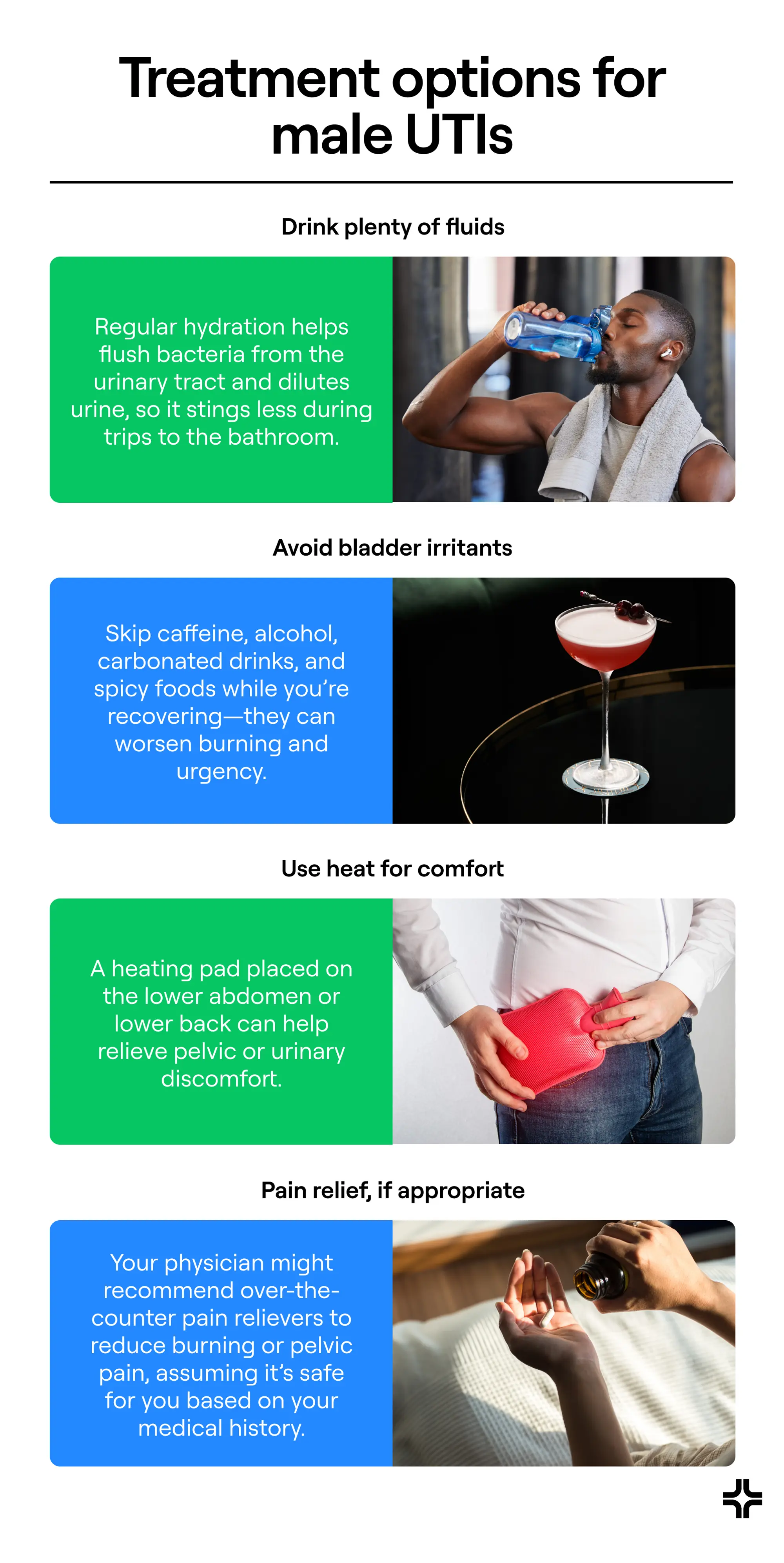
- Drink plenty of fluids: Regular hydration helps flush bacteria from the urinary tract and dilutes urine, so it stings less during trips to the bathroom.
- Avoid bladder irritants: Skip caffeine, alcohol, carbonated drinks, and spicy foods while you’re recovering—they can worsen burning and urgency.
- Use heat for comfort: A heating pad placed on the lower abdomen or lower back can help relieve pelvic or urinary discomfort.
- Pain relief, if appropriate: Your physician might recommend over-the-counter pain relievers to reduce burning or pelvic pain, assuming it’s safe for you based on your medical history.
When procedures or surgery may be needed (complicated UTIs)
Most UTIs in men clear up with antibiotics alone, no drama required. But sometimes an infection keeps making unwanted encore appearances because there’s an underlying roadblock that medication can’t fix by itself. When UTIs are recurrent, unusually severe, or slow to fully resolve, your provider may start looking beyond antibiotics to figure out what’s giving bacteria a comfortable place to settle in and hide out.
Situations where procedures or surgery may come into the picture include:
- Kidney or bladder stones: If stones are blocking urine flow, removing or breaking them up can restore normal drainage and take away a key bacterial hiding spot.
- Narrowed urethra (stricture) or other structural issues: If urine can’t flow freely, bacteria get extra time to multiply. Procedures can help widen the passage or correct the obstruction so things drain the way they’re supposed to.
- Significant prostate enlargement: When the prostate blocks bladder emptying, leftover urine becomes bacteria bait. Treatments (ranging from medications to minimally invasive prostate procedures) can improve flow and reduce the risk of repeat infections.
- Severe infections: In cases where infection spreads to the kidneys or into the bloodstream, hospital care with IV antibiotics may be needed for fast, aggressive treatment to prevent serious complications like sepsis.
The word “procedure” can sound intimidating, but for most men with a single uncomplicated UTI, these steps are not the norm. They’re used thoughtfully and selectively—mainly when a fixable anatomical issue stands between you and staying infection-free. Addressing the root cause often means fewer antibiotics down the road, and far fewer surprise uprisings from your urinary tract.
Working with a healthcare provider: virtual and in-person care
If you’re dealing with UTI-style symptoms, the best move isn’t to “wait and see” or reach for leftover meds. Instead, talk to a provider and get the diagnosis right from the start.
The good news: You don’t have to begin in a waiting room. Virtual visits through General Medicine allow for quick, comfortable initial evaluations. Your provider will review your symptoms, ask about your medical and sexual history, screen for STI or prostatitis signs, and decide whether labs or treatment are the next step.
To get the most out of a virtual visit, come prepared with:
- When symptoms started and how they’ve changed
- Any fever readings
- Where you feel pain and how strong it is
- Your current medications and allergies
- Any past UTIs, stones, prostate issues, or catheter use
Honest answers matter—especially about sexual activity or recent procedures—so your provider can pin down whether this is a simple UTI or something else.
After your visit, you may be sent to a local lab for same-day urine testing before antibiotics are started, or referred for in-person care if your symptoms are more concerning. If UTIs become repeat offenders, your physician may recommend a urology referral to check for underlying issues like stones, strictures, or prostate obstruction. That way, you can stop the cycle altogether.
When to seek care right away (red flags)
Some symptoms mean it’s time to skip the virtual queue and get urgent or emergency care right away. Think of these as the “don’t power through it” moments.
Get immediate medical help if you have:
- A high fever, chills, or a sudden feeling of being very ill
- Sharp flank or upper back pain, especially near the ribs (possible kidney infection)
- Nausea or vomiting that makes it hard to keep fluids down
- Trouble passing urine at all or sudden urinary retention
- Severe pelvic or abdominal pain
- Visible blood clots in your urine
- Confusion, weakness, or lightheadedness, especially in older adults
- Symptoms alongside kidney disease, immune suppression, or having only one kidney
These signs can point to a spreading infection or blockage that needs fast, hands-on treatment, not a wait-and-watch approach.
Bottom line: If your symptoms feel intense, unusual, or are worsening quickly, trust the gut check. Getting checked sooner can mean a simpler treatment and smoother recovery rather than letting a minor problem turn into a major one.
Prevention and long-term management for men prone to UTIs
Once you’ve had a UTI, the goal becomes pretty simple: Don’t make it a recurring houseguest.
According to Carewe, few simple, everyday habits may help keep UTIs at bay:
- Hydrate like you mean it: Drinking enough water helps flush bacteria out before they get settled. (Clear or pale-yellow urine = you’re doing great.)
- Don’t hold it forever: That legendary road-trip bladder of steel? It gives bacteria more time to grow, so use the restroom when you need to go.
- Pee after sex: It’s not romantic, but it’s effective. This simple step helps flush bacteria that may have gotten closer to the urethra during sex.
- Practice good hygiene: Regular, gentle washing of the genital area reduces bacterial buildup around the urethral opening.
Long-term prevention also includes managing the factors driving infections in the first place:
- Control chronic conditions, especially diabetes, to support immune health and bladder function.
- Follow treatment plans for prostate enlargement to improve bladder emptying and reduce urine retention.
- Quit smoking if applicable, because it increases bladder irritation and infection risk.
- For men with recurrent UTIs, your provider may suggest targeted prevention strategies, including supplements or medications designed to make the urinary tract less bacteria-friendly.
Key takeaways
- Yes, men can get UTIs. Infections become more common as they age or if prostate changes or urinary blockages affect bladder emptying.
- Common UTI symptoms in men include burning with urination, urgency or frequent trips to the bathroom, pelvic or low-back pain, and cloudy or strong-smelling urine.
- Testing matters. Because symptoms overlap with STIs and prostatitis, urine cultures (and sometimes STI tests) help make sure treatment targets the right problem.
- Antibiotics are the main treatment, with short courses for simple bladder infections and longer treatment for prostate or kidney involvement.
- Recurring UTIs are a signal, not bad luck. They often point to fixable issues like stones, prostate obstruction, or blood-sugar control problems.
- Red-flag symptoms such as fever, flank pain, vomiting, or trouble urinating require urgent care.
Frequently asked questions (FAQs)
How do you tell if a male has a UTI?
The most common signs are burning when you pee, needing to urinate often or urgently, pelvic pressure, cloudy or strong-smelling urine, and sometimes blood in the urine. A doctor will confirm your diagnosis through urine testing.
What happens to a man when he has a UTI?
A UTI causes inflammation in the urinary tract, which leads to discomfort while urinating, changes in urine appearance or smell, and pressure or pain in the lower abdomen or back. If the prostate or kidneys are involved, symptoms can expand to fever, chills, nausea, or deeper pelvic pain.
Is a UTI in a male an STD/STI?
No, a UTI is not what used to be commonly known as a sexually transmitted disease (STD), now more widely called a sexually transmitted infection (STI). UTIs are caused by bacteria entering the urinary tract, most often gut bacteria like E. coli. However, STIs can produce similar symptoms, which is why providers often test for both during evaluation. Also sexual exposure (especially condomless anal sex) can increase the risk of a UTI by increasing exposure of the urethra to bacteria like E. coli.
How do you treat a UTI in a male?
Treatment involves prescription antibiotics tailored to urine culture results. Simple bladder infections usually clear with a short course of medication, while prostate or kidney infections need longer treatment. Supportive care (like hydration, avoiding bladder irritants, heat for discomfort, and pain relief if safe)can help ease symptoms during recovery.
What is the usual cause of UTIs in men?
The most common cause is incomplete bladder emptying, often related to prostate enlargement. When urine stays trapped in the bladder, bacteria have more time to grow. Other frequent contributors include kidney stones, catheter use, diabetes, weakened immunity, dehydration, and certain sexual exposures.
Our editorial standards
At General Medicine, we cut through the clutter to make health care clearer, faster, and easier to navigate. Every article is grounded in evidence-based research and peer-reviewed journals, reviewed by medical professionals, and written in accessible language that helps you make health decisions with confidence. We’re committed to ensuring the quality and trustworthiness of our content and editorial process by providing information that is up-to-date, accurate, and actually useful. For more details on our editorial process, see here.