Jan. 5, 2026
Ureaplasma Symptoms: How To Recognize, Test for, and Treat This Overlooked Infection

Ana Weil, MD

Jump to
Book a visit
Book a visit
$25 typical copay
$100 without insurance
Don't ignore symptoms of this often overlooked infection. If you suspect you may have ureaplasma, book an evaluation today and get care.
Ureaplasma sounds like something you might encounter in a Ghostbusters movie. In reality, this generally harmless bacterium can live on your genitals or in your urinary tract. Usually, it doesn’t cause symptoms, but overgrowth can lead to discomfort with some of your most delicate parts and require treatment with antibiotics.
When something feels off “down there,” the symptoms can be quite disconcerting. Maybe you’re experiencing genital itching, an unusual discharge, an odd smell, a sense of discomfort, or having to pee All. The. Time!
Understandably, you might be worried that something is wrong, and the guessing game begins. Is it a urinary tract infection (UTI), a sexually transmitted infection (STI), or a yeast or bacterial infection? And you might be wondering whom to call to figure it out: a primary care physician, a gynecologist, an exorcist? Kidding on that last one.
In all seriousness, one possibility of what might be going on is an overgrowth of Ureaplasma. That word sounds a little scary, especially if you haven’t heard it before.
“Ureaplasma is a type of bacteria that can live naturally in the genital or urinary tract of many healthy adults,” says Brian Wood, MD, an internist and infectious disease specialist at UW Medicine.
“I think it is important to note that most people who have Ureaplasma never develop any symptoms or problems.” It can occasionally cause symptoms that warrant treatment. But, he adds, “having Ureaplasma does not automatically mean something is wrong.” Whew!
In this article, we explore what Ureaplasma is, how you get Ureaplasma, Ureaplasma symptoms, Ureaplasma tests, Ureaplasma treatment, and more.
What is ureaplasma?
Fun fact: Your body—and everyone else’s for that matter—plays host to about 38 trillion bacterial cells. These cells practically outnumber your more than 30 trillion human cells. In a way, we’re all walking Petri dishes, aren’t we? Generally, these microbes are harmless. Ureaplasma is an example.
Ureaplasma is a type of bacteria that commonly lives within urinary and genital organs. Typically, people with Ureaplasma are asymptomatic, meaning the bacterium doesn’t cause any symptoms. This is because a healthy immune system typically keeps Ureaplasma and other microbes living in balance. However, sometimes Ureaplasma can become overgrown and cause symptoms that may require treatment
Think of it this way: If you host a small house party, everything might go fine and dandy with your generally well-behaved guests. But now imagine your normally chill friend “Ureaplasma” decides to text a bunch of his rowdy buddies to come over. Suddenly you have a bunch of out-of-control visitors knocking over lamps, spilling on your rugs and furniture, and ruining things for your other pals. When Ureaplasma turns into a party animal, leading to an infection, symptoms may arise. Therefore, you may wish to get the authorities involved—in this case antibiotics—to tell the Ureaplasma squad to take a hike.
When Ureaplasma might cause issues:
- A weakened immune system: In immunocompromised people, the immune system can have trouble serving as a “bouncer,” keeping Ureaplasma in check, leading to infections and health concerns.
- During pregnancy: Some people may have asymptomatic Ureaplasma, but in certain cases, its presence has been associated with complications during pregnancy.
- In newborns: Ureaplasma can be passed to newborns, which can lead to health concerns, especially in those who are premature.
With co-infections: Ureaplasma infections commonly show up with other urogenital infections, including bacterial vaginosis (BV), pelvic inflammatory disease (PID), human papillomavirus (HPV), and other STIs, such as chlamydia or gonorrhea. The combination can lead to a host of symptoms.
Ureaplasma Symptoms: Men vs. Women
If Ureaplasma symptoms do arise, they may show up differently, depending on your parts—meaning whether you’re assigned female or male at birth. Here’s an overview with more info following the table.
Ureaplasma Symptoms: Females vs. Males
Ureaplasma symptoms and complications in women
Some research suggests that 40% to 80% of people assigned female at birth who are sexually active have Ureaplasma. Most of the time, it does not cause any symptoms. But complications can arise when Ureaplasma overgrows.
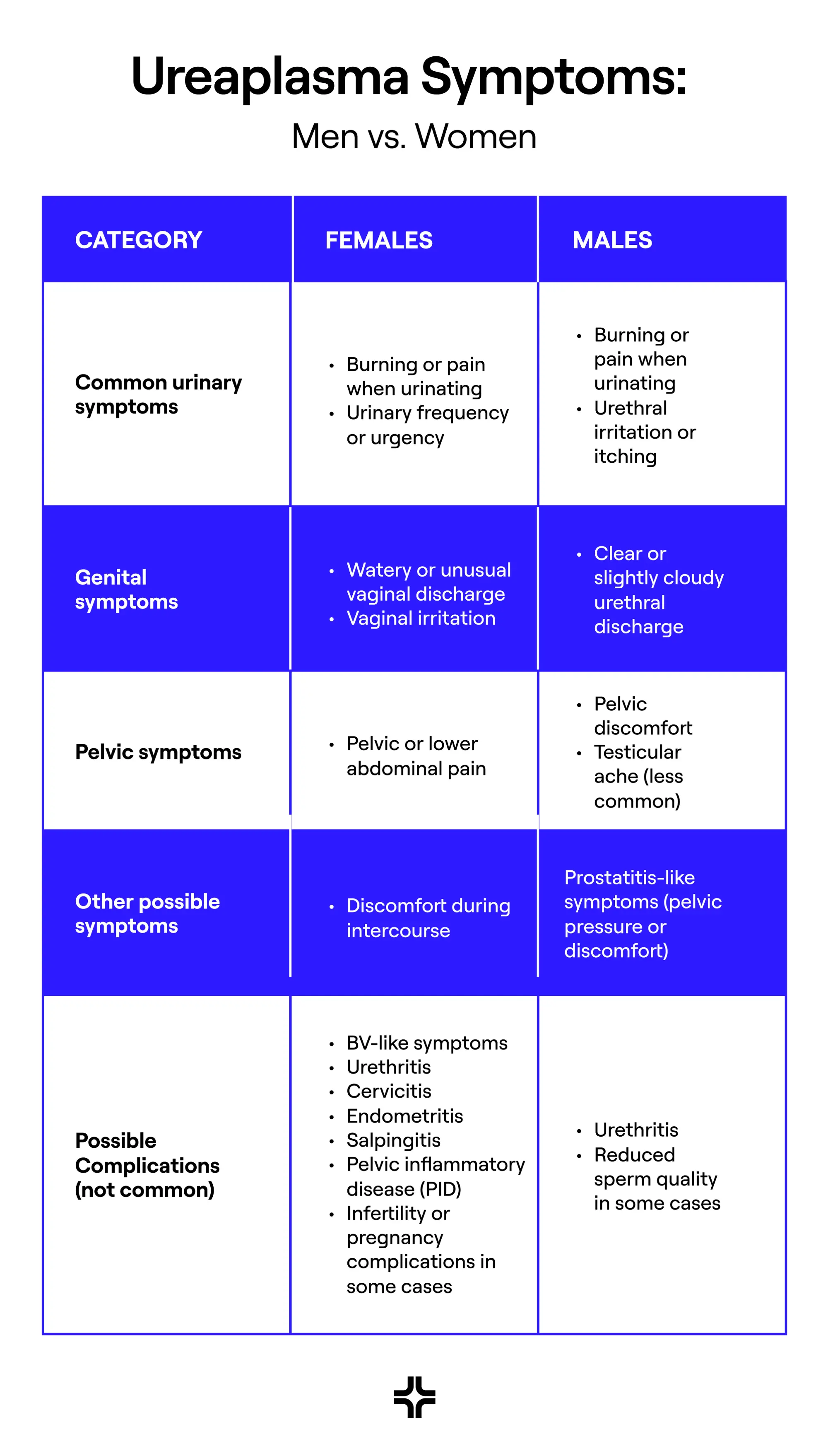
Ureaplasma symptoms
- Urethritis: Ureaplasma causes Inflammation of the urethra, potentially leading to discharge, pain during urination, and a frequent urge to urinate.
- Cervicitis: Ureaplasma may drive inflammation of the cervix.
- Endometritis: Ureaplasma may cause inflammation of the endometrium, the uterine lining.
- Salpingitis: Ureaplasma may cause inflammation of the fallopian tubes.
- BV-like symptoms: Different bacteria cause BV, but the symptoms of a Ureaplasma infection overlap with those common in BV. Ureaplasma is often mistaken for BV, and these infections can also occur together.
- Long-term complications: In rare cases, a severe infection can occur, leading to pelvic inflammatory disease (PID).
- Infertility: In rare cases with complications, Ureaplasma may cause infertility.
- Pregnancy complications: These issues are rare, but Ureaplasma increases the risk of preterm birth and miscarriage. It can also lead to chorioamnionitis (amniotic membrane infection or inflammation) or preterm premature rupture of membranes (PPROM).
Ureaplasma symptoms and complications in men
Although estimates vary, some research suggests that 10% to 40% of people assigned male at birth who are sexually active have Ureaplasma. Most of the time, it does not cause any symptoms. But complications can arise when Ureaplasma overgrows.
- Urethritis: The bacterium causes Inflammation of the urethra, potentially leading to discharge, pain during urination, and a frequent urge to urinate.
- Prostatitis-like symptoms: Ureaplasma may cause symptoms that resemble prostatitis (inflammation of the prostate gland); symptoms may include pelvic, urinary, or genital discomfort.
- Low sperm motility or quality or infertility: Limited evidence suggests an association with Ureaplasma and male infertility.
- Epididymitis: In some cases, Ureaplasma may be associated with inflammation of the epididymis, the coiled tube at the back of the testicle that holds and carries sperm.
How do you get Ureaplasma?
“Ureaplasma is usually spread through sexual contact,” Dr. Wood says. “Because many adults carry the bacteria without their knowledge, it is common for it to be shared between partners. It can also be passed to a baby during pregnancy or during birth.”
- Sexual contact: Ureaplasma can spread through vaginal, anal, or oral sex with an infected partner. However, it is not generally spread through casual touching, such as shaking hands, or sharing basic objects such as a towel or toilet seat.
- Pregnancy and delivery: Ureaplasma can spread from a pregnant person to their fetus or from a birthing parent to a newborn during delivery.
- Transplants: Ureaplasma can also spread through organ or other tissue transplant.
How is it diagnosed?
“Ureaplasma can be found using special lab tests that look for its genetic material,” Dr. Wood says. “I usually only order these tests when someone has symptoms that don’t improve after checking for more common causes of infection. Most important to remember, in my opinion, is that a positive test for Ureaplasma does not always mean it needs treatment.”
- Female: Testing in females typically requires a vaginal or endocervical swab. A swab is inserted into the vagina or even the opening of the cervix to collect cells to test. A urine sample may also be required.
- Male: Testing in men may require a urethral swab (where a small swab is inserted into the urethra), a semen sample, or a urine sample.
- Infant: Testing in infants may involve a throat or eye swab, or in rare cases a blood sample.
Treatment options
“Most people with Ureaplasma do not need treatment unless they have persistent symptoms despite testing and treatment for more common causes of infection,” Dr. Wood says.
When symptoms arise, treatment can help resolve the Ureaplasma overgrowth. Typically this requires a course of antibiotics. “When treatment is needed,” Dr. Wood says, “antibiotics like doxycycline (for non-pregnant adults) or azithromycin (during pregnancy) are commonly used.”
Ureaplasma does not have a cell wall. (Just a fun fact for you to win at trivia night, should the topic come up.) This means that beta-lactam antibiotics (such as penicillin or cephalosporins) won’t work.
Treatment works best with macrolides (azithromycin or erythromycin) and tetracyclines (doxycycline). Sometimes treatment-resistant cases require fluoroquinolones (levofloxacin or moxifloxacin).
But hold the phone! Treatment may not be just a matter popping a course of antibiotics and going about your life. If you are sexually active and require treatment for Ureaplasma, your sexual partner(s) should be treated too, preferably with the same antibiotic.
While you are undergoing treatment, you should avoid sexual contact or use barrier methods (such as condoms) until your symptoms resolve. Not treating a partner may mean re-infection.
Prevention and partner strategies
Prevention of Ureaplasma comes down to a few strategies regarding sex and your partners, and precautions during pregnancy.
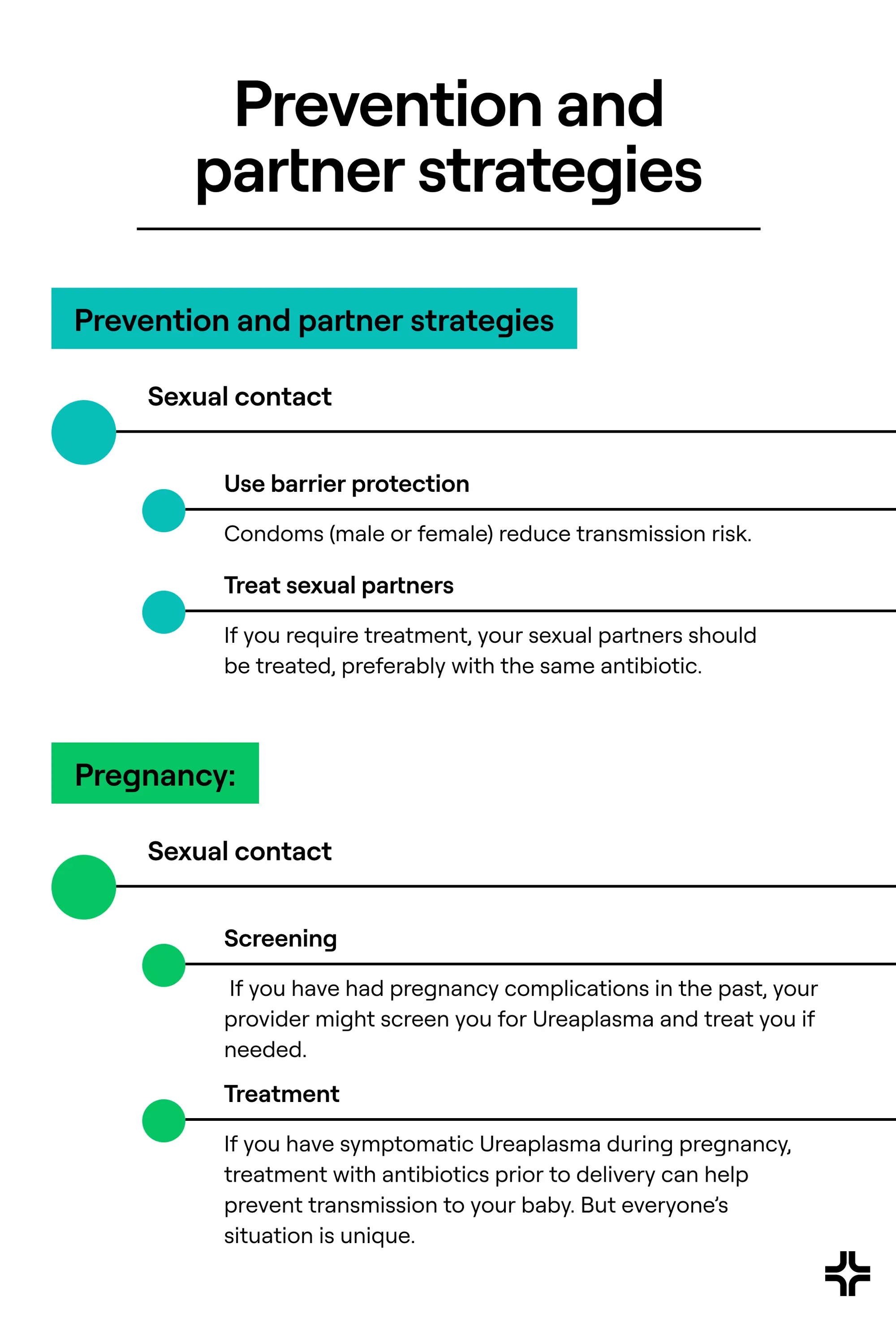
Prevention and partner strategies to combat ureaplasma
Sexual contact:
- Use barrier protection: Condoms (male or female) reduce transmission risk.
- Treat sexual partners: If you require treatment, your sexual partners should be treated, preferably with the same antibiotic.
Pregnancy:
- Screening: If you have had pregnancy complications in the past, your provider might screen you for Ureaplasma and treat you if needed.
- Treatment: If you have symptomatic Ureaplasma during pregnancy, treatment with antibiotics prior to delivery can help prevent transmission to your baby. But everyone’s situation is unique.
Working with a healthcare provider
“People without symptoms generally do not need testing,” Dr. Wood says.
“A non-pregnant [person] should see a doctor if they have symptoms like burning with urination, unusual genital discharge, or pelvic pain with fever, especially if these symptoms keep coming back after treatment for more common infections,” he adds.
If you are pregnant, always talk to your provider about any unusual pelvic or vaginal symptoms.
Key takeaways
- Ureaplasma is a bacterium commonly found in healthy adults that generally does not cause symptoms.
- However, sometimes an overgrowth of Ureaplasma can cause genital or urinary discomfort, and in rare cases complications, including with pregnancy.
- Treatment, if needed, requires an antibiotic and the treatment of sexual partners as well.
- If you are concerned you are experiencing symptoms from Ureaplasma overgrowth, General Medicine can help.
General Medicine follows a strict editorial process, including using real experts to write our articles, vetted primary sources, fact-checking, a secondary medical review, and updates as necessary. This article was medically reviewed and fact checked by Ana Weil, MD.
FAQ
What are the first symptoms of Ureaplasma?
The first symptoms of Ureaplasma vary from person to person. Not everyone experiences symptoms from the bacterium, but burning or painful urination, unusual urinary or vaginal discharge, pelvic or genital discomfort, and pain during intercourse are all common.
Is Ureaplasma an STD?
Ureaplasma is primarily transmitted through sexual contact such as vaginal, anal, or oral sex with an infected partner. Most people with Ureaplasma are asymptomatic and may not know they carry Ureaplasma. Sometimes birthing parents can pass the bacterium on to their newborn.
Will Ureaplasma clear up on its own?
Ureaplasma generally does not cause symptoms, and people who don’t have symptoms typically do not need any treatment. However, if overgrowth occurs and leads to symptoms, then you may need an antibiotic to resolve the issue. If you have symptoms and require treatment, your sexual partner(s) should be treated as well.
How do females get Ureaplasma?
Ureaplasma is generally transmitted through sexual contact in both females and males. However, sometimes birthing parents can pass the bacterium on to their newborn.
Our editorial standards
At General Medicine, we cut through the clutter to make health care clearer, faster, and easier to navigate. Every article is grounded in evidence-based research and peer-reviewed journals, reviewed by medical professionals, and written in accessible language that helps you make health decisions with confidence. We’re committed to ensuring the quality and trustworthiness of our content and editorial process by providing information that is up-to-date, accurate, and actually useful. For more details on our editorial process, see here.