Feb. 25, 2026
What to Drink for Heartburn Relief: Soothing Remedies That Help

Hannah Systrom, MD

Jump to
Book a visit
Book a visit
$25 typical copay
$100 without insurance
Struggling with heartburn? Get help for your symptoms now.
That burning chest feeling ruining your meal or your sleep? Knowing what to drink for heartburn relief (and what to avoid) is just one piece of the puzzle, and getting the full picture can help you feel better faster and keep symptoms from coming back.
What to drink for heartburn relief is usually the first thing on your mind when that familiar burn creeps up your chest or throat, often right after a meal or the second you lie down. Heartburn has a talent for ruining both your dinner and your night. I somehow made it through decades without acid reflux … until pregnancy. Between hormone shifts and a growing belly putting pressure on my abdomen, reflux became my constant companion for nearly nine months. Fun times.
If this sounds familiar, you’re far from alone. Heartburn is incredibly common and deeply uncomfortable. So it’s no wonder people go searching for answers to burning questions (pun intended) like what foods neutralize stomach acid immediately and what to do during an acid reflux attack.
Here’s the quick reality check: heartburn is usually a symptom of acid reflux, which can range from an occasional annoyance to a chronic condition like gastroesophageal reflux disease (GERD). In this guide, we’ll walk through what actually helps—from soothing drinks and simple food swaps to everyday habits and acid reflux remedies that work in real life—plus the clear signs it’s time to check in with a clinician (virtually, if that’s easier). Calm answers, no panic, and relief that makes sense.
What to drink for heartburn relief: quick soothers and common triggers
When heartburn flares, the right sip can calm the burn while the wrong one can fan the flames. If you’re reaching for relief, start simple: water is your MVP. “Water helps wash acid back down into your stomach and dilute it, clearing the esophagus [the tube that leads from your throat to your stomach] and easing heartburn,” says Elizabeth Rubin, MD, a board-certified physician and clinical advisor at Embers Recovery.
Alkaline water (which has a higher pH level, meaning it’s less acidic) may offer an extra boost by helping “neutralize acid on contact,” adds Brian Honeyman, MD, PhD, a board-certified physician in hospice/palliative care and internal medicine and clinical advisor at iRely Recovery.
If plain water isn’t cutting it, these gentler options can also calm irritation:
- Low-fat milk: It can create a temporary soothing coating for the esophagus, and the calcium may help buffer stomach acid, according to Drs. Honeyman and Rubin.
- Ginger tea: A longtime digestive go-to. Ginger’s natural anti-inflammatory properties help relax and calm the GI tract, says Dr. Honeyman.
Now for the hard truth: some beverages are basically heartburn bait. Common triggers include:
- Citrus juices and tomato-based drinks: Highly acidic and irritating to the esophagus.
- Alcohol, coffee, and other caffeinated drinks: These relax the lower esophageal sphincter (the valve that keeps acid where it belongs), making reflux more likely. This can often be worsened at night, when you’re lying down after consuming these beverages (especially alcohol).
- Carbonated beverages (soda, seltzer): The bubbles increase pressure in the stomach, which can force acid upward.
Relief isn’t just about what you drink—it’s how. Chugging may feel tempting, but it can backfire. “Consuming large volumes of liquid too quickly can distend the stomach and put pressure on the lower esophageal sphincter, forcing acid upward,” explains Dr. Honeyman.
Instead, think small, slow sips. “Gentle sipping allows the liquid to slowly settle in your stomach and wash the acid down without creating excessive internal pressure,” says Dr. Rubin. And resist the urge to lie down right after drinking—gravity is your friend here, and staying upright helps keep acid from creeping back up.
One last thing to remember: Heartburn triggers are personal. What bothers one person might be fine for another. Keeping a simple log of what you eat or drink—and when symptoms show up—can help you spot your own patterns and make smarter choices next time.
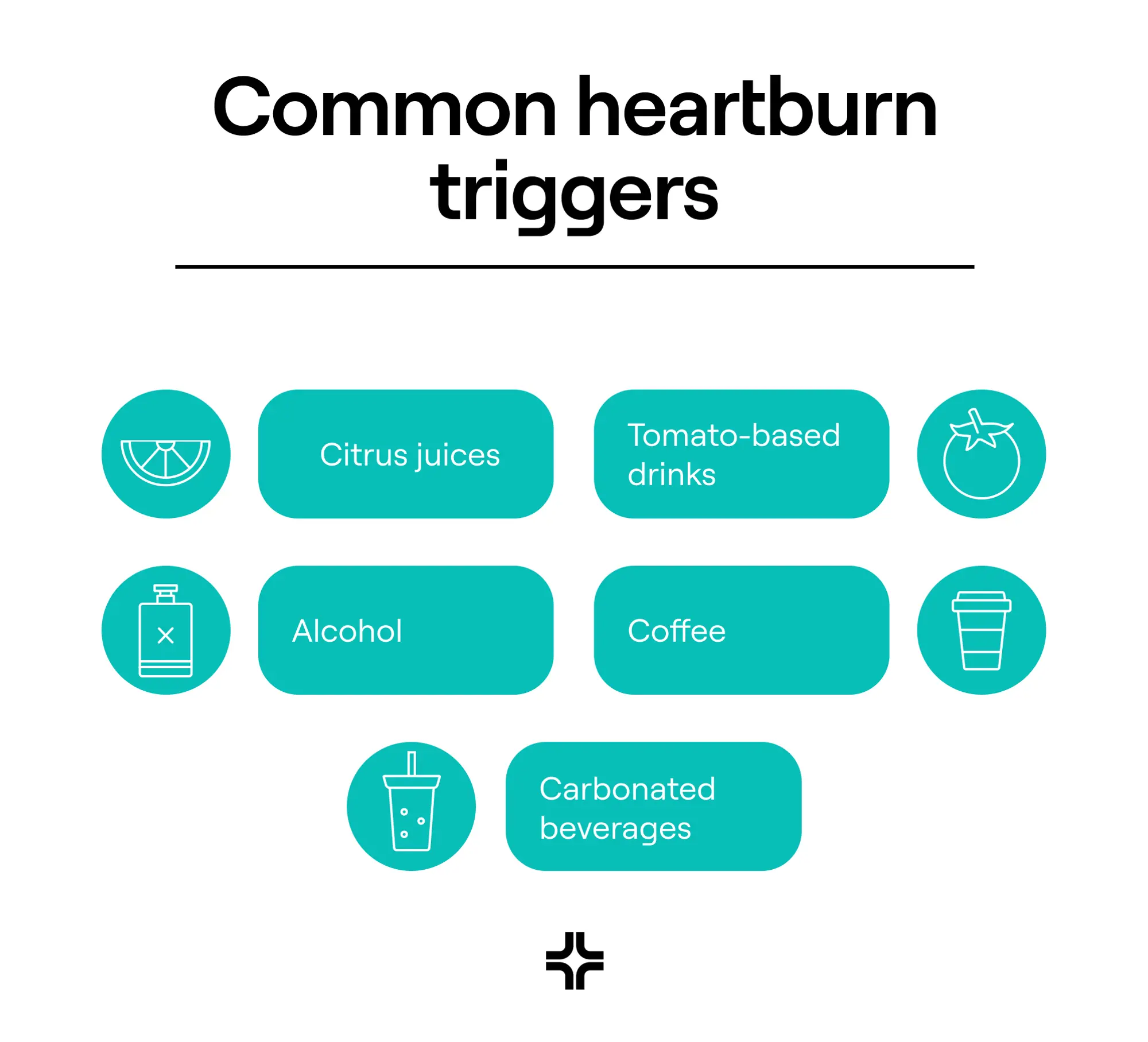
Common heartburn triggers
Understanding heartburn and acid reflux: why it happens
That burning in your chest isn’t your heart—it’s acid in the wrong place. Heartburn is the fiery sensation you feel behind your breastbone when stomach acid creeps up into your esophagus. This process is called acid reflux, and it happens right where the esophagus runs through your chest, close enough to your heart to cause confusion (and anxiety).
Here’s the real issue: your esophagus isn’t built for acid. Your stomach is lined with thick mucus that protects it from its own powerful acids and enzymes. Your esophagus doesn’t have that defense. Normally, a small valve at the bottom of the esophagus—the lower esophageal sphincter (LES)—keeps stomach contents where they belong. But when that valve weakens or relaxes too much, acid can splash back up, triggering heartburn.
So what makes that valve misbehave? Often, it’s a perfect storm. More than one factor usually contributes, including:
- Smoking
- Extra pressure on the abdomen, from body weight, tight clothing, or pregnancy
- A hiatal hernia, where part of the stomach pushes up through the diaphragm
- Large or heavy meals that stretch the stomach and linger longer
- Indigestion or gas, which increases pressure as gas bubbles rise
- Lying down too soon after eating
- Trigger foods, like coffee, chocolate, citrus, mint, alcohol, and tomato sauce
- Certain medications, including some birth control and blood pressure drugs
For many people, heartburn is an occasional annoyance. For others, it’s a frequent visitor. When symptoms show up regularly (think: two or more times a week), it may be a sign of GERD, a chronic form of acid reflux that can damage the esophageal lining (and often needs a more structured treatment plan).
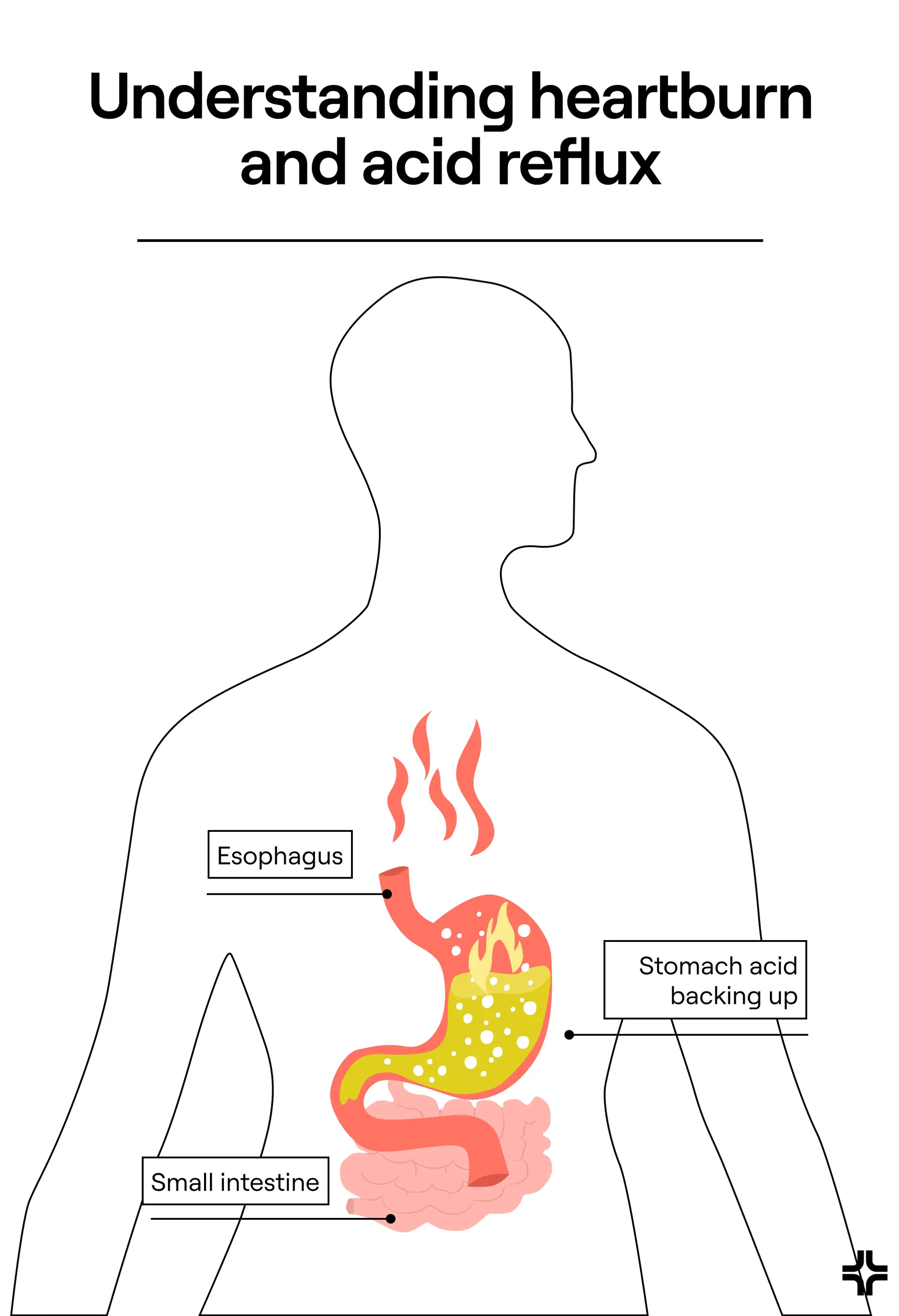
Understanding heartburn and acid reflux
What foods neutralize stomach acid immediately (and what to limit)
Let’s be honest: no food hits the “off” switch on acid, but some calm the burn fast. While there’s no magic bite that instantly shuts down stomach acid, certain foods are gentler on your system and can help neutralize or absorb acid so symptoms ease more quickly.
Start with foods that naturally buffer acid. Dr. Honeyman points to bananas, noting that their alkaline nature can help counter acidity in the stomach. Oatmeal and other high-fiber foods are also smart choices. “They absorb acid in the stomach, targeting the source of heartburn,” says Dr. Rubin.
Other fiber-rich options that may help keep reflux in check include:
- Fruits
- Vegetables
- Whole grains
When symptoms are active, alkaline foods can be especially soothing. Foods on the alkaline end of the spectrum may help neutralize acid on contact. Dairy products tend to fit the bill—if you tolerate them well. Try:
- Milk
- Yogurt
- Cottage cheese
- Kefir (a fermented milk drink)
Now for the foods and drinks most likely to fan the flames. These don’t cause heartburn in everyone, but they’re common triggers:
- Chocolate, peppermint, and fried foods, which relax the valve at the bottom of the esophagus and let acid creep upward
- Citrus fruits and tomatoes, which are acidic and can irritate the esophagus
- Spicy foods, which can also irritate an already inflamed lining
- Alcohol
One more thing matters just as much as what you eat: how you eat. Large meals stretch the stomach and put pressure on that esophageal valve, says Dr. Rubin. Her advice? “Eat smaller, more frequent meals instead of three large ones.” Dr. Honeyman also recommends avoiding food for at least three hours before bedtime, since lying down makes reflux more likely.
Pay attention to what helps and what hurts. A little trial and error can go a long way toward finding your own acid-calming routine and keeping that burn at bay.
Acid reflux remedies at home: everyday habits that help
If you’re here, you’re probably looking for straightforward solutions for what helps with heartburn. The encouraging part: You don’t need a total lifestyle overhaul to calm heartburn. Small, consistent tweaks to how you eat, move, and rest can significantly reduce acid reflux and make flare-ups less frequent.
Try these expert-approved acid reflux remedies:
- Stick to smaller, more frequent meals, which produces less stomach acid and puts less pressure on your stomach.
- Eat slowly (inhaling food fills the stomach fast and strains the lower esophageal sphincter).
- Sip water sparingly with meals (overfilling your stomach with water just adds more pressure on the esophageal valve; hydrate between meals instead)
- Skip tight clothing that squeezes your abdomen and puts pressure on your stomach.
- Stay upright after meals (lying down makes it easier for acid to flow back up your throat. Wait three to five hours after eating before bed).
- Avoid exercising right after eating (giving yourself time to digest keeps acid and stomach contents down where they belong).
- Chew sugar-free gum after meals to boost saliva, which helps neutralize acid and wash it back into the stomach, says Dr. Rubin. (Just avoid peppermint, which can trigger symptoms.)
- Elevating your head with a wedge or pillows can also help, and sleeping on your left side keeps the stomach lower than the esophagus, says Dr. Honeyman.
- Pay attention to which foods and drinks reliably make symptoms worse and avoid them when you can.
What to do during an acid reflux attack in the moment
When heartburn hits, think “upright, relaxed, and gentle.” A few quick moves can help put out the fire fast, according to Drs. Honeyman and Rubin. Here’s how to get rid of acid reflux, stat:
- Stand up straight (don’t slouch or lie down) so gravity keeps acid down
- Take slow, deep breaths to relax the muscles around your stomach
- Loosen tight clothing to reduce abdominal pressure
- Chew sugar-free gum to increase saliva and neutralize acid
Over-the-counter antacids can also offer temporary relief—just follow the package directions.
Important safety note: If you have severe chest pain that spreads to your jaw or arm, seek emergency care immediately, says Dr. Honeyman. Heartburn and heart attacks can feel similar, and it’s not always easy to tell the difference, he explains.
What helps with heartburn long-term: lifestyle and prevention
Lasting relief comes from stacking small habits, not chasing quick fixes. The same everyday strategies that calm heartburn now (smaller meals, avoiding late-night eating, smart sleep positions) also help prevent future flare-ups.
A few additional long-term moves matter, too:
- Don’t smoke and limit alcohol. Both weaken the lower esophageal sphincter, making reflux more likely.
- Aim for a healthy weight for you. Extra weight adds abdominal pressure, increasing reflux risk. “Losing even a small amount of excess weight can reduce the pressure on your abdomen, preventing heartburn,” says Dr. Rubin.
- Review your medications. Some drugs can worsen reflux or irritate the esophagus. Case in point: tricyclic antidepressants (like amitriptyline) may loosen the lower esophageal sphincter, while certain antibiotics (like doxycycline) can inflame the esophagus. A quick check-in with your doctor or pharmacist can help.
Moral of the story: The more reflux-friendly habits you build into daily life, the calmer your gut will be over time.
Diagnosis and treatment options for frequent heartburn and reflux
Heartburn is usually diagnosed based on how it feels and how often it shows up. Most providers can recognize it just by your description. If it’s occasional or mild, testing may not be necessary. But if symptoms are frequent, persistent, or worsening—or if GERD is suspected—your provider may want a closer look.
At that point, you might be referred to a gastroenterologist, a specialist in digestive health, to check for irritation or damage to your esophagus.
These tests help confirm what’s really going on:
- Upper endoscopy: A thin, flexible tube with a tiny camera is gently passed down your throat (with medication to keep you comfortable) into the esophagus (not your airway). It allows your provider to look at your esophagus, stomach, and the top of your small intestine for inflammation, ulcers, or other damage.
- Esophageal pH test: A small wireless capsule is placed in your esophagus to measure acid levels over time. It sends data to a wearable receiver while you track symptoms in a journal, helping your provider connect the dots between acid exposure and how you feel.
Getting an accurate diagnosis matters. Heartburn symptoms can overlap with other conditions—like ulcers, esophagitis, or other GI disorders—and proper treatment depends on knowing exactly what you’re dealing with.
Non-surgical treatment options: medications and structured care
Over-the-counter meds can help now and then, but ongoing symptoms may require prescription treatment and lifestyle changes working together.
Common medications for heartburn:
- Antacids (like Tums or Rolaids): These neutralize stomach acid so reflux is less irritating. Some also help with gas or constipation. They work well for occasional heartburn, but frequent use can lead to side effects. Talk to your doctor if you are using these.
- Alginates: Made from seaweed, these form a floating “raft” on top of stomach acid, creating a physical barrier that keeps acid from washing up. They’re available alone or combined with antacids.
- H2 blockers: These reduce acid by blocking histamine, the signal that tells your stomach to produce acid. Some are OTC; others require a prescription. They can be helpful but may lose effectiveness over time.
- Proton pump inhibitors (PPIs): Stronger acid suppressors that also help heal irritated tissue. Providers often recommend PPIs if symptoms are severe or there’s esophageal damage. They’re about 90% effective at reducing acid reflux, and they’re the only meds that can heal esophageal ulcers and inflammation.
Important caveat: meds lower acid, but they don’t fix the underlying valve problem (the lower esophageal sphincter). That’s why lifestyle changes—meal timing, portion size, sleep position—are essential, not optional.
OTC Quick Guide: Heartburn Medications at a Glance
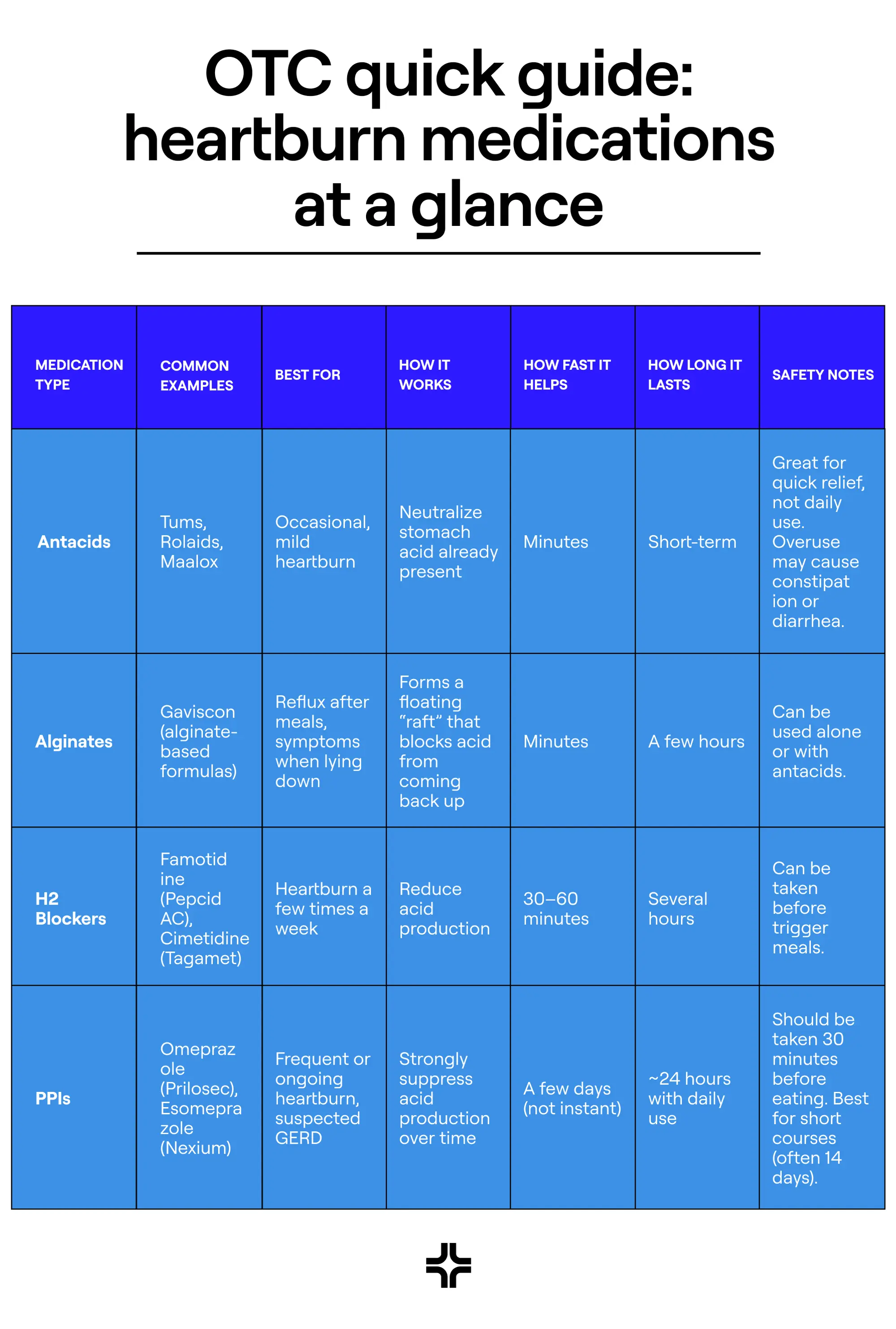
OTC heartburn medications
Surgical treatment options: when GERD is severe or complicated
Surgery is the exception, not the rule—but it can be life-changing when needed for chronic heartburn and reflux. If medications and lifestyle changes aren’t enough—or if complications develop—your provider may discuss procedural options.
Possible treatments include:
- Nissen fundoplication: A minimally invasive surgery that tightens the connection between the stomach and esophagus. Highly effective for GERD.
- Transoral incisionless fundoplication (TIF): A similar repair done through an endoscope (no external incisions required).
- LINX device: A small ring of magnetic beads implanted around the esophagus to help keep acid from backing up into the esophagus.
- Hiatal hernia repair: If reflux is caused by a hernia, fixing it can significantly reduce symptoms.
These decisions are made carefully, with a specialist, after thorough testing and discussion of risks and benefits.
The big takeaway: most people with heartburn never need surgery. With the right diagnosis, lifestyle changes, and targeted treatment, symptoms can usually be managed—often very effectively—without going under the knife.
Working with a healthcare provider to manage heartburn safely
Heartburn may be common, but that doesn’t mean you have to guess your way through it. Providers can usually recognize heartburn pretty quickly, but showing up with a little prep helps them help you faster. Whether it’s an in-office visit or a virtual General Medicine appointment, here’s what’s useful to bring:
- A food and symptom diary: Jot down what you eat, when symptoms hit, and how intense they feel. Patterns = clues.
- OTC meds you’ve tried: Antacids, H2 blockers, PPIs—what helped, what didn’t, and whether symptoms broke through anyway.
- Lifestyle changes you’ve tested: Smaller meals, earlier dinners, sleep position—note what’s made a difference (even a small one).
From there, your provider can gauge how often and how severely symptoms are showing up and whether this looks like occasional reflux or something more chronic, like GERD. If needed, they may order tests to confirm the diagnosis or rule out other conditions that can mimic heartburn.
Once there’s a plan, follow-up matters. Treatment isn’t one-and-done, especially for issues like GERD. Checking in allows your provider to tweak meds, reinforce lifestyle strategies, or pivot if something isn’t working.
And one important reminder: don’t minimize this. Heartburn isn’t life-threatening, but chronic discomfort that affects sleep, eating, or daily life is worth addressing. Asking for help isn’t overreacting. It’s smart.
The good news? Heartburn and reflux are very treatable, and with the right approach, most people can get back to feeling normal.
When to seek care (red flags you shouldn’t ignore)
Some reflux is normal, and many people never even feel it. But when heartburn becomes frequent or persistent, it can damage the esophagus over time and lead to complications like scarring or Barrett’s esophagus (a precancerous condition).
According to Drs. Honeyman and Rubin, it’s time to see a provider if you notice:
- Heartburn more than twice a week, consistently
- OTC meds stop working or barely help
- Pain or difficulty swallowing
- Unexplained weight loss
- Black stools
- Persistent vomiting or vomiting blood
Emergency rule of thumb: If you have severe chest pain that spreads to your jaw or arm, seek emergency care immediately. Heartburn and heart attacks can feel similar, and it’s not always possible to tell the difference on your own.
When in doubt, get checked. Listening to your body early can prevent bigger problems later.
The bottom line
Heartburn relief doesn’t come from one quick trick—it comes from the combo of what you drink, what you eat, and how you move through your day. For many people, small, targeted changes and simple acid reflux remedies can make a big difference. But if heartburn is frequent, painful, or messing with your quality of life, it deserves medical attention.
Here’s the upside: Once you understand your personal triggers and get the right guidance, heartburn becomes far more manageable and a lot less disruptive.
Ready to take the next step? General Medicine makes it easy to get help. Connect with an experienced clinician over video to talk through your symptoms and get personalized care from home, including a tailored treatment plan, prescriptions if needed, and referrals or lab orders when appropriate. Relief doesn’t have to be a guessing game, and you don’t have to tough it out alone.
Key takeaways
- Relief isn’t one-size-fits-all. What helps heartburn most is a mix of smart drink choices, gentle foods, and everyday habits—not a single magic fix.
- Some foods and drinks soothe; others spark the burn. Low-fat milk, ginger tea, water, oatmeal, and bananas can help, while alcohol, coffee, citrus, fizzy drinks, and fatty, fried, or spicy foods often trigger symptoms.
- How you eat and move matters. Smaller meals, staying upright after eating, and avoiding late-night snacks go a long way.
- Frequent heartburn isn’t “normal.” If symptoms keep coming back or OTC meds stop working, it’s time to talk to a clinician.
General Medicine follows a strict editorial process, including using real experts to write our articles, vetted primary sources, fact-checking, a secondary medical review, and updates as necessary. This article was medically reviewed and fact checked by Hannah Systrom, MD.
FAQ
What gets rid of heartburn quickly?
For fast relief, stand upright, take small sips of water, and loosen tight clothing to reduce pressure on your stomach. Chewing sugar-free (non-mint) gum can also help by increasing saliva, which washes acid back down. If needed, OTC antacids can neutralize acid quickly—just follow the label.
Can drinking water help heartburn?
Yes—water often helps, especially when you sip it slowly. It can dilute stomach acid and help clear acid from your esophagus. Chugging, though, can backfire by overfilling your stomach, so go easy.
What drinks help with acid reflux while pregnant?
Pregnancy-safe, soothing options include plain water, low-fat milk, and ginger tea (in moderate amounts). These can help buffer or calm acid without irritating the stomach. Avoid citrus juices, coffee, carbonated drinks, and anything that triggers symptoms for you. And always ask your provider before trying anything new.
Can drinking cold water reduce heartburn?
Cold water may feel soothing for some people, but it’s not a guaranteed fix. The temperature matters less than how you drink it—small, steady sips are more helpful than large gulps. If cold drinks worsen your symptoms, room-temperature water is a safer bet.
Our editorial standards
At General Medicine, we cut through the clutter to make health care clearer, faster, and easier to navigate. Every article is grounded in evidence-based research and peer-reviewed journals, reviewed by medical professionals, and written in accessible language that helps you make health decisions with confidence. We’re committed to ensuring the quality and trustworthiness of our content and editorial process by providing information that is up-to-date, accurate, and actually useful. For more details on our editorial process, see here.