


Trouble swallowing (dysphagia)
Difficulty swallowing can range from a minor, occasional issue to something that needs prompt evaluation, especially if it's new, worsening, or affecting liquids as well as food. This visit helps you understand what's going on and what to do next.
1:1 virtual visit with a clinician experienced in common gastrointestinal concerns
Insurance accepted, with clear pricing per visit
A care plan built from your full health history
Visit options
We'll check any insurance and show you your options before you book.
Video Visit
$25
Est. or $100 w/o insurance
Most insurance accepted
Board-certified clinicians
No hidden fees
Available nationwide
What to expect from a visit for trouble swallowing
1
Share your health story
Tell us what's happening and when it started.
2
Meet your clinician
Discuss whether this needs urgent evaluation or further workup.
3
Get your care plan
Leave with guidance or a referral for further testing if needed.
4
Own your health
Follow up as you move through any next steps.

All your care in one place. That’s the General Medicine difference.
We help you understand your options, connect you to the right clinicians, manage prescriptions, coordinate any needed evaluations, and keep an eye on your overall health along the way. It’s comprehensive care that looks at the full picture — your goals, your history, your lifestyle — and makes it simple to move forward with confidence.
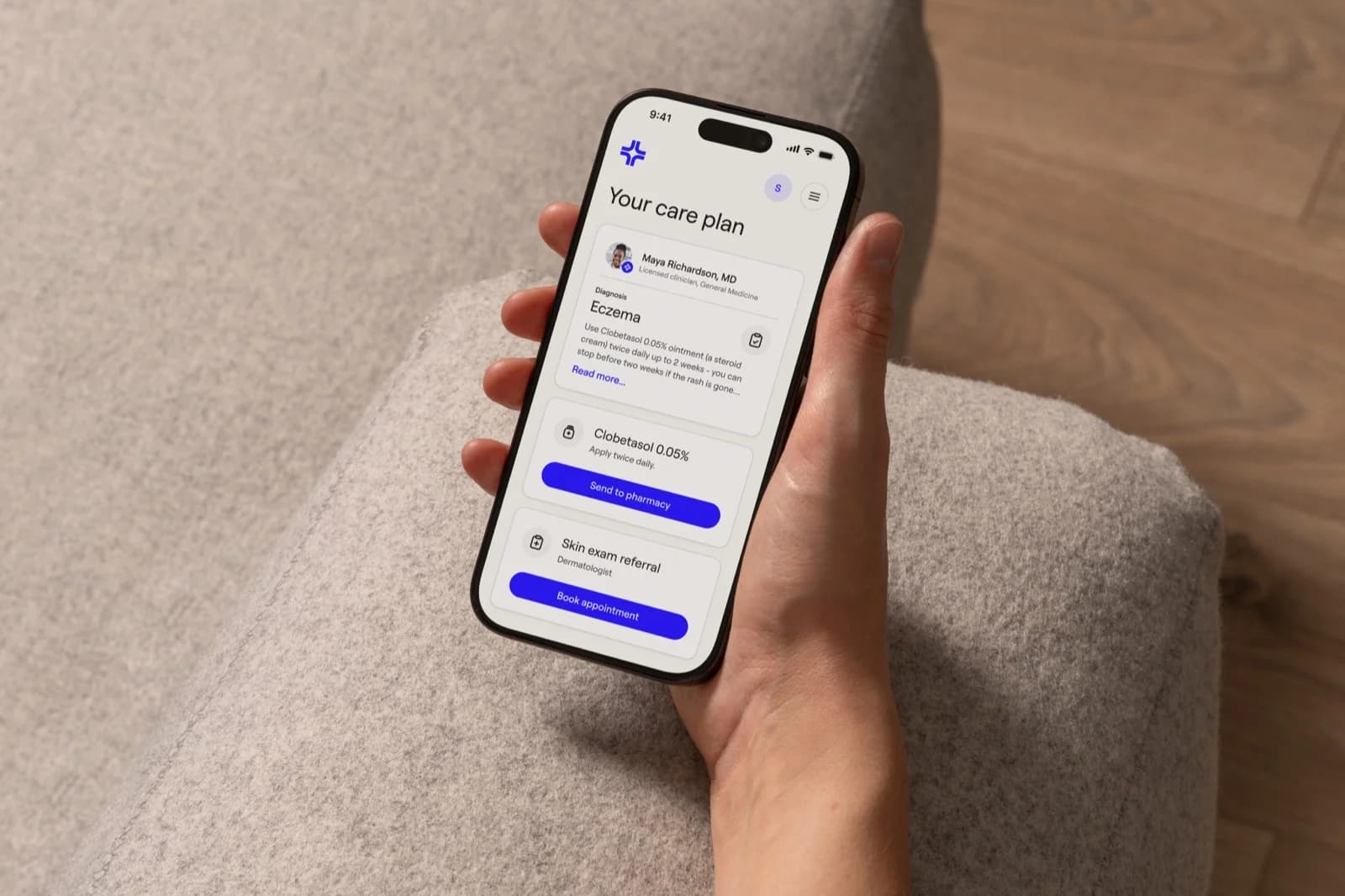

Is this visit right for your swallowing trouble?
Understanding what's driving your symptoms is the first step toward the right treatment — or knowing when you need to be seen urgently.
You've noticed food or liquids feel like they're getting stuck
Swallowing has become gradually more difficult or painful over time
You've had unexplained weight loss along with the symptom
You want to understand if it's related to reflux or something else
You're not sure if your symptoms need this visit or urgent care
What our customers have to say
“I feel like I’m finally on the right path to improving my health with the right support now! It’s so refreshing and reassuring.”
Emerald
“My experience with General Medicine was amazing. The understanding and care that was taken to figure out what is exactly going on with me. I feel like a weight has been lifted off of me.”
Kaylee
“I couldn’t be happier with my experience with General Medicine! They are fast, responsive, kind and knowledgeable. It is much easier, more affordable and faster.”
Nika
Get answers about your symptoms
More digestive care
Frequently asked questions
What causes trouble swallowing?
Causes range from reflux and esophageal irritation to structural narrowing from scarring, or, less commonly, nerve or muscle conditions affecting swallowing. Anxiety can also sometimes cause a sensation of throat tightness that mimics true swallowing difficulty.
When is trouble swallowing an emergency?
Sudden inability to swallow, choking, difficulty breathing, or drooling because you can't manage your own saliva needs immediate emergency care right away. Don't wait to see if these symptoms improve — seek care right away.
Can this visit diagnose the cause of my swallowing trouble?
A video visit can't replace tests like an endoscopy or swallow study, which are often needed to find the cause — your clinician can assess your symptoms and refer you appropriately, if needed. These specialized tests can pinpoint exactly where and why swallowing is being affected.
Is trouble swallowing with liquids different from trouble with solids?
Yes — difficulty with liquids especially can point toward a different set of causes than solids alone, which is useful information for your clinician. Your clinician will use this detail to help narrow down the likely cause.
What side effects are associated with treatments for swallowing problems?
This depends entirely on the cause found — treating reflux carries different considerations than addressing a structural or nerve-related cause your clinician identifies. Your clinician will explain what to expect once your specific cause is identified.