Mar. 4, 2026
Why Is My Eye Swollen? Common Causes and How to Reduce the Swelling

Kevin Motamedi, MD
Jump to
Book a visit
$25 typical copay
$100 without insurance
Dealing with a swollen eye or eyelid? Book an evaluation today to get the expert help you need.
A swollen eye can stop you in your tracks, but it usually has a simple cause. Most swollen eyes are caused by everyday issues like allergies, irritation, blocked oil glands, or mild infections, and many improve with simple at-home care. The key is matching the right fix to the likely cause and knowing when swelling is a sign you should get medical advice.
Few things trigger panic faster than looking in the mirror and seeing a swollen eye staring back at you. It can feel sudden, dramatic, and wildly unfair—especially if it showed up overnight. But before you spiral, here’s the reassuring truth: A swollen eye is usually your body reacting to something minor, not a sign of a serious eye problem.
“Swollen eyelids are common and can happen for many reasons,” says Chris Sales, MD, MPH, associate professor of ophthalmology at the University of Iowa’s Carver College of Medicine and president of Oko. “They can look concerning and may feel uncomfortable or tender, but they are rarely an emergency.”
Allergies, irritation from skincare or makeup, rubbing your eyes, a stye or chalazion, eyelid inflammation like blepharitis, or eyelid dermatitis can all make an eye swell. Lifestyle factors—like poor sleep, dehydration, or extra salt—can add to the puffiness, too. Less often, an infection or injury is involved, which is when closer attention matters.
Most swollen eyes settle down with the right care and a little patience. And when they don’t, getting guidance early can save you days of discomfort and a lot of unnecessary Googling. Below, we’ll walk through how to read your symptoms, what actually helps reduce swelling, and what can make it worse (spoiler: squeezing a stye is never the move).
Why is my eye swollen? Quick triage to narrow the cause
Before jumping into treatments, it helps to do a quick symptom check. These clues can often point you toward the most likely cause of a swollen eye and the safest next step.
First, whether one eye or both eyes are swollen can help separate local problems from broader causes:
- One swollen eye: This often indicates a local issue, such as a stye, chalazion, irritation, minor injury, or infection.
- Both eyes swollen: Allergies, fluid retention, or generalized irritation are more likely, especially if itching and puffiness are the main features.
Which eyelid is swollen offers another important clue:
- Upper-lid swelling: This is common with styes, chalazia, blepharitis flares, and eyelid dermatitis.
- Lower-lid swelling: This is more often linked to allergies, fluid retention, or irritation from rubbing or crying.
The way the swelling feels can also point toward different causes. Here’s the breakdown:
- Itchy: Allergies or dermatitis are more likely, especially if you also notice redness or flaky skin.
- Painful or tender: This raises concern for a stye, infection, or injury.
- Pressure or heaviness without pain: This often signals fluid retention or mild irritation.
Any discharge or crusting provides insight into inflammation versus infection:
- Crusting or discharge: These symptoms can suggest conjunctivitis or blepharitis, particularly if your eyelids stick together in the morning.
- Watery tearing: This is common with allergies, viral irritation, or mild exposure to irritants. In rare cases, watery tearing can be a result of ectropion, which is caused by lower eyelid laxity and can be a symptom of Bell’s Palsy.
- Dry, gritty feeling: This sensation is often linked to eyelid inflammation, irritation, or dry eye.
Recent exposures or triggers can also explain sudden swelling, such as:
- New makeup, skincare, sunscreen, or eye products
- Contact lens use, overwearing lenses, or sleeping in them
- Frequent eye rubbing, especially during allergy season
- Recent cold symptoms, sinus congestion, or pink eye exposure
- A bug bite, small injury, or a foreign particle like dust or sand
Swollen eyelid causes: the most common culprits
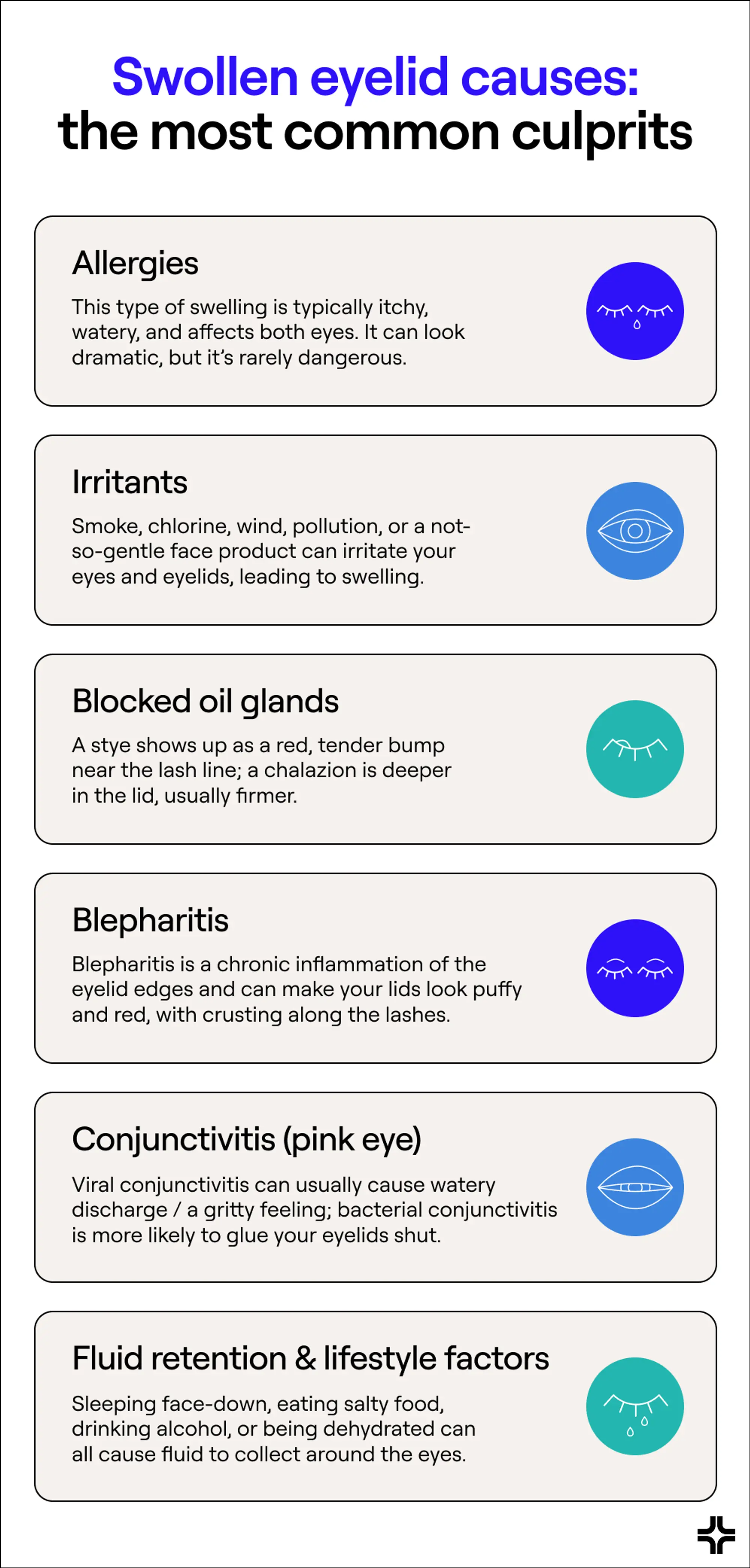
Most swollen eyes come down to a handful of common issues, each with its own telltale signs:
- Allergies: When your immune system reacts to pollen, dust, pets, or mold, it releases histamine, which makes the delicate tissue around your eyes puff up. This type of swelling is typically itchy, watery, and affects both eyes. It can look dramatic, but it’s rarely dangerous.
- Irritants: Smoke, chlorine, wind, pollution, or a not-so-gentle face product can irritate your eyes and eyelids, leading to swelling. This kind of reaction often feels more burny or stingy than itchy, and your eyes may water as they try to flush things out.
- Blocked oil glands (stye or chalazion): Your eyelids are lined with tiny oil glands, and sometimes one gets clogged, says Sales. A stye shows up as a red, tender bump near the lash line and can feel sore or throbbing. A chalazion is deeper in the lid, usually firmer, and more annoying than painful. Either way, it’s typically a one-eye situation.
- Blepharitis: Blepharitis is a chronic inflammation of the eyelid edges and a frequent reason for repeat swelling. It can make your lids look puffy and red, with crusting along the lashes or a gritty, irritated feeling. It tends to come and go, often flaring when you’re tired, stressed, or dealing with dry eyes.
- Conjunctivitis (pink eye): Pink eye doesn’t always look the same. Viral conjunctivitis usually causes watery discharge and a gritty feeling, sometimes alongside cold symptoms. Bacterial conjunctivitis is more likely to glue your eyelids shut in the morning. Allergic conjunctivitis brings itching, tearing, and swelling in both eyes. The pattern matters here, because treatment depends on the type.
- Fluid retention and lifestyle factors: Sometimes, a swollen eye is just … puffiness. Sleeping face-down, eating salty food, drinking alcohol, not fully closing your eyelid during sleep, or being dehydrated can all cause fluid to collect around the eyes, especially overnight. This kind of swelling is painless, often worse in the morning, and tends to fade as the day goes on.
Eyelid dermatitis: when skin irritation is the problem
Eyelid dermatitis happens when the delicate skin of the eyelids becomes irritated or inflamed, often in response to something it doesn’t like. Because eyelid skin is thin and sensitive, even minor exposures can cause noticeable swelling.
Common symptoms include:
- Redness and puffiness of the eyelids
- Itching or a tight, uncomfortable feeling
- Dry, flaky, or scaly skin on the lids
- Swelling that makes the eyelids feel heavy
The trigger is often a well-meaning daily product, not a shocking skincare plot twist. Common culprits include:
- Makeup, mascara, eyeliner, or eyelash glue
- Face wash, moisturizer, sunscreen, or fragrance
- Nail polish or nail treatments that transfer to the eyes
- Topical medications used near the eye area
There are a few clues that help distinguish eyelid dermatitis from an infection. It usually causes more itching and visible skin irritation, with little to no discharge. The eye itself often looks normal, and there’s typically no single painful bump like you’d see with a stye.
Once you recognize that pattern, the next step is simple: Calm the skin and step away from the trigger. Think of it as giving your eyelids a short break:
- Stop using all eye-area makeup and skincare products for now
- Gently cleanse with a mild, fragrance-free cleanser
- Avoid rubbing or scrubbing the eyelids
- Keep your routine simple while the skin barrier recovers
If the swelling doesn’t improve or starts to move in the wrong direction, it’s time to loop in a healthcare provider with a quick virtual visit at General Medicine. Seek care if:
- Swelling continues to worsen instead of easing
- The skin begins oozing, crusting, or cracking
- You notice pain, redness in the eye itself, or vision changes
- Flares keep coming back despite avoiding known triggers
Infections and inflammation that need closer attention
Some causes of a swollen eye deserve a closer look; not because they’re always serious, but because the right treatment depends on the cause.
Causes of a swollen eyelid
Viral conjunctivitis is one such condition. It’s common and very contagious, and often occurs alongside cold or flu symptoms and may start in one eye before spreading to the other. Symptoms commonly include:
- Watery discharge
- Redness
- A gritty or sandy feeling
- Puffy eyelids, especially in the morning
Bacterial conjunctivitis is less common, but it tends to be messier and more stubborn. It often starts in one eye and may benefit from prescription treatment. Symptoms may include:
- Yellow or green discharge
- Eyelids stuck shut when you wake up
- Localized swelling
- Redness and irritation
Blepharitis flares can also make your eyelid look swollen, even though the main issue lives along the lash line. This tends to be a repeat offender rather than a one-time surprise. Symptoms often include:
- Redness along the lash line
- Crusting or flakes on the lashes
- Burning or gritty sensation
- Swelling that comes and goes
Preseptal cellulitis is an infection of the eyelid skin itself. It usually develops after something small—like a cut, bug bite, or irritated patch of skin—creates an opening for bacteria. An acute or chronic sinus infection can also cause this. Symptoms often include:
- A red, swollen, tender eyelid
- Warmth of the skin around the eye
- Swelling without vision changes
Orbital cellulitis is rare, but it’s serious and needs urgent, in-person care. This is not a “wait and see” situation, so seek care if you notice warning signs like:
- Fever
- Severe eye pain
- Pain with eye movement
- Bulging of the eye
- Vision changes
Injury, contact lenses, and foreign body irritation
If something rubbed, poked, dried out, or annoyed your eye, it can make a very visible complaint. Minor bumps, enthusiastic eye rubbing, or even staring at screens too long can irritate delicate eye tissue and lead to puffiness. This kind of swelling often looks worse than it feels and usually settles down within a day or two with some rest and gentle care.
Foreign body irritation is another frequent offender. Dust, sand, or a rogue eyelash can sneak under the lid and instantly make your eye feel like it’s on high alert. Common signs include:
- A gritty or scratchy “something’s in my eye” feeling
- Lots of tearing
- Redness
- Trouble keeping the eye comfortably open
Contact lenses can raise the stakes. Even well-behaved lenses can dry out the eye or trap debris, especially if you sleep in them or wear them longer than recommended. Contact lens–related irritation often causes:
- Redness and swelling
- Burning or dryness
- Blurry vision that improves once the lens is out
- Discomfort that ramps up the longer you wear them
Typically, this kind of irritation isn’t a big deal and improves once the lenses are out and the eye gets a break. But if you also notice light sensitivity or significant pain, that’s a different story. That combo can signal irritation or injury to the cornea (the clear surface of the eye), and it’s a good reason to get medical advice rather than waiting it out.
Chemical exposure is rarer but urgent. Cleaning products, pool chemicals, or beauty products splashed into the eye should be flushed immediately with clean water or saline, followed by prompt medical evaluation.
And sometimes, it really is just a black eye. Bruising after blunt trauma is common, but severe swelling, worsening pain, vision changes, or trouble moving the eye are not and should be checked right away.
Diagnosis and testing: what a clinician will check
If eye swelling isn’t improving, keeps coming back, or doesn’t fit a clear pattern, a clinician can help clarify what’s going on, rule out anything serious, and get you the right treatment.
They’ll usually start by asking a few targeted questions, including:
- When did the swelling begin?
- Is the swelling in one eye or both?
- Do you have other symptoms, like itching, pain, discharge, or vision changes?
- Do you use contact lenses?
- Have you had any recent illness or injury?
- Have you used any new products around your eyes?
From there, the exam focuses on the essentials:
- Looking at the eyelids and lash line for inflammation or blocked glands
- Checking the white of the eye for irritation or infection
- Assessing where and how severe the swelling is.
In many cases, that’s enough to identify common causes like allergies, styes, blepharitis, or eyelid dermatitis. Testing is usually reserved for symptoms that are severe, unusual, or not improving, such as suspected corneal injury, recurrent styes or chalazia, or signs of deeper infection.
Virtual care can be especially useful at this stage. A clinician can review your symptoms, look at photos if helpful, recommend safe next steps, prescribe treatment when appropriate, or guide you to in-person care if something needs closer attention.
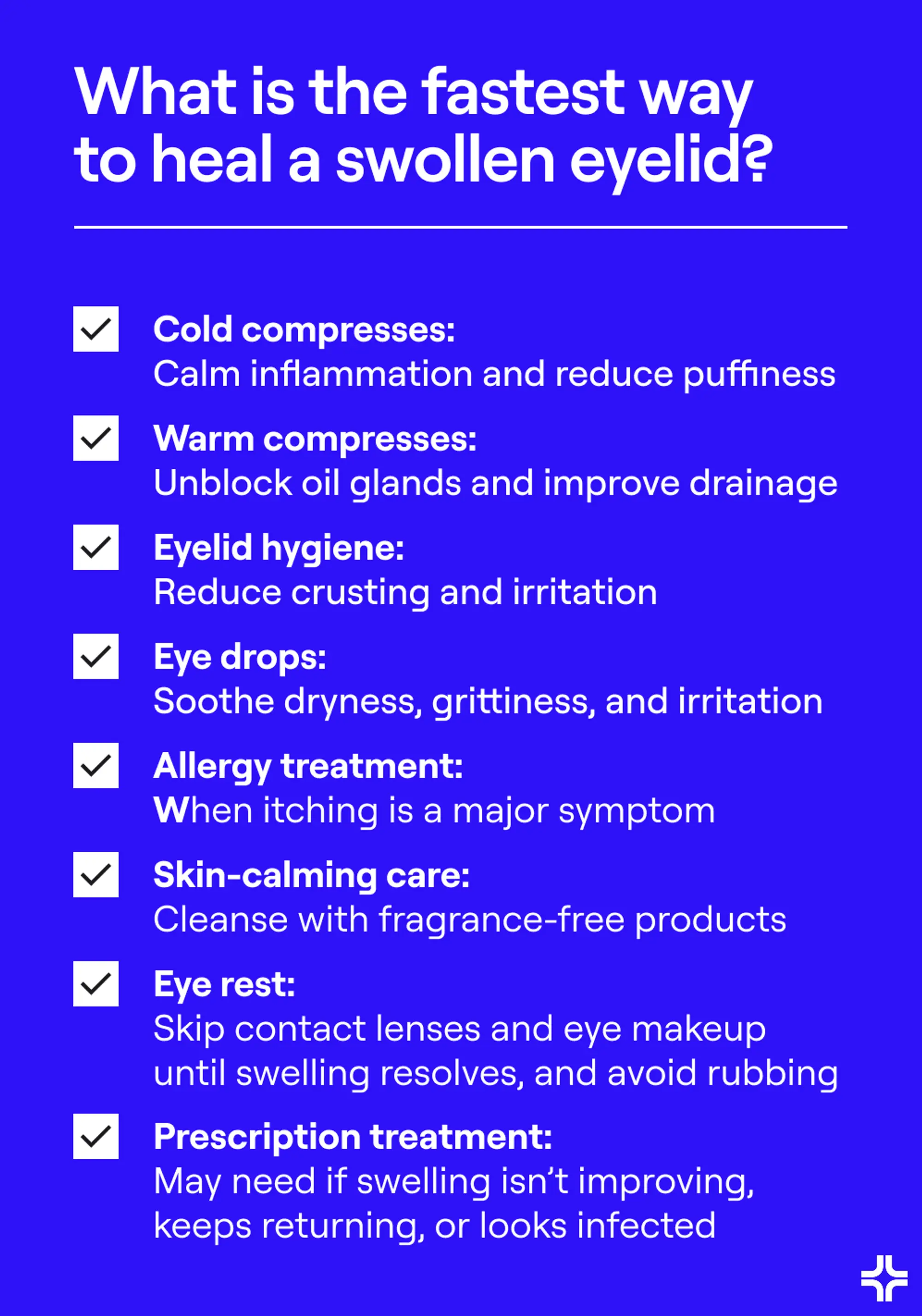
Treatment options: What is the fastest way to heal a swollen eyelid?
If you’re not sure what’s driving the swelling, start with these low-risk, high-help options and adjust based on how your eye responds:
- Cold compresses: These help calm inflammation and reduce puffiness. They’re best for allergies, irritation, fluid retention, or general eyelid swelling. Apply a clean, cool compress for 10–15 minutes at a time, a few times a day.
- Warm compresses: These help unblock oil glands and improve drainage. They’re best for styes, chalazia, and blepharitis-related swelling. Use a warm (not hot) compress for 10–15 minutes once or twice daily, and be consistent.
- Eyelid hygiene: If blepharitis is part of the picture, gentle lid hygiene can help reduce crusting and irritation. This usually means light cleansing of the lash line after a warm compress—no scrubbing or harsh products needed.
- Eye drops: Artificial tears can soothe dryness, grittiness, and irritation. Just avoid frequent use of steroidal “redness relief” drops, which can actually make irritation worse over time, says Sales.
- Allergy treatment: When itching is a major symptom, over-the-counter or prescription antihistamine eye drops or oral antihistamines may help reduce swelling and discomfort. These work best when allergies—not infection—are the main driver.
- Skin-calming care: If eyelid dermatitis is likely, simplifying your routine is often the fastest fix. Pause eye-area makeup and skincare, cleanse gently with fragrance-free products, and avoid rubbing while the skin barrier recovers.
- Eye rest: Giving your eyes a break matters more than it sounds. Skip contact lenses and eye makeup until swelling resolves, and try to avoid rubbing, even when your eyes itch; this is especially important for styes or chalazion.
- Prescription treatment: If swelling isn’t improving, keeps returning, or looks infected, your doctor may recommend prescription drops, ointments, or oral medication depending on the cause.
The fastest way to heal a swollen eyelid
What not to do (common mistakes that make swelling worse)
When your eye is swollen, it’s tempting to throw everything at it and hope something sticks. Unfortunately, a few well-intentioned moves can actually slow healing or make things worse. Here’s what to skip while your eyelid recovers:
- Don’t squeeze or pop a stye or chalazion: As satisfying as it might seem, squeezing can push bacteria deeper, increase inflammation, and raise the risk of infection. Let warm compresses do the work instead.
- Don’t use leftover medications without guidance: Old prescriptions aren’t one-size-fits-all. Using the wrong medication can delay healing or worsen certain conditions.
- Don’t keep testing new products “just in case:” If eyelid dermatitis or irritation is in the mix, trying new creams, serums, or makeup can keep the reaction going.
- Don’t wear contact lenses or eye makeup while swelling is active: Both can trap bacteria, irritate the eye, and slow recovery, even if they weren’t the original cause.
- Don’t aggressively rub or scrub your eyelids: Rubbing feels instinctive when your eye itches, but it can worsen swelling and irritate already inflamed skin.
- Don’t ignore pain, vision changes, or rapid worsening: Swelling that’s getting more painful, affecting vision, or spreading quickly isn’t something to push through.
When to seek care: red flags for a swollen eye
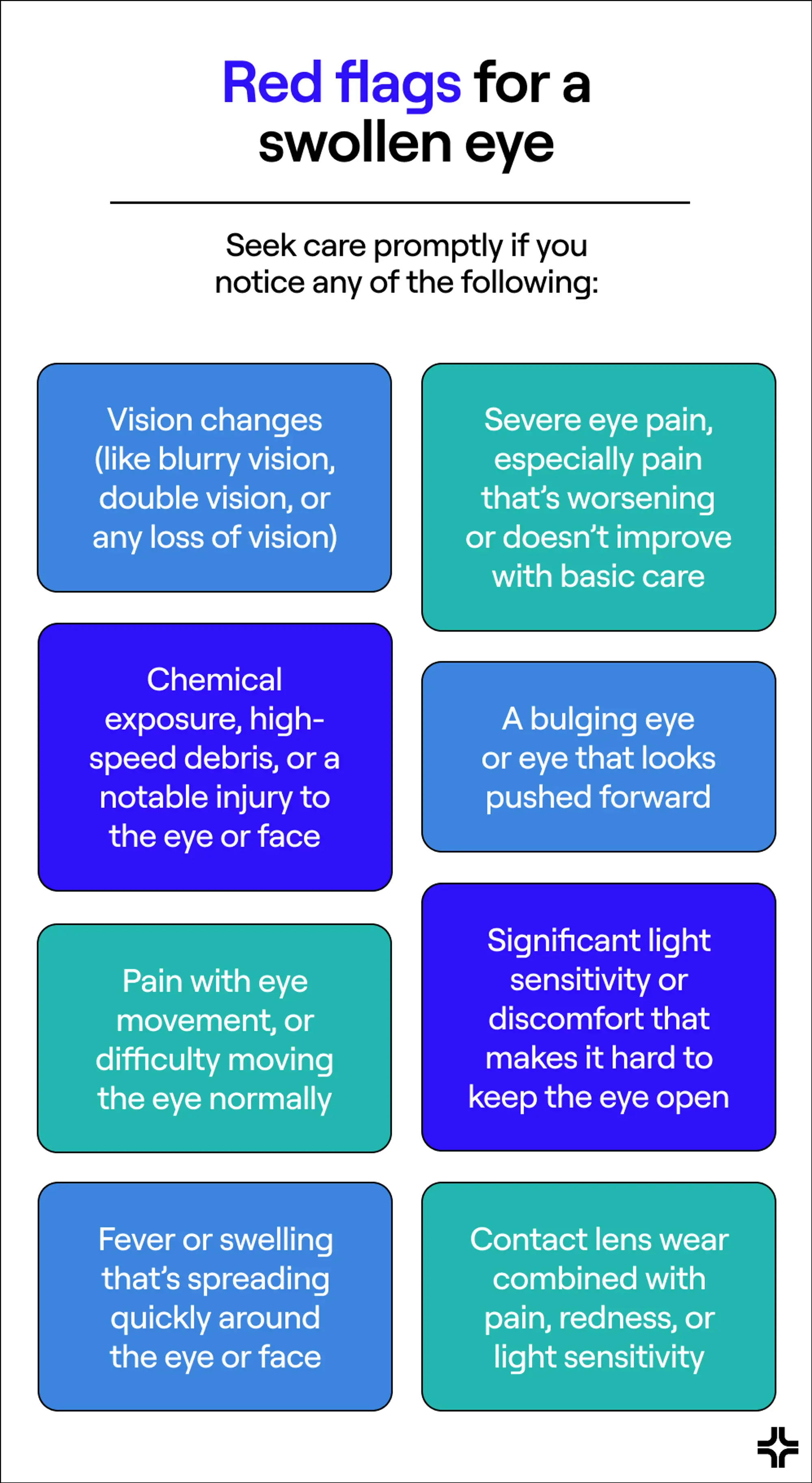
Some symptoms mean it’s time to stop waiting and get medical advice, even if the swelling itself doesn’t look dramatic. Seek care promptly if you notice any of the following:
- Vision changes (like blurry vision, double vision, or any loss of vision)
- Severe eye pain, especially pain that’s worsening or doesn’t improve with basic care
- Pain with eye movement, or difficulty moving the eye normally
- A bulging eye or eye that looks pushed forward
- Fever or swelling that’s spreading quickly around the eye or face
- Significant light sensitivity or discomfort that makes it hard to keep the eye open
- Chemical exposure, high-speed debris, or a notable injury to the eye or face
- Contact lens wear combined with pain, redness, or light sensitivity
Red flags for a swollen eye
Working with a healthcare provider (virtual-first, practical next steps)
If you’ve tried basic home care but still have a swollen eyelid, a healthcare provider can help you move forward with a clear, tailored plan. Based on your symptoms, they may recommend:
- Continuing supportive care with clearer guardrails on timing and expectations
- Prescription eye drops or ointment if infection or inflammation is suspected
- Oral medication if swelling is allergy-driven or spreading beyond the eyelid
- Referral for in-person care if something needs closer evaluation
Virtual care with General Medicine fits especially well here. A licensed clinician will review photos, monitor your symptoms, and adjust treatment without delay. It’s often the fastest way to move from “I’m not sure” to “I know what to do now.”
To make the most of a virtual visit, it helps to:
- Share photos taken in good lighting (both eyes, front and side views)
- Note how long symptoms have lasted and what’s helped (or hasn’t)
- Track whether swelling is improving, staying the same, or getting worse
Prevention: Reduce the chances of recurring eyelid swelling
Once your swollen eye finally settles down, the obvious question is: How do I keep this from happening again? While you can’t prevent every flare, this simple habits can significantly lower your odds of repeat eyelid swelling:
- Allergy prevention: If allergies tend to show up around your eyes, reducing exposure helps more than you might expect. Rinsing your face and eye area after being outdoors, washing hands before touching your eyes, and changing pillowcases regularly can all limit allergen buildup.
- Contact lens hygiene: Clean habits matter here. Stick to the recommended replacement schedule, wash your hands before handling lenses, and avoid sleeping in contacts unless your provider has specifically cleared it. If your eyes feel irritated, give them a break—don’t push through discomfort.
- Makeup hygiene: Replace eye makeup regularly, don’t share products, and remove makeup thoroughly before bed. If you’ve had recent swelling or irritation, it’s often safest to toss eye makeup used during that time.
- Blepharitis prevention: If you’re prone to blepharitis, a simple lid hygiene routine during flare-prone periods can help keep symptoms from cycling back. Consistent, gentle care tends to work better than occasional aggressive cleaning.
- Dermatitis prevention: Less is more around the eyes. Choose fragrance-free products, keep your eye-area routine minimal, and introduce new products one at a time. A patch test can also help you catch reactions before they show up on your eyelids.
Key takeaways
- A swollen eye usually looks scarier than it is. Common issues like allergies, irritation, blocked oil glands, blepharitis, or eyelid dermatitis cause most cases.
- Simple clues—itchy vs. painful, one eye vs. both—can help you narrow the cause and choose the right next step.
- The fastest way to reduce swelling is to match the treatment to the cause, such as cold compresses for puffiness and allergies or warm compresses for styes and blocked glands.
- Avoid common mistakes like squeezing a stye, overusing eye drops, or trying new products during a flare, as these can slow healing.
- Some symptoms, including vision changes, severe pain, fever, or pain with eye movement, mean it’s time to seek medical care.
Frequently asked questions (FAQs)
How do you treat a swollen eye?
It depends on what’s causing it. For puffiness, allergies, or general irritation, a cold compress can help bring swelling down. If you’re dealing with a stye, chalazion, or blepharitis, warm compresses usually work better. Artificial tears can soothe dryness or grittiness, and antihistamines may help if itching is a big part of the picture. While things heal, it’s best to skip eye makeup and contact lenses.
When should I worry about eye swelling?
If swelling comes with vision changes, severe pain, pain when you move your eye, fever, or significant light sensitivity, it’s time to see a doctor. The same goes for chemical exposure, eye injuries, or contact lens–related pain. Even if you’re unsure, getting guidance early can help prevent bigger issues.
Why do I suddenly have a swollen eyelid?
Most of the time, it’s something ordinary like allergies, irritation from a product, rubbing your eyes, or a blocked oil gland. Fluid retention overnight can also cause puffiness that shows up in the morning. Less often, an infection or injury is involved, which is why paying attention to pain, discharge, and vision changes matters.
How long do swollen eyes last?
Many swollen eyes start to improve within a few days once you remove the trigger and use the right care. Allergy or irritation-related swelling often goes down quickly, while styes, chalazia, or blepharitis flares can take longer and benefit from consistent treatment.
What can cause just one eye to swell?
When only one eye is swollen, it’s usually due to a local issue like a stye, chalazion, irritation, infection, contact lens trouble, or something that got into the eye. Swelling in both eyes is more likely tied to allergies or fluid retention.
Our editorial standards
At General Medicine, we cut through the clutter to make health care clearer, faster, and easier to navigate. Every article is grounded in evidence-based research and peer-reviewed journals, reviewed by medical professionals, and written in accessible language that helps you make health decisions with confidence. We’re committed to ensuring the quality and trustworthiness of our content and editorial process by providing information that is up-to-date, accurate, and actually useful. For more details on our editorial process, see here.