Dec. 12, 2025
Bronchitis vs. Pneumonia: Key Differences, Symptoms, and Treatment Options

Laura Brenner, MD

Jump to
Book a visit
$25 typical copay
$100 without insurance
Get expert care for your pain today.
When your chest feels like it’s hosting its own percussion section, bronchitis and pneumonia are two common culprits. But how do you tell them apart? Bronchitis is usually the loud, messy cough that annoys you but doesn’t knock you flat, while pneumonia is the one that bulldozes your energy, spikes your fever, and makes every breath feel like a chore. Here, you’ll learn the difference, what each one really feels like, how they’re treated, and when your lungs are telling you it’s time to loop in a doctor instead of just another cup of tea.
If you’re staring down a cough that won’t quit, a fever that’s hovering just a little too high, or breathing that feels “off,” it’s totally normal to wonder whether you’re dealing with bronchitis vs pneumonia. I’ve been there myself, Googling symptoms at 2 a.m. and trying to figure out if it’s just a virus or something that needs real treatment.
Both conditions hit the lungs. Both often follow a cold or flu. Both can leave you exhausted and clutching your water bottle like a security blanket. But they’re not the same, and knowing the difference helps you choose the right next step.
Here’s a quick breakdown: “Bronchitis means the tubes that carry air into your lungs (called the bronchi) are swollen or irritated, usually after a cold or the flu,” says Pallabi Sanyal-Dey, MD, a physician at General Medicine. “Pneumonia is more serious. It means the tiny air sacs inside your lungs are infected, often with bacteria.”
So if you’re trying to make sense of your symptoms (or someone else’s), you’re in the right place. This guide breaks it all down: what each illness feels like, how symptoms differ, what causes them, how to treat them, and when to get help.
Bronchitis vs pneumonia: the quick differences
Bronchitis vs. pneumonia
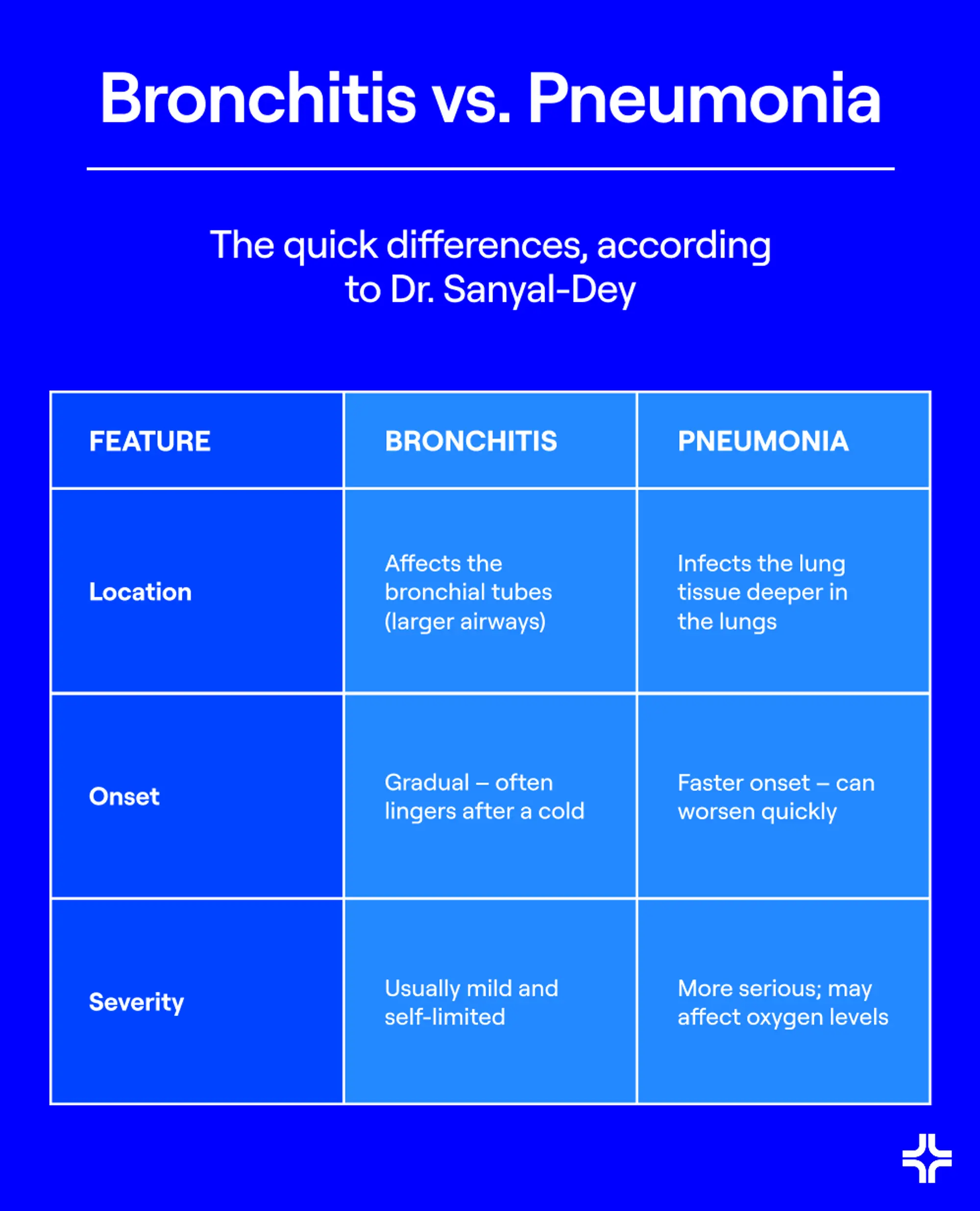
Before we dive deeper, here’s a quick cheat sheet for telling the difference between bronchitis and pneumonia. According to Sanyal-Dey, there are three telltale differences:
- Location: Bronchitis affects the bronchial tubes, which are the larger airways that move air in and out of your lungs. They get inflamed, irritated, and noisy, which is why coughing is the star of the show. Pneumonia happens deeper in the lungs. It infects the lung tissue itself, specifically the tiny air sacs (alveoli), which can make breathing feel heavier or harder and often creates a noticeable ache or pressure in the chest.
- Onset/course: Bronchitis is the classic “I had a cold that just will not quit” situation. Symptoms tend to build gradually after a viral illness. Pneumonia can hit faster and harder, sometimes seemingly overnight. You may notice fever, chills, and whole-body symptoms that feel more intense than a typical respiratory bug.
- Severity: Bronchitis is annoying, uncomfortable, and exhausting, but usually mild and self-limited. Pneumonia is more serious and can lower oxygen levels, especially in older adults, pregnant people, or anyone with chronic heart or lung disease. It’s the one that deserves more attention and often medical treatment.
What does bronchitis feel like?
Bronchitis is the ultimate cough that overstays its welcome. Symptoms usually peak around day three to five, often creeping in after a cold or flu. They also tend to sound worse than they are—in fact, the cough can linger for two to three weeks, even after you’re mostly feeling better.
Here’s what it typically feels like:
- A persistent, chronic cough that starts dry and often becomes more mucousy over a few days
- Chest tightness or irritation, like your airways are tired of being used
- Wheezing or a whistling sound when you breathe (especially if you have asthma or reactive airways)
- Fatigue
- Body aches
- A low-grade fever (or no fever at all)
- A sore throat from all the coughing
How do you know if you have pneumonia?
Pneumonia tends to feel like a respiratory illness that suddenly leveled up. Symptoms are stronger, hit harder, and affect your whole body, not just your airways. Many people describe it as feeling “wiped out” or “hit by a truck,” and breathing often takes more effort than usual.
Put simply, if your symptoms feel more intense than an average cold or chest bug, or if breathing feels harder than what you’d expect from congestion alone, pneumonia is worth considering.
According to Sanyal-Dey, here are the common signs:
- A fever that’s higher and lasts longer than a typical cold or bronchitis
- Chills or sweating that come in waves
- Chest pain that gets sharper when you breathe in (called pleuritic pain)
- Shortness of breath, especially with simple activities or even at rest
- Fast breathing or a noticeably faster heart rate
- A cough with thick, yellow/green, or rust-colored mucus
- Deep fatigue or weakness that sidelines your normal routine
- Nausea, vomiting, or loss of appetite
- New confusion or dizziness, especially in older adults
- Home pulse oximeter readings that drop below 92–94%
Can bronchitis turn into pneumonia?
Short answer: Usually not, but it can happen in certain situations.
Bronchitis and pneumonia often show up in the same season, after the same viruses, and with the same “why do I sound like this?” cough, which is why people assume one turns into the other. In reality, though, bronchitis almost always stays put in the airways and gradually improves with rest and time. It does not automatically grow into full-blown pneumonia.
But can pneumonia develop after bronchitis? Yes—especially if your immune system is tired, a bacterial infection jumps in, or you fall into a higher-risk group. You’re more likely to make that unlucky jump if you:
- Are 65 or older
- Are pregnant
- Have asthma, COPD, heart disease, or diabetes
- Smoke or vape
- Are immunocompromised
- Recently had the flu or another viral illness
One classic red flag that your bronchitis warrants reassessment: You start to feel a little better … and then suddenly feel worse, says Sanyal-Dey. Think: fever returning with attitude, breathing that feels heavier, new chest pain, or a cough that goes from nuisance to not normal.
Causes and risk factors
Bronchitis vs. pneumonia symptoms can look similar on the surface, but they tend to come from different troublemakers—and knowing the “why” behind each one can help you understand what’s going on in your lungs.
Bronchitis
Most cases of acute bronchitis (which is what we’re focusing on in this article, since chronic bronchitis is a whole different animal) are caused by the same viruses that spark colds, the flu, or RSV. In other words, it’s usually your airways reacting to a viral party they never asked to host.
Irritants and underlying conditions can also make your bronchial tubes chronically inflamed and cranky. Common triggers include:
- Cigarette smoke or secondhand smoke
- Air pollution or chemical fumes
- Dust, allergens, or ongoing airway irritation
- Family history of COPD
- Preexisting conditions like asthma, cystic fibrosis, bronchiecstatis, and gastroesophageal reflux disease
Pneumonia
Pneumonia is a step deeper and more serious—it means an actual infection in the lung tissue, says Sanyal-Dey. That infection can come from:
- Bacteria (like Streptococcus pneumoniae, the most common culprit)
- Viruses (flu, COVID-19, RSV)
- Fungal infections
- “Atypical” organisms (such as Mycoplasma pneumoniae)
So-called “atypical” pneumonia doesn’t mean rare—it means the symptoms can look different from classic bacterial pneumonia. With walking pneumonia, for example, people may have a lingering cough, fatigue, and mild fever but still feel well enough to go about daily activities. Even though it’s usually milder, it’s still pneumonia and benefits from medical evaluation and the right treatment.
Certain factors can make pneumonia more likely or more severe:
- Age 65+
- Pregnancy
- Smoking or vaping
- Chronic lung conditions like asthma or COPD
- Heart disease
- Diabetes
- Immune suppression
- Difficulty swallowing or higher aspiration risk
- Not being up to date on flu, COVID-19, or pneumococcal vaccines
Diagnosis: What to expect in evaluation
If you’re not sure whether you’re dealing with bronchitis or pneumonia, an evaluation can help sort things out quickly. A clinician will usually start by asking about your symptoms, when they began, and how they’ve changed. They’ll also check a few key vitals, including:
- Temperature
- Breathing rate
- Heart rate
- Oxygen level
Listening to your lungs is also a big part of the puzzle. Wheezing, for example, tends to point toward bronchitis or reactive airways. Crackles—those tiny popping sounds—can suggest pneumonia deeper in the lungs.
Sometimes that’s enough to make the call. Other times, you may need a chest x-ray to confirm pneumonia, especially if:
- Symptoms are moderate to severe
- Your oxygen level is low or dropping
- Lung sounds suggest a deeper infection
- You’re older or have chronic conditions
- Symptoms aren’t improving
- You got better, then suddenly worse
Depending on what your symptoms look like—and what viruses are making the rounds—your clinician may also swab for flu, COVID-19, or RSV. These quick tests help clarify what’s behind your cough. If you’re at higher risk or feeling especially unwell, they may also run simple blood work to check inflammation and make sure nothing more serious is brewing.
Treatment options — bronchitis
“Bronchitis usually gets better on its own in a week or two,” says Sanyal-Dey. “Antibiotics don’t usually help unless it turns bacterial, which is rare.”
Instead, the goal is to keep you comfortable, support your breathing, and prevent symptoms from getting worse while your body clears the infection. Here’s what typically helps:
- Stay well-hydrated to thin mucus and soothe your throat
- Rest (your lungs are already doing enough work)
- Use a humidifier (these need to be cleaned correctly and often in order to be helpful and healthy) or take steamy showers to ease coughing
- Take short-term cough suppressants
- Try honey or lozenges for throat irritation
- Use OTC pain/fever reducers like acetaminophen or ibuprofen if needed
- Try expectorants can make mucus easier to clear
- If you’re wheezing or have reactive airways, a clinician may recommend an inhaler to open up your airways
- Quit smoking
Because bronchitis is usually viral, antibiotics won’t speed recovery—plus, using them unnecessarily can lead to side effects or antibiotic resistance. They’re only considered if a clinician suspects:
- A bacterial superinfection
- A COPD exacerbation
- Symptoms that worsen
Treatment options — pneumonia
Pneumonia is a whole different ballgame from bronchitis. Because the infection is inside the lung tissue itself, it usually needs more than tea, tissues, and patience.
Ultimately, treatment depends on the type of pneumonia you have, how hard it’s hitting you, and whether you fall into a higher-risk group, says Sanyal-Dey.
That said, most cases of community-acquired bacterial pneumonia respond well to antibiotics, she adds. Your clinician will pick the right one based on your symptoms and health history—just make sure to finish the full course of meds so the infection doesn’t bounce back. They may also want to follow up after a day or two to make sure your symptoms are trending in the right direction.
Even with medication, though, your lungs are still working overtime. Supportive care is what helps you actually feel better day to day, including:
- Staying hydrated
- Using acetaminophen or ibuprofen to tame fever or chest discomfort
- Clearing your airways (think gentle coughing, not the dramatic, chest-splitting kind)
- Resting (like, a LOT of resting)
- Using a humidifier or taking warm, steamy showers
If symptoms start moving in the wrong direction—like breathing getting harder, fever staying high, oxygen levels dropping, or you suddenly feeling much weaker—that’s your cue to stop “waiting it out” and get seen quickly. These can be signs the infection needs oxygen, IV fluids, or more intensive treatment, according to Sanyal-Dey.
At-home treatment and natural remedies
Medication can help, but the right at-home habits can make breathing easier and recovery smoother. These simple steps support your lungs while you heal.
Bronchitis and pneumonia prevention
- Positioning and breathing: Sitting upright or propping yourself up at night can ease coughing. Slow, deep breathing helps open the lungs, and pursed-lip breathing (inhale through your nose, exhale through pursed lips) can calm shortness of breath.
- Gentle movement: Light activity is fine if you feel OK doing it—just pace yourself. Take breaks before you feel wiped, and stop if you get dizzy, breathless, or unusually tired.
- Avoiding irritants: Your airways are already sensitive, so steer clear of smoke, vaping, strong scents, and harsh cleaning chemicals. A humidifier can help if your home air is dry.
- Tracking symptoms: Keep an eye on fever patterns, cough severity, breathing effort, overall energy, and oxygen levels if you have a home pulse oximeter. Oxygen levels dropping below 92–94% are are a red flag and you should seek care. If you're taking antibiotics for pneumonia, you should feel slightly better—or at least not worse—within 24 to 48 hours.
Prevention (simple wins)
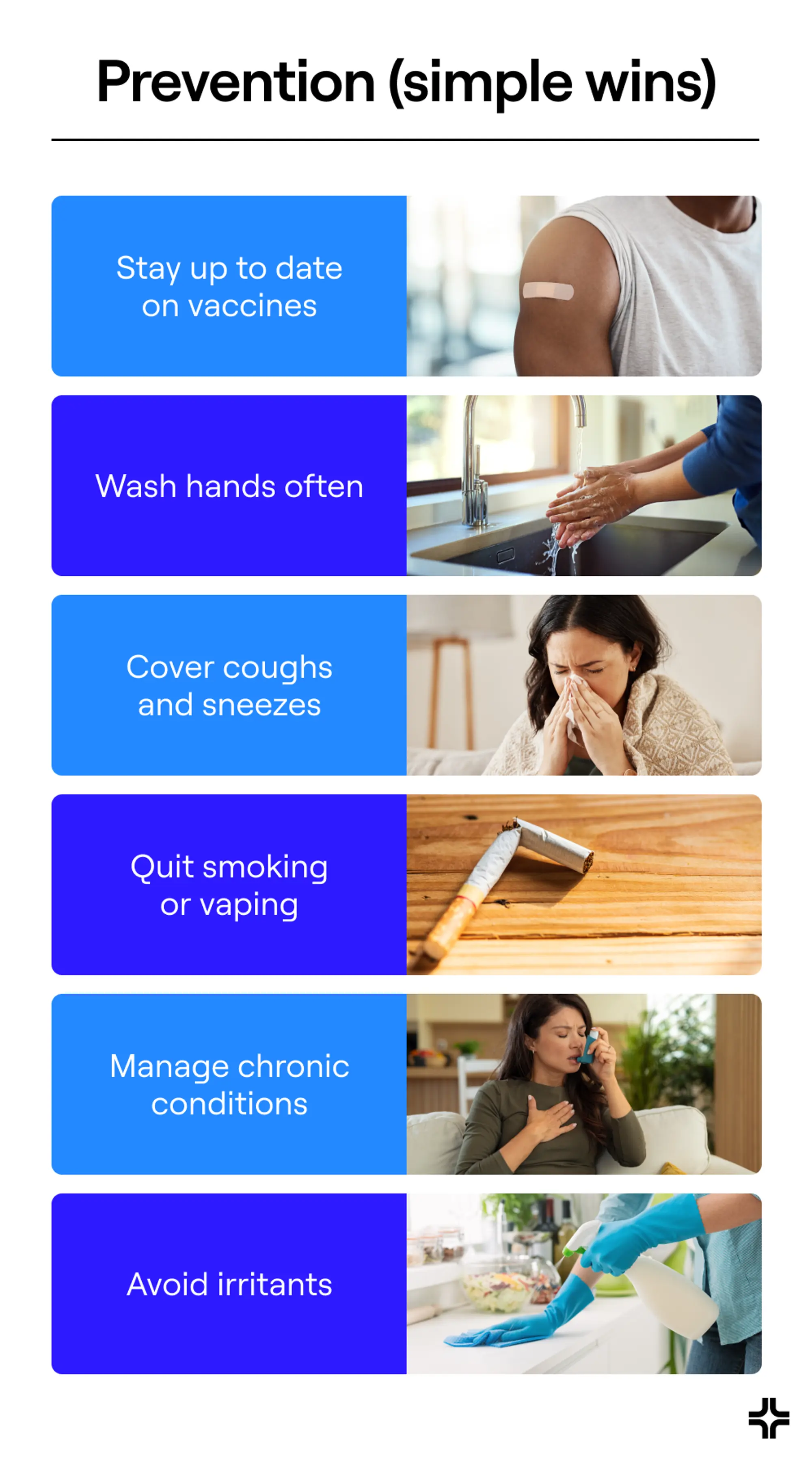
Unfortunately, you can’t avoid every cold or cough. But a few small habits can seriously lower your chances of landing bronchitis or pneumonia in the first place. Try these as low-effort, high-impact moves to give your lungs a fighting chance:
- Vaccines: Staying up to date on your pneumococcal, flu, and COVID-19 vaccines reduces the viral infections that often snowball into bronchitis or pneumonia. Adults 65+, people with chronic conditions, and others at higher risk may also benefit from pneumococcal vaccination.
- Hand hygiene: It’s not glamorous, but it works. Wash your hands often, especially during cold and flu season or if you’ve been around large groups of people.
- Cough etiquette: Cover coughs and sneezes, and try to avoid close contact with someone who’s actively coughing (your lungs will thank you).
- Quit smoking or vaping: These irritate and weaken the airways, making infections more likely and recovery slower. Quitting is one of the best lung-health steps you can take. Note that after quitting, your cough may temporarily worsen before it gets better as the cilia “wake up.”
- Manage chronic conditions: Keeping asthma, COPD, or heart conditions well-controlled lowers your chances of developing severe respiratory infections.
- Avoid irritants: Air pollution, harsh cleaning chemicals, and heavy fragrances can inflame your airways and make them more vulnerable to infection. Ventilate or avoid when possible.
- Wearing masks in high traffic areas or when with sick people
Working with a healthcare provider
If you’re dealing with a stubborn cough, fever, or breathing changes, partnering with a clinician can help you get answers faster (and avoid the dreaded “am I overreacting or underreacting?” guessing game).
A little prep on your end helps your visit go smoothly and makes it easier for your provider to spot whether you’re dealing with bronchitis, pneumonia, or something else altogether. It’s especially useful to track and share:
- When your symptoms started and how they’ve changed
- Fever patterns
- Breathing changes
- Mucus changes (color, amount, sudden shifts)
- Recent exposures or illnesses in your household
- Any chronic conditions
- Home pulse-ox readings, if you have them
From there, your clinician will piece together the cause of your symptoms.
Before you wrap up the visit, make sure you understand the follow-up plan—what improvement should look like, when to check in again, and which changes should prompt a sooner evaluation.
For example, pneumonia often warrants a 24- to 48-hour update; bronchitis may just need a timeline for when the cough should start easing. The goal is to give you a clear roadmap so you’re not guessing your way through recovery.
When to seek care (red flags)
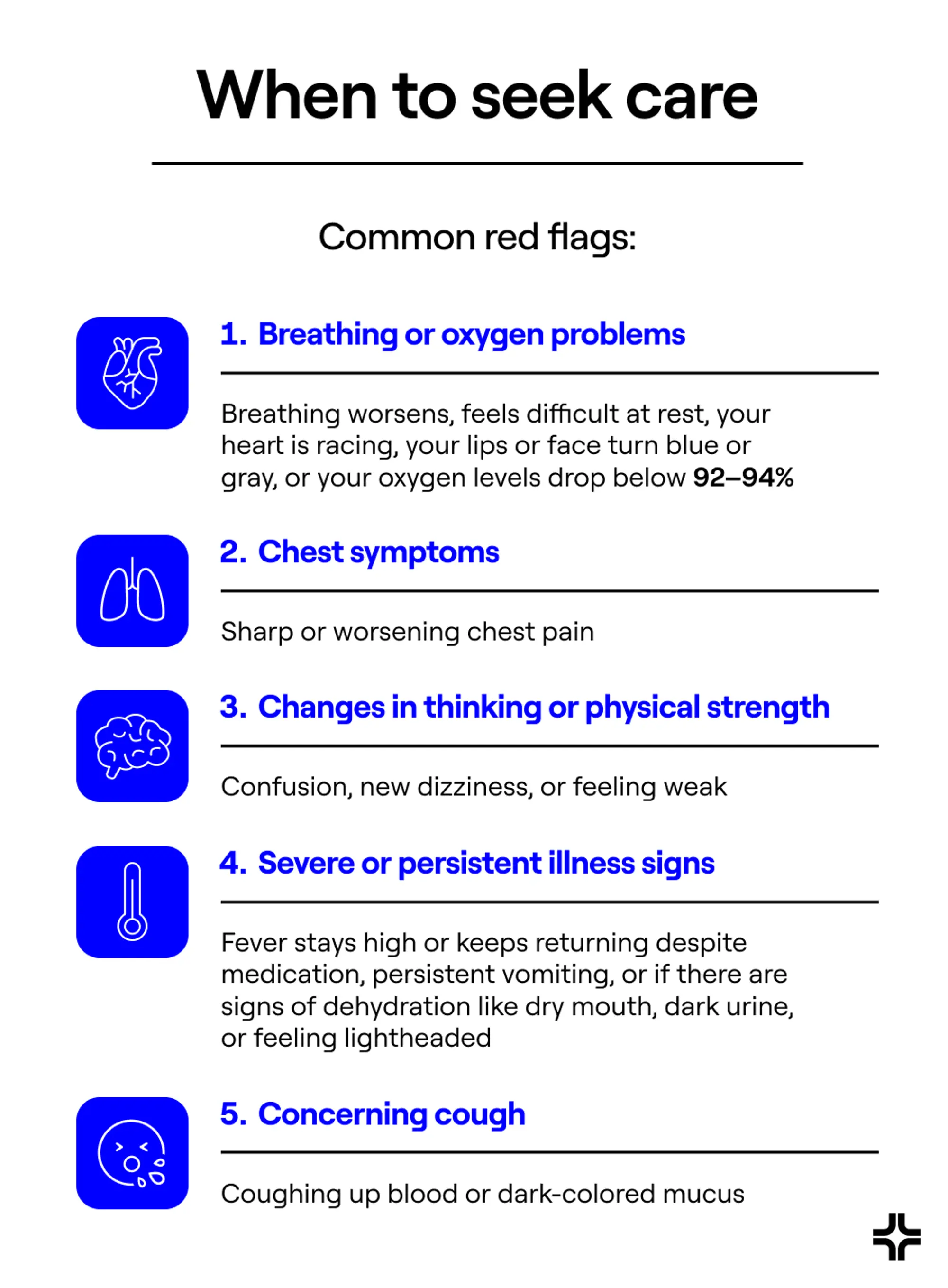
Most coughs and chest colds get better with time, but according to Sanyal-Dey, certain symptoms deserve faster attention. These are the red flags that mean it’s time to stop watching and waiting and get evaluated:
- Shortness of breath that’s getting worse, or trouble breathing at rest
- Lips or face turning blue or gray
- Oxygen levels dropping below 92–94% on a home pulse oximeter
- Sharp or worsening chest pain, especially when you breathe
- Confusion, new dizziness, or feeling unusually weak
- Fever that stays high or keeps returning despite medication
- Coughing up blood or dark-colored mucus
- Fast breathing or heart rate
- Persistent vomiting
- Signs of dehydration (like dry mouth, dark urine, feeling lightheaded)
When to seek care
“Also, if your cough lasts more than a week or you start to feel worse after feeling better, it’s time to get checked out,” adds Sanyal-Dey. “Older adults, people with asthma, COPD, heart disease, or a weak immune system should seek help sooner—pneumonia can become serious quickly in these groups.”
If something feels off, trust that instinct. A quick virtual check-in with a General Medicine physician can prevent complications and help you feel better faster.
Key takeaways
- Bronchitis usually stays in the airways and feels like a stubborn, noisy cough; pneumonia goes deeper into the lungs and hits harder with fever, fatigue, and trouble breathing.
- Bronchitis is almost always viral and gets better with rest. Pneumonia—especially bacterial—typically needs medical treatment, often antibiotics.
- Bronchitis rarely “turns into” pneumonia, but it can happen if symptoms backslide or you’re in a higher-risk group.
- Home care matters: Hydration, rest, humidified air, gentle movement, avoiding irritants, and tracking symptoms can make recovery smoother.
- If breathing worsens, fever stays high, oxygen drops below 92–94%, or you feel significantly weaker, it’s time to see a doctor.
Frequently asked questions (FAQs)
How do you tell if it's bronchitis or pneumonia?
Bronchitis usually gives you a loud, lingering cough with chest tightness and maybe a mild fever. You’ll feel tired, but you can generally still function. Pneumonia hits harder—you may experience higher fevers, deeper fatigue, breathing that feels like real work, and often chest pain when you take a deep breath. Put simply, if symptoms feel more intense than a typical chest cold, or your breathing feels “off,” pneumonia is worth considering.
What are 5 symptoms of bronchitis?
Common bronchitis symptoms include a persistent cough (dry or later mucousy), chest tightness or irritation, wheezing, fatigue, and a low-grade fever. A sore throat and mild body aches can show up too.
How long does bronchitis last in dogs?
While this guide focuses on humans, chronic bronchitis in dogs usually lasts at least two months and often involves a persistent cough similar to “kennel cough.” If your dog is coughing, gagging, or breathing noisily, a vet visit is always the right move—dogs can hide respiratory issues until they’re more advanced.
Is bronchitis the first stage of pneumonia?
Not usually. Bronchitis and pneumonia can follow similar viral illnesses, but bronchitis does not automatically turn into pneumonia. Most cases stay in the airways and improve on their own. Pneumonia is only a concern if symptoms worsen instead of improve (like fever returning, breathing getting harder, or new chest pain).
Can bronchitis turn into pneumonia easily?
For most healthy adults, no. But it can happen if your immune system is run down or if you’re in a higher-risk group (including older adults, people with asthma/COPD or heart disease, pregnant people, smokers, or anyone immunocompromised). One key sign that your bronchitis may be evolving into something more serious is if you feel better for a bit, then suddenly feel worse.
Our editorial standards
At General Medicine, we cut through the clutter to make health care clearer, faster, and easier to navigate. Every article is grounded in evidence-based research and peer-reviewed journals, reviewed by medical professionals, and written in accessible language that helps you make health decisions with confidence. We’re committed to ensuring the quality and trustworthiness of our content and editorial process by providing information that is up-to-date, accurate, and actually useful. For more details on our editorial process, see here.