

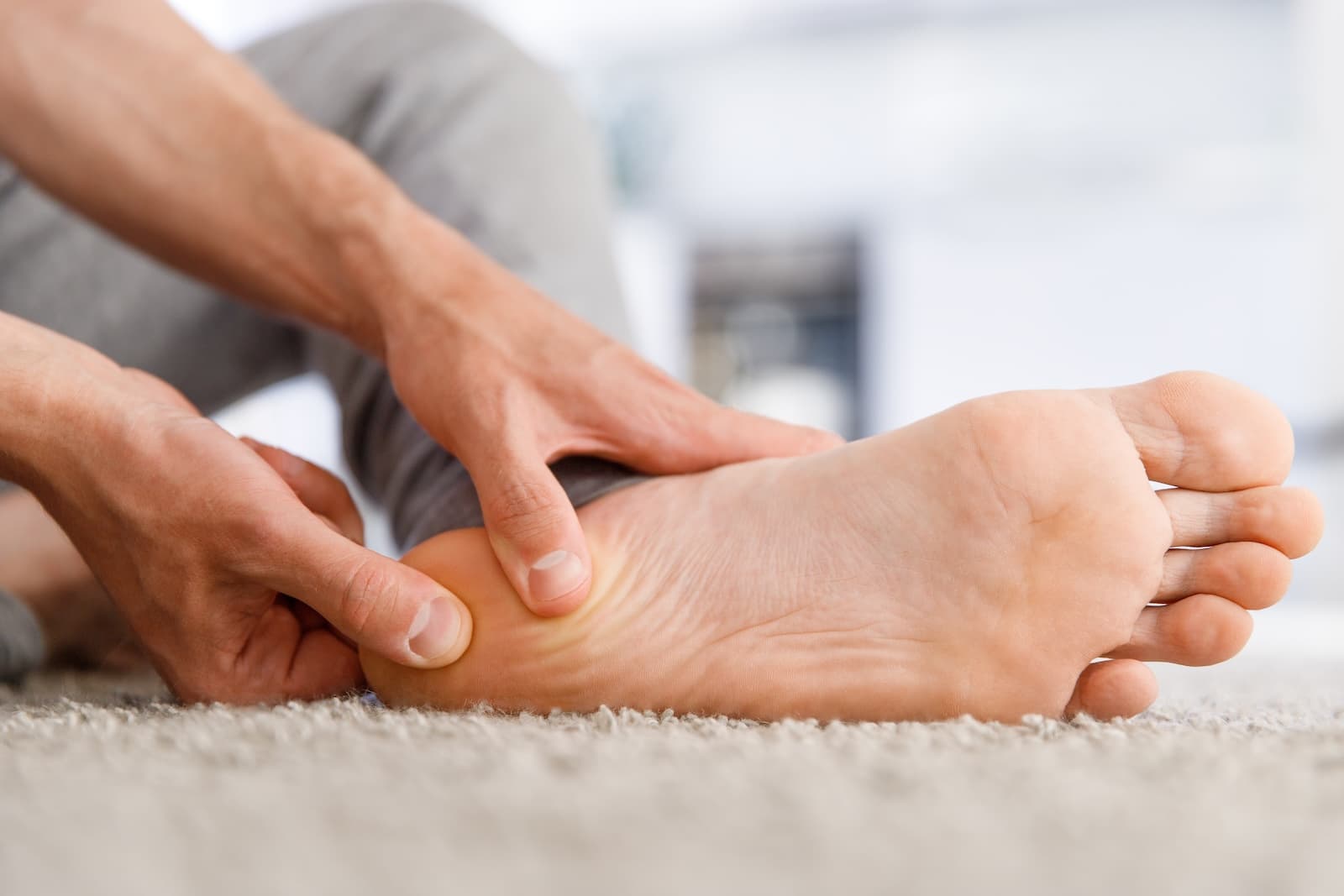
Plantar fasciitis
Sharp heel pain, especially with your first steps in the morning, is the classic sign of this common condition — inflammation of the tissue that supports your foot's arch. This visit gets you a clinician's assessment and a plan to get back on your feet comfortably.
1:1 virtual visit with a clinician experienced in musculoskeletal health
Insurance accepted, with clear pricing per visit
A care plan built from your full health history
Visit options
We'll check any insurance and show you your options before you book.
Video Visit
$25
Est. or $100 w/o insurance
Chat Visit
$30
w/o insurance
Most insurance accepted
Board-certified clinicians
No hidden fees
Available nationwide
What to expect from a plantar fasciitis visit
1
Share your health story
Tell us where the pain is and when it's worst.
2
Meet your clinician
Confirm the diagnosis and discuss treatment options.
3
Get your care plan
Leave with a treatment plan, which may include stretches, inserts, or medication.
4
Own your health
Follow up if pain continues or worsens.

All your care in one place. That’s the General Medicine difference.
We help you understand your options, connect you to the right clinicians, manage prescriptions, coordinate any needed evaluations, and keep an eye on your overall health along the way. It’s comprehensive care that looks at the full picture — your goals, your history, your lifestyle — and makes it simple to move forward with confidence.


Is a plantar fasciitis visit right for you?
Plantar fasciitis usually improves well with a consistent treatment plan, especially when started early.
You have heel pain that's worst with your first steps in the morning
Pain improves with activity but returns after resting
You've been on your feet more than usual recently
Home stretches haven't given you lasting relief
You want to understand if you need orthotics or other support
What our customers have to say
“I feel like I’m finally on the right path to improving my health with the right support now! It’s so refreshing and reassuring.”
Emerald
“My experience with General Medicine was amazing. The understanding and care that was taken to figure out what is exactly going on with me. I feel like a weight has been lifted off of me.”
Kaylee
“I couldn’t be happier with my experience with General Medicine! They are fast, responsive, kind and knowledgeable. It is much easier, more affordable and faster.”
Nika
Get a real plan for your heel pain
More musculoskeletal care
Frequently asked questions
What causes plantar fasciitis?
Inflammation of the plantar fascia, the tissue supporting your foot's arch, often from overuse, tight calf muscles, or foot mechanics. Being on your feet for long periods or wearing unsupportive shoes can also contribute significantly. Sudden increases in activity level, like starting a new running routine, can also trigger it.
How long does plantar fasciitis take to heal?
Most cases improve significantly within a few months of consistent stretching and treatment, though more stubborn cases can take 6 months to a year to fully resolve. Consistent stretching, even after pain improves, helps prevent it from coming back. Your clinician will set realistic expectations based on how long you've had symptoms already.
How is plantar fasciitis different from a stress fracture?
Plantar fasciitis pain is typically worst with first steps and improves with activity, while a stress fracture tends to worsen with continued activity — your clinician can help distinguish the two. A stress fracture may also cause pain that's localized to one specific spot rather than the whole heel.
Will I need orthotics or physical therapy?
Your clinician can recommend targeted stretches, over-the-counter or custom shoe inserts, or a physical therapy referral based on your specific symptoms and severity. Your clinician will start with the least invasive option before considering anything more involved. Most people improve significantly before ever needing more invasive treatment options.
What side effects are associated with plantar fasciitis treatments?
Stretching and orthotics carry essentially no risk; a steroid injection, if used for stubborn cases, can weaken the fascia with repeated use, which is why it's not a first-line or frequent option. This is why injections are generally reserved for cases that haven't responded to other treatment.