


Knee pain
Aching, swelling, or stiffness in the knee can come from an injury, overuse, or arthritis — and the right treatment depends on which one. This visit gets you a clinician's assessment and a plan to get moving comfortably again.
1:1 virtual visit with a clinician experienced in musculoskeletal health
Insurance accepted, with clear pricing per visit
A care plan built from your full health history
Visit options
We'll check any insurance and show you your options before you book.
Video Visit
$25
Est. or $100 w/o insurance
Most insurance accepted
Board-certified clinicians
No hidden fees
Available nationwide
What to expect from a knee pain visit
1
Share your health story
Tell us how the pain started and what makes it better or worse.
2
Meet your clinician
Discuss possible causes and whether imaging is needed.
3
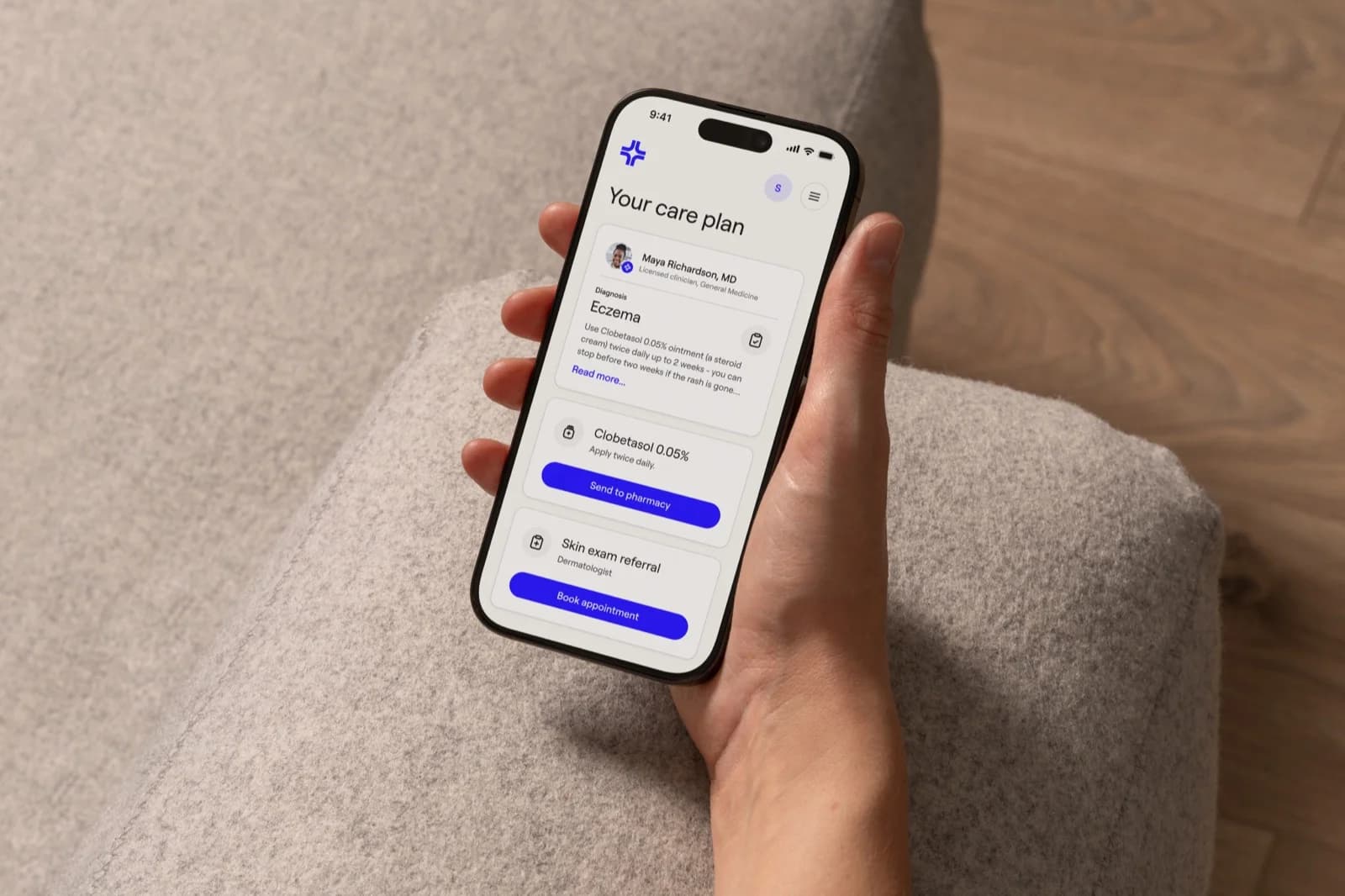
Get your care plan
Leave with a treatment plan or referral if needed.
4
Own your health
Follow up if pain continues or worsens.

All your care in one place. That’s the General Medicine difference.
We help you understand your options, connect you to the right clinicians, manage prescriptions, coordinate any needed evaluations, and keep an eye on your overall health along the way. It’s comprehensive care that looks at the full picture — your goals, your history, your lifestyle — and makes it simple to move forward with confidence.

Is a knee pain visit right for you?
Knee pain is common, and a clinician can help you figure out what's driving it and what to do next.
You have knee pain that's lasted more than a few days
Your knee is swollen, warm, or unstable
Pain is affecting your ability to walk or exercise normally
You want to get back to a specific activity or sport safely
You're not sure if you need imaging or physical therapy
What our customers have to say
“I feel like I’m finally on the right path to improving my health with the right support now! It’s so refreshing and reassuring.”
Emerald
“My experience with General Medicine was amazing. The understanding and care that was taken to figure out what is exactly going on with me. I feel like a weight has been lifted off of me.”
Kaylee
“I couldn’t be happier with my experience with General Medicine! They are fast, responsive, kind and knowledgeable. It is much easier, more affordable and faster.”
Nika
Get a real plan for your knee
More musculoskeletal care
Frequently asked questions
What are common causes of knee pain?
Injuries (sprains, ligament strain), overuse, and arthritis are among the most common causes — your clinician reviews your symptoms to help narrow this down. and your clinician reviews how the pain started to help pinpoint which one applies to you.
When does knee pain need urgent or in-person care?
An inability to bear weight, visible deformity, or a knee that repeatedly gives way needs prompt in-person evaluation rather than continued video follow-up. Sudden swelling right after an injury is also worth a same-day check rather than waiting. Your clinician can help you decide over video whether this level of concern applies.
Will I need an X-ray or MRI?
An X-ray typically checks for fracture or arthritis, while an MRI is better for soft-tissue detail like a ligament or meniscus tear — your clinician will determine which, if either, fits your specific injury. Most knee injuries don't need imaging right away unless symptoms are severe or don't improve.
What can help knee pain at home?
Rest, ice, and activity modification are usually the first line while you're being seen, along with over-the-counter anti-inflammatory medication if needed. Elevating the knee and avoiding twisting movements can also help while it heals. Compression sleeves can also provide some support while you're recovering.
What side effects are associated with knee pain treatments?
Oral anti-inflammatories can affect the stomach or kidneys with prolonged use; a corticosteroid injection into the knee joint itself carries a small infection or cartilage risk, which is why it's typically limited to a few times a year. Physical therapy carries essentially no risk beyond temporary soreness after a session.