

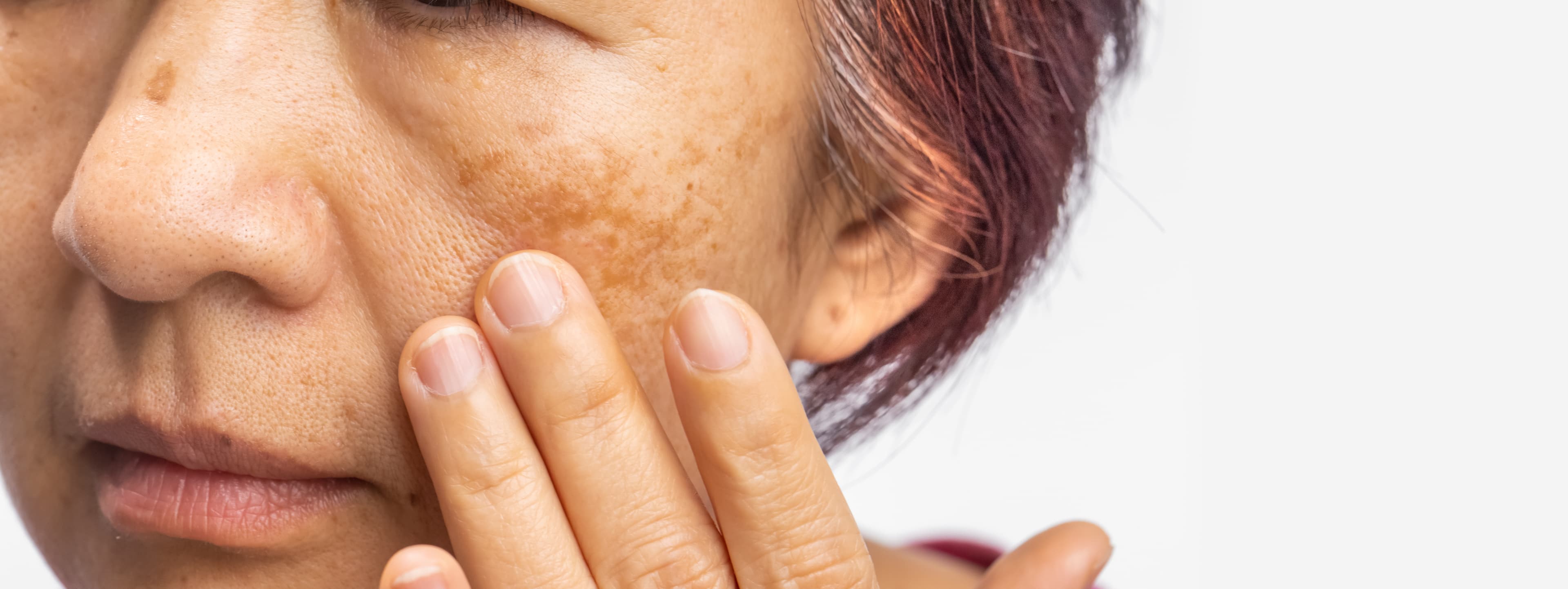
Melasma (hyperpigmentation)
Melasma causes brown or gray-brown patches, usually on the face, often triggered by sun exposure, hormones, or pregnancy. It's a common, manageable condition — this visit confirms the diagnosis and gets you a treatment plan.
1:1 virtual visit with a clinician experienced treating melasma
Insurance accepted, with clear pricing per visit
A care plan built from your full health history
Visit options
We'll check any insurance and show you your options before you book.
Video Visit
$25
Est. or $100 w/o insurance
Chat Visit
$30
w/o insurance
Most insurance accepted
Board-certified clinicians
No hidden fees
Available nationwide
What to expect from a melasma visit
1
Share your health story
Tell us when it started and any triggers you've noticed.
2
Meet your clinician
Confirm the diagnosis based on your description and photos.
3
Get your care plan
Leave with a treatment plan, which may include prescription creams.
4
Own your health
Follow up to track how your skin responds.

All your care in one place. That’s the General Medicine difference.
We help you understand your options, connect you to the right clinicians, manage prescriptions, coordinate any needed evaluations, and keep an eye on your overall health along the way. It’s comprehensive care that looks at the full picture — your goals, your history, your lifestyle — and makes it simple to move forward with confidence.


Is a melasma visit right for you?
Melasma often improves with the right combination of treatment and sun protection.
You've noticed new brown or gray-brown patches on your face
Your patches seem to worsen with sun exposure
Your patches started or worsened during pregnancy or after starting a hormonal medication
The patches have been there for months without fading
You want a prescription-strength option
What our customers have to say
“I feel like I’m finally on the right path to improving my health with the right support now! It’s so refreshing and reassuring.”
Emerald
“My experience with General Medicine was amazing. The understanding and care that was taken to figure out what is exactly going on with me. I feel like a weight has been lifted off of me.”
Kaylee
“I couldn’t be happier with my experience with General Medicine! They are fast, responsive, kind and knowledgeable. It is much easier, more affordable and faster.”
Nika
Get a real plan for your melasma
More dermatology care
Frequently asked questions
What causes melasma?
Sun exposure, hormonal changes (including pregnancy, birth control, or hormone therapy), and genetics can all contribute to melasma, which is why it's often called the "mask of pregnancy." Any of these can trigger it, but hormonal shifts are typically the strongest driver of new onset.
Will melasma go away on its own?
It can fade over time, especially if it was pregnancy-related, but it often benefits from treatment and consistent sun protection. Sun exposure without protection can also make it worse or cause it to return after fading.
How is melasma different from other causes of dark spots?
Melasma typically appears as symmetric patches on the face, often on the cheeks, forehead, or upper lip — your clinician can confirm based on your specific pattern. Sun damage spots tend to be more scattered and less symmetric by comparison.
What treatment options are available?
Options include prescription lightening creams, sun protection, and in some cases in-office procedures — your clinician can discuss what fits your case. Results typically take several months of consistent use before becoming clearly noticeable.
What side effects are associated with melasma treatments?
Skin irritation, dryness, and increased sun sensitivity are common with topical lightening treatments, making daily sunscreen essential to prevent the melasma from worsening. Your clinician will start with the gentlest effective option before considering anything stronger.