Dec. 17, 2025
7 Signs You're Losing Too Much Blood During Your Period

Poushali Bhattacharjee, MD
Jump to
Book a visit
$25 typical copay
$100 without insurance
Concerned about heavy flow? Meet with a General Medicine clinician to discuss your symptoms today.
Noticing large clots, nonstop soaking, or feeling wiped out? These signs you're losing too much blood during your period could point to something more than a “heavy month” and knowing what’s normal (and what’s not) can help you get answers fast.
If you’ve ever sat on the toilet asking ChatGPT to generate a list of “signs you're losing too much blood during your period,” welcome to the club. Heavy menstrual bleeding (aka menorrhagia) is super common (1 in 5 people with periods have it).
As someone deep in perimenopause myself, I’m no stranger to chaotic cycles that leave me wondering, Is this normal… or am I auditioning for a remake of Carrie?
Heavy periods can be totally harmless if they happen once in a blue or they can be a sign of something more serious, especially if you’re soaking through pads or tampons in record time, passing clots the size of a quarter (or larger), or feeling wiped out in a way that sleep just doesn’t fix. The good news? You can look at a few clues to start to figure out what’s going on.
This guide breaks down what heavy periods actually look like, the red flags you shouldn’t ignore, simple things you can do at home right now, and when it’s time to click over to a virtual provider for backup.
Because when your period goes off the rails, you deserve clarity, not confusion.
What counts as “too heavy”? (heavy periods 101)
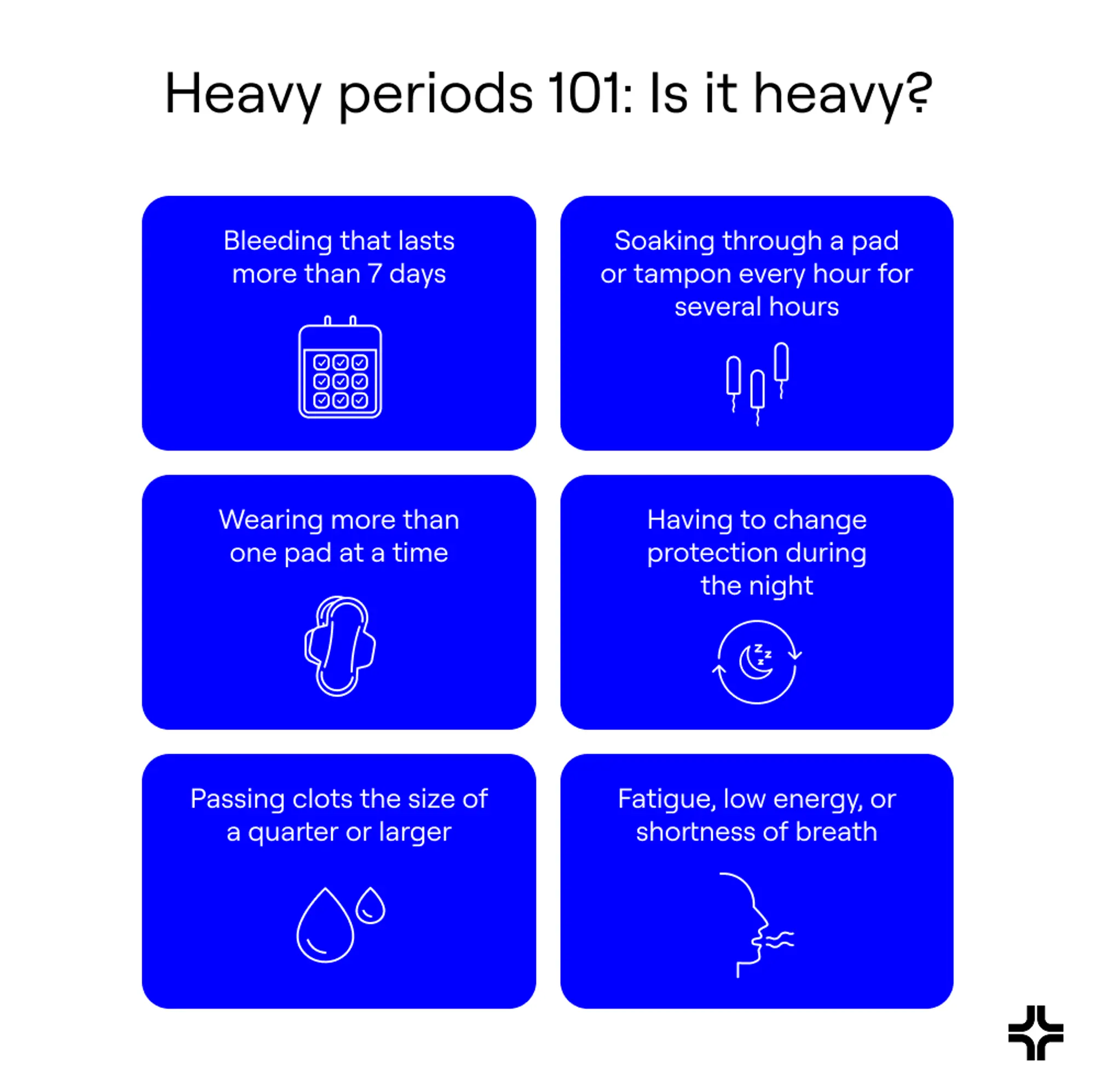
Heavy periods 101
Let’s start with the big question: how heavy is too heavy? Everyone’s “normal” looks different, but certain symptoms are universal red flags. Bleeding is considered excessive if you’re experiencing any of the following:
- Bleeding that lasts more than 7 days
- Soaking through a pad or tampon every hour for several hours
- Wearing more than one pad at a time just to keep up
- Having to change protection during the night
- Passing clots the size of a quarter or larger
And heavy bleeding doesn’t only show up in your underwear—it can show up in other ways including:
- Feeling wiped out, low energy, or short of breath
- Dealing with intense, lower-abdominal cramps during your period can also be signs that your flow is heavier than it should be.
Spotting before period vs heavy bleeding
Here’s where things get more confusing: sometimes it’s not your period—it's spotting. Spotting is light bleeding that happens between periods. It usually looks like small smears or drips of blood that shouldn’t soak a pad (though occasionally it can trick you into thinking your period has arrived), says Charles M. Carlsen, MD, FACOG, a board-certified obstetrician-gynecologist and chief technology officer at DRSONO Medical.
Heavy bleeding, on the other hand, is a whole different story. This is the kind of bleeding that fills tampons or pads, passes clots, or even leaks through your clothes or sheets, Dr. Carlsen says.
Spotting before your period can happen for lots of reasons—hormone fluctuations, birth control changes, infections, endometrial polyps, or fibroids. Some of these causes overlap with those of heavy menstrual bleeding (more on this later).
Most spotting isn’t dangerous, but consistent or unexplained spotting deserves attention. If you’ve been spotting for several months, notice bleeding after sex, or just feel unsure about what’s normal, start a menstrual diary to track what’s happening. If things stay irregular for more than two months, schedule a visit with your provider for a pelvic exam.
Why is my period so heavy? (Common causes)
If your period is coming in hot (and heavy), here are the most common reasons it might be stepping up the drama.
Uterine conditions
Sometimes the source of a heavy period is the uterus itself. When something in the structure or lining is off, bleeding can ramp up fast. Uterine conditions include:
- Fibroids and polyps: These benign growths hang out in or on the uterine wall and can crank up bleeding.
- Adenomyosis: Here, the uterine lining burrows into the muscle wall, which can trigger pain and heavy bleeding.
- Endometriosis: When uterine-like tissue grows outside the uterus, it can stir up inflammation and heavier periods.
- Endometrial hyperplasia: An overly thick uterine lining often equals a heavier shed.
Age-related shifts
Your period changes as you do. Some life stages are simply more prone to heavy flow. “Excessive bleeding during menses is a common occurrence during certain phases of a woman’s life,” says Dr. Carlsen.
Here’s when bleeding tends to spike:
- Adolescence: Early on, your hormones are basically in rehearsal. “The hormones that control the menstrual cycle are ‘learning to work together,’” says Dr. Carlsen. That can lead to anovulatory cycles (no egg released), which often bring heavier bleeding, he explains.
- Perimenopause: Later in life, hormones like estrogen and progesterone swing wildly. “This increases the endometrium, also known as the uterine lining,” says Dr. Carlsen. And when that thick lining finally sheds? Hello, heavy periods.
Hormone imbalances
If the hormones that regulate your cycle fall out of balance, the uterine lining can grow thicker than usual, and a big buildup means a bigger bleed.
Common causes of hormone imbalances include:
- Polycystic ovary syndrome (PCOS): A hormonal condition marked by irregular periods, excess androgens, and ovarian cysts.
- Hypothyroidism: Too little thyroid hormone can disrupt your cycle and contribute to heavier bleeding.
Bleeding disorders
If your body can’t properly clot, periods can become significantly heavier. Conditions include:
- Platelet function disorders: Platelets help plug bleeding. When they don’t work well, bleeding lasts longer.
- Von Willebrand disease: A common bleeding disorder that slows clotting. It can also cause easy bruising, long-lasting nosebleeds, and excessive bleeding after surgery, dental work, or even childbirth.
Pregnancy-related causes
Certain pregnancy complications can cause heavy bleeding and need prompt medical attention:
- Miscarriage: The loss of a pregnancy before week 20.
- Ectopic pregnancy: When a pregnancy implants outside the uterus. It’s dangerous and can be life-threatening without urgent treatment.
- Placenta previa: A low-lying placenta that can cause significant bleeding.
Early care not only protects your health but can preserve future fertility.
Pelvic inflammatory disease
Pelvic inflammatory disease (PID) is a serious infection of the reproductive organs, often caused by sexually transmitted bacteria like chlamydia or gonorrhea, but non-STI bacteria can spark it too.
Along with heavy bleeding, PID can bring:
- Abnormal or increased vaginal discharge
- Pelvic or lower abdominal pain
- Pain during sex (sometimes with bleeding)
- Fever, chills, nausea, or vomiting
- Painful urination
- Right-sided upper abdominal pain
- Foul-smelling discharge
PID affects anyone with a uterus, ovaries, and fallopian tubes including menopausal people and transgender men.
Medications
What’s in your pillbox matters. Some medications can fuel a heavier flow including:
- Blood thinners and aspirin can increase bleeding.
- The copper intrauterine device (IUD) may make periods heavier, particularly during the first year.
Cancer
Heavy bleeding is usually caused by benign issues, but in rare cases, it can be an early sign of endometrial cancer. It usually occurs in people in their mid-60s who have already gone through menopause.
Blood clots during period: what’s normal vs concerning
Let’s be honest: spotting a blob of mystery goo in your underwear can be … a moment. Fortunately, most menstrual clots are harmless and totally expected.
Here’s what’s actually going on: as your uterine lining sheds each month, tiny blood vessels bleed. To keep you from losing too much blood, your body jumps into action—plasma and platelets team up to create small clots. So yes, blood clots during your period are part of the design. And if your flow is heavier, your body may not break down that blood fast enough, which can lead to bigger clots, explains Dr. Carlsen.
But size matters and so do symptoms. Clots larger than a quarter deserve attention, especially if they come with lightheadedness or weakness (both signs you may be losing too much blood), says Dr. Carlsen. Major red flags include passing golf ball–sized clots every couple of hours or soaking through pads or tampons about every hour. “Sometimes large clots are a sign of fibroids, polyps, and heavy bleeds that require medical intervention,” he says.
One and done? Probably fine. Recurring? Speak up. If you pass a big clot once and it never happens again, it’s likely nothing serious. But if you’re consistently dealing with heavy bleeding and large clots, loop in your doctor so you can get to the bottom of it.
Important exception: pregnancy. If you’re pregnant and notice clots, call your doctor or go to the ER right away. It could signal a miscarriage or ectopic pregnancy, both of which can be life-threatening.
Self-check: simple ways to track flow at home
If your period has recently switched vibes—from “totally fine” to “wait…why is my period so heavy?”—your best move is to start tracking what’s actually happening. No fancy tools required: an app works, but so does a notes app or even old-school pen and paper. (If you want extra credit, some providers use a period-tracking chart like this one—also fair game.)
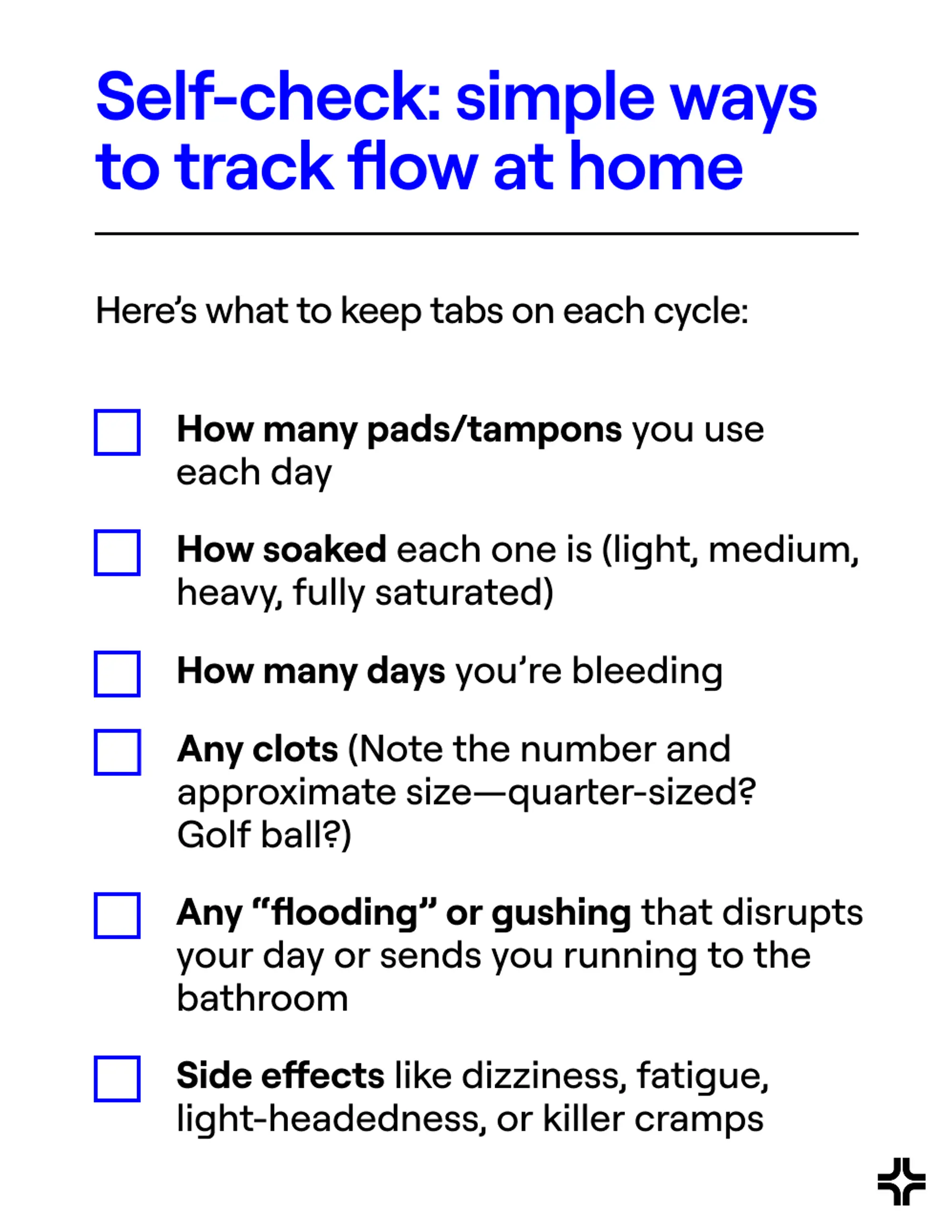
Simple ways to track period flow at home
Here’s what to keep tabs on each cycle:
- How many pads/tampons you use each day
- How soaked each one is (light, medium, heavy, fully saturated)
- How many days you’re bleeding
- Any clots (note the number and approximate size—quarter-sized? cherry? golf ball?)
- Any “flooding” or gushing that disrupts your day or sends you running to the bathroom
- Sidekicks like dizziness, fatigue, light-headedness, or killer cramps
Track this for a few cycles, and you’ll walk into your provider’s office or a General Medicine virtual appointment with gold-level data. It helps them spot patterns, rule out causes, and figure out what’s driving your heavier-than-usual flow.
Diagnosis and treatment options
Figuring out the “why” behind a heavy period starts with a full detective-style workup. Your provider will dig into your medical history—pregnancies, illnesses, surgeries, medications, birth control, and any pattern shifts in your cycle. All of this helps shape the list of possible causes.
From there, they’ll do a physical exam (including a pelvic exam) and may order tests such as:
- Blood tests: Check for anemia, thyroid issues, and clotting problems.
- Ultrasound: Looks at your uterus, ovaries, and surrounding tissue.
- Pap test: Screens cervical cells for infection, inflammation, or early cancer changes.
- Endometrial biopsy: Samples the uterine lining to detect abnormal cells or cancer.
- Hysteroscopy: Uses a thin, lighted camera to look for fibroids, polyps, or structural issues.
- Sonohysterogram: A saline-infused ultrasound for a sharper view of the uterine lining.
Once your provider connects the dots, they’ll make a diagnosis and walk you through treatment options that fit your symptoms, health goals, and fertility plans.
Non-surgical treatment options
If surgery isn’t on the table (or needed), plenty of treatments can help dial down heavy bleeding. Depending on the cause, your provider may recommend a mix of medication, supplements, and lifestyle tweaks, including:
- Iron supplements: Boost low iron levels and help combat anemia.
- Ibuprofen (Advil): Reduces cramps and can lessen bleeding
- Birth control pills: Regulate cycles and lighten flow
- Hormonal IUDs or other intrauterine contraception: Reduce bleeding through localized hormone release
- Hormone therapy (estrogen and/or progesterone): Helps thin the uterine lining and ease flow
- Desmopressin nasal spray: Helps blood clot properly in people with specific bleeding disorders
- Antifibrinolytics (tranexamic acid, aminocaproic acid): Prevent clots from breaking down, reducing bleeding
Lifestyle changes can support treatment too. Dr. Carlsen recommends:
- Eating iron-rich foods (spinach, lentils, eggs, meat)
- Regular exercise to support hormonal balance
- Cutting back on alcohol (it can interfere with clotting)
- Managing stress, which really can impact your cycle
- Maintaining a healthy weight for your body, which helps regulate estrogen levels
Surgical treatment options
If medications don’t help enough—or you’re dealing with certain underlying conditions—surgical options may be the next step. These include:
- Endometrial ablation: Destroys the uterine lining to reduce or stop bleeding. Pregnancy afterward is risky, so birth control is essential. Usually considered when other treatments haven’t worked.
- Uterine artery embolization (UAE): Cuts off blood supply to fibroids so they shrink.
- Myomectomy: Removes fibroids while leaving the uterus intact.
- Hysteroscopy: A camera-guided procedure that can diagnose and sometimes treat fibroids or bleeding issues.
- Hysterectomy: Removes the uterus. Used for fibroids, adenomyosis, or cancer when other treatments have failed or aren’t appropriate. This permanently ends periods and pregnancy.
Because some procedures impact fertility, it’s important to talk through each option with your provider and make sure your treatment plan supports your long-term reproductive goals.
Working with a healthcare provider (what to share & expect)
Walking into your appointment with solid info is like giving your provider a cheat sheet—they can help you faster, better, and with way fewer guesswork detours. That period-tracking data you’ve been collecting? Bring it. It helps your clinician spot patterns, rule out causes, and pinpoint what’s behind your heavy bleeding.
Your provider will likely ask about:
- Your medical history: past/current illnesses or surgeries
- Pregnancy history
- Medications and supplements (including OTC)
- Birth control use
All of these details offer clues that can help narrow down what’s going on.
From there, your provider may do a physical exam to check for inflammation, scarring, fibroids, polyps, or other uterine changes. They may also order additional testing—like an ultrasound—if something needs a closer look.
Once they’ve got a working theory, you’ll talk treatment options based on your goals: symptom relief, fertility plans, contraception needs, or a mix of all three. Together, you’ll map out a plan—often involving medication, lifestyle tweaks, or both—and set up follow-up checks (plus labs or imaging when needed) to make sure the treatment is actually helping. If not? You’ll adjust course together.
When to seek care (red flags)
Heavy periods are common (especially during certain life phases), but some symptoms are your cue to stop Googling and call your provider. Most heavy bleeding isn’t dangerous and is totally treatable, but certain signs can point to something more serious. Seek medical care ASAP if you’re experiencing, per Dr. Carlsen:
- Soaking a pad or tampon every hour
- Recurring large clots
- Severe pelvic pain
- Bleeding after menopause
- Heavy vaginal bleeding plus a positive pregnancy test
Special Situations
Not all heavy periods follow the same script—different life stages and health factors change the picture. Dr. Carlsen notes that he’s treated thousands of patients, and no two cases look exactly alike. Here’s how the approach shifts based on age, hormones, and birth control choices:
Teens
Hormones are basically figuring out how to work together, says Dr. Carlsen. That can lead to anovulatory cycles—where no egg is released—which often means heavier bleeding. For teens, he also typically screens for thyroid issues and bleeding disorders like von Willebrand disease. An ultrasound often gives enough information, and a pelvic exam is usually not required.
Perimenopause
This life stage is peak hormone chaos. Estrogen and progesterone can swing dramatically, causing the uterine lining to thicken, and when it sheds, the bleeding can be intense. Dr. Carlsen monitors bleeding patterns and screens for fibroids, adenomyosis, and endometrial hypertrophy. Sometimes an endometrial biopsy is needed to make sure everything checks out.
IUD Users
Some IUDs change your bleeding pattern. Copper IUDs can make periods heavier, while hormonal IUDs usually lighten them, says Dr. Carlsen. If your bleeding suddenly shifts, an ultrasound can check whether the IUD has moved—an off-position device can explain new or unexpected bleeding, he adds. This is definitely a conversation to have with your provider when choosing (or troubleshooting) an IUD.
At-home management while you wait for care
While you and your provider work on the why behind your heavy periods, there’s plenty you can do right now to stay comfortable (and a few things you’ll want to dodge). Here’s Dr. Carlsen’s quick-start guide.
Do:
- Take ibuprofen. It lowers prostaglandins—the chemicals that crank up cramps and bleeding.
- Stay hydrated. Water helps your body cope with blood loss and keeps you feeling less sluggish.
- Load up on iron-rich foods (spinach, lentils, eggs, meat) to support your iron levels.
- Track your flow—how often you change tampons/pads, how soaked they are, clots, the works.
- Use high-absorbency products to avoid leaks and make life easier.
Don’t:
- Take aspirin. It can increase bleeding.
- Drink alcohol. It can interfere with clotting.
- Ignore red-flag symptoms like dizziness or a racing heart.
The bottom line
Heavy periods don’t have to be a mystery or something you just “push through.” Tracking your flow, tuning into the signs of excessive blood loss, and getting timely care can help you spot what’s normal for you and what deserves a closer look. The good news? Most causes of heavy bleeding have effective, personalized treatments that can help you feel like yourself again.
Ready for answers and a plan that actually fits your life? Connect with a General Medicine clinician over video to talk through your symptoms and get tailored care—all from home—including prescriptions, lab orders, or referrals if needed. You don’t have to navigate heavy periods alone.
Key takeaways
- Heavy menstrual bleeding has clear warning signs like soaking products hourly, passing quarter-sized clots, or bleeding longer than 7 days.
- Symptoms like fatigue, dizziness, or shortness of breath can signal low iron from blood loss.
- Tracking your cycle, symptoms, and product changes gives your provider crucial clues.
- Safe at-home steps (hydration, ibuprofen, iron-rich foods) can help, but there are also red-flag symptoms that need timely evaluation.
- Most causes of heavy periods are treatable with personalized plans, from meds to lifestyle shifts to targeted care.General Medicine follows a strict editorial process, including using real experts to write our articles, vetted primary sources, fact-checking, a secondary medical review, and updates as necessary. This article was medically reviewed and fact checked by Poushali Bhattacharjee, MD.
FAQ
What happens if you lose too much blood on your period?
Losing a lot of blood each month isn’t just a nuisance—it can signal an underlying issue that needs attention. Heavy bleeding can drain your iron stores and lead to iron-deficiency anemia, which can leave you exhausted, short of breath, and, in severe cases, increase strain on your heart. In short: worth getting checked out.
What are the red flags for heavy periods?
Big picture: if your period is hijacking your week or ruining your laundry, it may be too heavy. Red flags include: • Bleeding longer than 7 days • Soaking a pad or tampon every hour for several hours • Doubling up on pads just to keep up • Needing to change products overnight • Passing clots quarter-sized or bigger
Your body may throw other hints, too: • Feeling wiped out, dizzy, low-energy, or short of breath • Intense, lower-abdominal cramps that feel beyond “usual period pain”
Is it normal to soak a pad in 1 hour?
Occasionally? Sure. If it happens once and never again, it’s usually nothing to panic about. But soaking a pad or tampon every hour for several hours—especially cycle after cycle—is a textbook sign to talk to a provider.
How can you tell if you're bleeding too much on your period?
Think frequency, duration, and how hard you’re working to keep up. You may be bleeding too much if you have: • Periods lasting more than 7 days • Hourly pad/tampon changes for several hours • Layered pads or super-absorbency everything just to function • Overnight product changes • Clots the size of a quarter or bigger
And pay attention to whole-body signs: • Extreme fatigue, dizziness, or shortness of breath • Cramps so intense they feel out of character for you
What to drink when you have heavy periods?
Keep it simple: water, water, water. Hydration helps your body handle blood loss and keeps your energy steadier. And skip alcohol—it can mess with clotting and make bleeding worse, says Dr. Carlsen.
Our editorial standards
At General Medicine, we cut through the clutter to make health care clearer, faster, and easier to navigate. Every article is grounded in evidence-based research and peer-reviewed journals, reviewed by medical professionals, and written in accessible language that helps you make health decisions with confidence. We’re committed to ensuring the quality and trustworthiness of our content and editorial process by providing information that is up-to-date, accurate, and actually useful. For more details on our editorial process, see here.