Dec. 19, 2025
Eczema on the Face: Causes, Triggers, and the Best Treatments for Clearer Skin

Pallabi Sanyal-Dey, MD

Jump to
Book a visit
$25 typical copay
$100 without insurance
Book a visit for your eczema today.
Eczema is an inflammatory condition that can occur anywhere on your body, including—unfortunately—on your face or even down there (yikes!). It often causes itching and other types of irritation. But take note: Eczema on your face can sometimes be trickier to treat than eczema elsewhere, since your face is, well, a sensitive soul.
Eczema on the face might itch, burn, cause an uneven skin tone, and more. It can feel uncomfortable, as if your face were on fire. It can also send your confidence up in flames.
“Facial eczema can present with red patches, scaling, and roughening,” says David Johnson, MD, a board-certified dermatologist and cofounder of RedliteX. “Itching can be accompanied by feelings of tightness, stinging, and burning, particularly in the area surrounding the eyes, nose, and mouth. Some patients may also note cracking and mild swelling. In practice, I have noticed that these flares can be particularly confidence-damaging if they occur suddenly.”
As someone who occasionally experiences eczema flares that seem to love my nasolabial folds, aka laugh lines, I know firsthand how eczema can make you want to hide from the world. Sometimes I also want to claw my face off. Yes, I’m being a bit dramatic, but anyone with eczema will attest to the way it can really steal your focus. When my face is aflame, thinking about anything else can be nearly impossible. All I want is soothing and satisfying relief.
You may be wondering how to cure eczema permanently. Eczema doesn’t have a definitive cure, according to the National Eczema Association. But that doesn’t mean you’ve got to just grin and bear it. In fact, grinning can be irritating when those laugh lines or your cheeks itch and burn.
The good news is that a customized treatment plan can serve as a fire extinguisher of sorts and get you back to a state of calmer skin and ready to face the world. Plus, ongoing treatment regimens for facial eczema can offer flare prevention—serving as a Smokey Bear of sorts for your skin.
In this article, we explore what eczema is, what causes eczema, various ways to treat the condition, how to avoid common triggers, and more.
What is eczema?
Eczema is an umbrella term for a group of inflammatory skin conditions that cause irritating symptoms anywhere on your body, including your face.
“Eczema, in a nutshell, is a chronic disease, meaning that your skin has become extremely itchy, inflamed, dry and red due to a compromised skin barrier that is not functioning properly due to a combination of genetic and environmental factors,” says Eleonora Fedonenko, MD, a dermatologist with Your Laser Skin Care. “This compromised barrier makes it easier for irritants to get inside and moisture to escape quickly.”
7 different types of eczema
Not all eczema is the same. The National Eczema Association describes seven types.
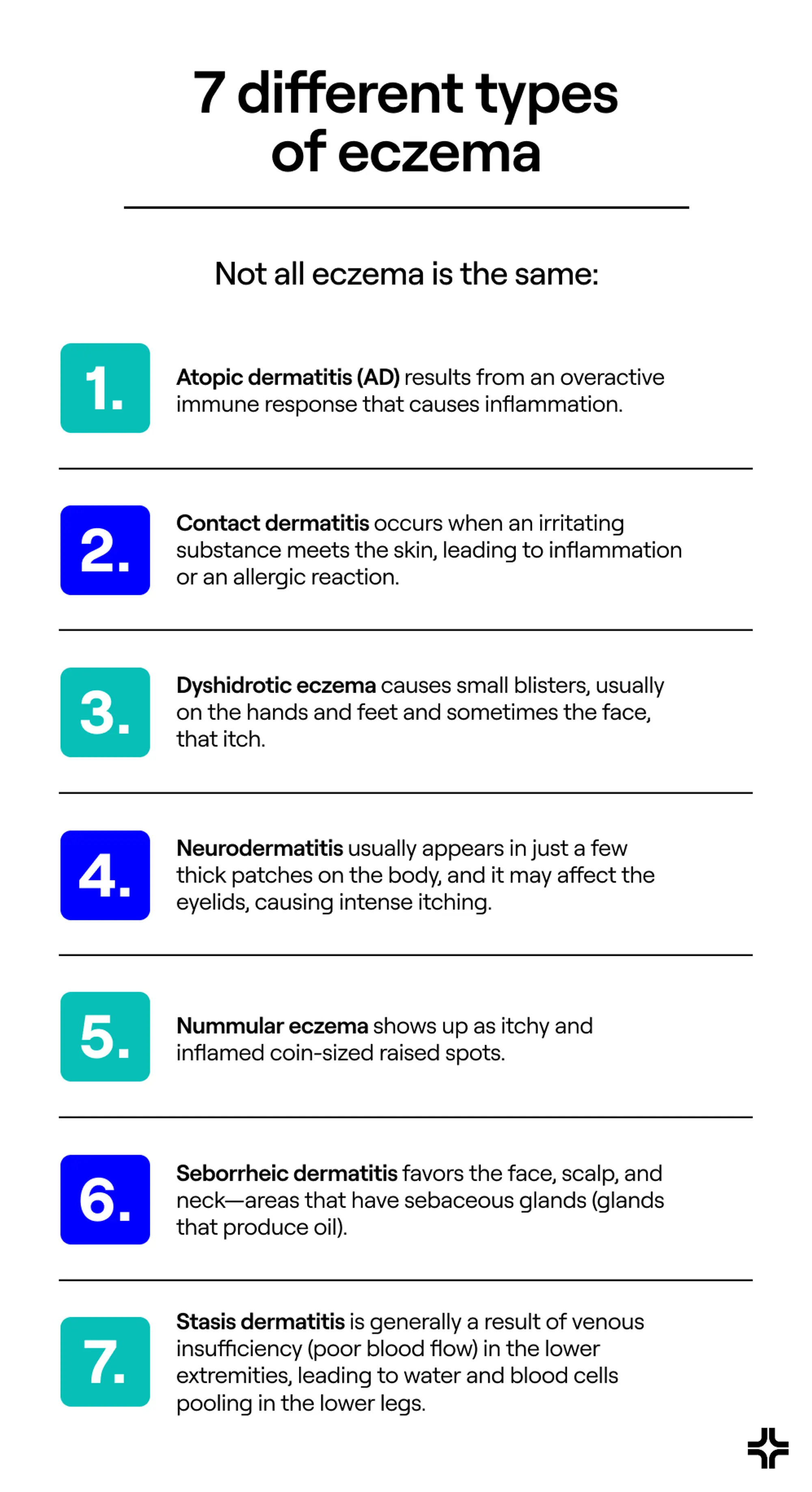
The 7 different types of eczema
- Atopic dermatitis (AD) results from an overactive immune response that causes inflammation and damages the skin barrier.
- Contact dermatitis occurs when an irritating substance meets the skin, leading to inflammation or an allergic reaction. Skin care ingredients, jewelry, face coverings, and more can all trigger this eczema type.
- Dyshidrotic eczema causes small blisters, usually on the hands and feet and sometimes the face, that itch.
- Neurodermatitis usually appears in just a few thick patches on the body, and it may affect the eyelids, causing intense itching. Excessive scratching can cause lesions that damage nerves.
- Nummular eczema shows up as itchy and inflamed coin-sized raised spots.
- Seborrheic dermatitis favors the face, scalp, and neck—areas that have sebaceous glands (glands that produce oil). A common trigger for this type is an overgrowth of a yeast living on the skin.
- Stasis dermatitis is generally a result of venous insufficiency (poor blood flow) in the lower extremities, leading to water and blood cells pooling in the lower legs, causing them to swell and become discolored. This type does not affect the face.
What does eczema look like on the face?
Facial eczema can show up anywhere on your face, including your forehead, cheeks, and chin, or around your eyes, nose (including your nasolabial folds), mouth, or hairline.
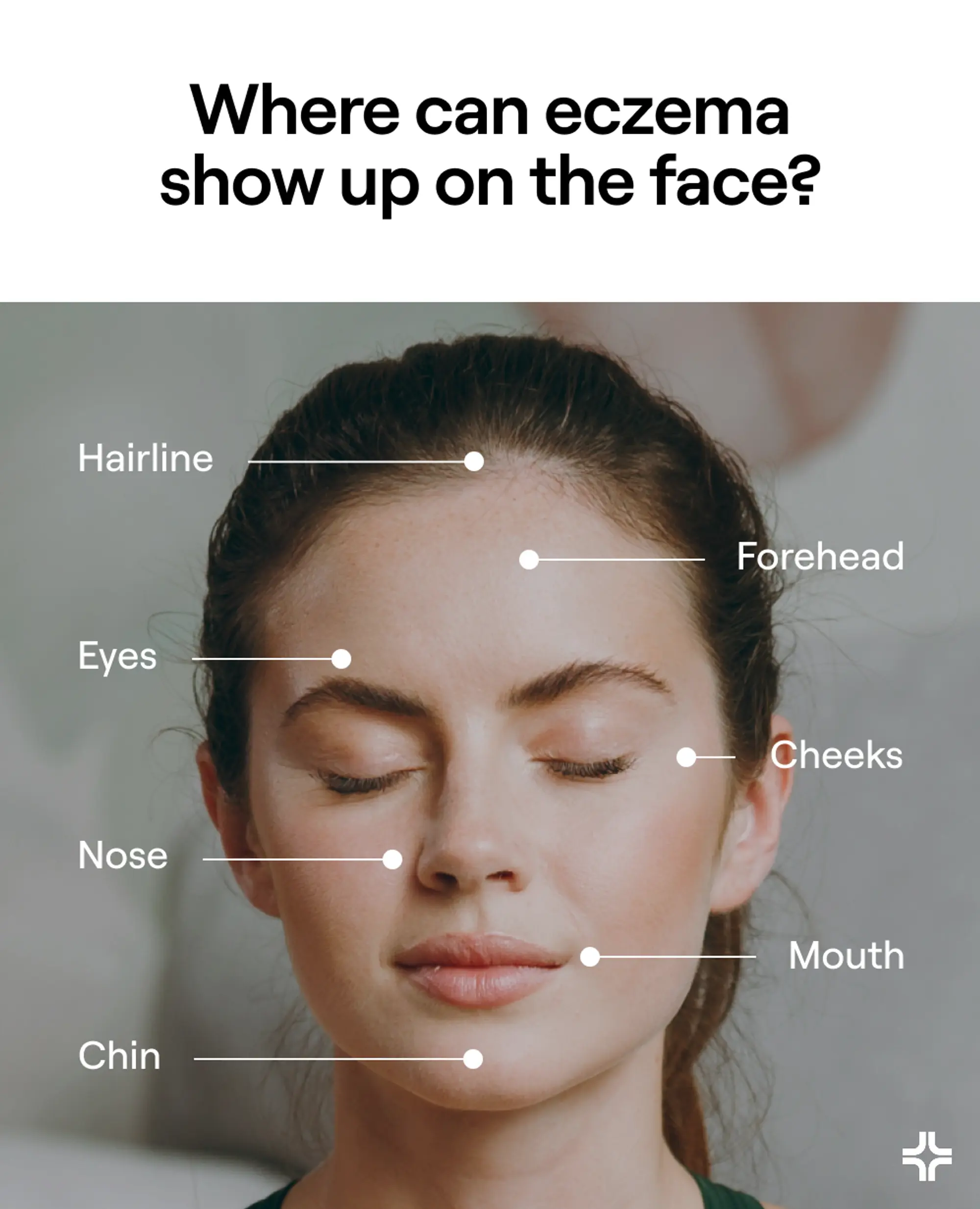
Where eczema can show up on the face
Facial eczema symptoms:
- Burning
- Itching
- Flaking
- Oozing
- Patches of red, purple, gray, or brown (depending on skin tone)
- Raised bumps or another type of eczema rash
Why facial eczema can be trickier to treat
Although it is treatable, eczema on the face can present some challenges.
- Co-occurring conditions: Eczema isn’t the only skin condition that can affect your face. Others include acne, rosacea, melasma, actinic keratosis, vitiligo, and psoriasis. These conditions may require different treatments than eczema, some of which could cause eczema flares on your face.
- Environmental exposure: This skin on your face tends to be the most exposed to environmental triggers (e.g., pollution and ultraviolet radiation). Exposure to the air can cause facial skin to lose more moisture—and next to your hands, facial skin is likely what you wash the most. Both these factors can negatively affect the skin barrier, leading to eczema flares.
- Skin microbiome: Your facial skin microbiome differs from your body’s overall skin microbiome, and it may be more prone to eczema exacerbations.
- Products: You might use more products on facial skin (e.g., cosmetics and skin care items), which could lead to irritation.
- Texture and sensitivity: Facial skin is also delicate and sensitive, more so than many other parts of your body; eczema on such sensitive skin can worsen irritation and make treatment more complex.
- Visibility: Eczema on one of your most visible parts can affect more than just your skin; it can also be distressing for your mental health.
What causes eczema flares on the face?
Researchers don’t yet know the exact causes of eczema, and each eczema type likely has different or intersecting drivers, according to the National Eczema Foundation.
A top theory on what causes eczema is that it’s a mix of genetics and environmental factors. Some people may be more predisposed to the condition based on their genetics, and then environmental and other factors may lead to the development of eczema and trigger flares. Let’s explore these topics more in depth.
Genetics
Children born to parents who have allergic diseases are more at risk for eczema. And in a 2020 review investigating more than 70 research articles, scientists found 62 genes to have associations with atopic dermatitis.
Based on genetics, some people may be more prone to skin barrier dysfunction. The stratum corneum is your skin’s outermost layer. It should keep harmful substances out and seal moisture in. But in people with eczema, the stratum corneum may be compromised.
The gene variant Filaggrin (FLG), which is associated with atopic dermatitis, codes for the filaggrin protein, which is involved in strengthening skin cells. When you don’t have enough filaggrin because of this gene variant, your skin barrier can develop gaps, leading to moisture loss and irritation.
Lipids (essential fats) help make up your skin barrier. But people with eczema may have less ceramide, a substance that traps moisture in the skin, leading to additional dryness that can cause itching. But scratching the itch can further impair the skin barrier.
Environmental triggers
Several environmental factors may play a role in eczema. “The face is particularly sensitive,” Dr. Fedonenko says. “So some possible causes of facial eczema are exposure to harsh soaps, fragrances, some makeup ingredients, and even temperature changes from moving from the warm indoors to the cold outside. Sometimes, ordinary household allergens such as dust mites or pet dander can also trigger the sensitive skin on the face and provoke a sudden flare-up.”
The following are common environmental triggers:
- Allergens: If you have environmental allergies, such as to pollen, mold, dust mites, animal dander, or topical ingredients, exposure to these allergens may trigger eczema flares. These can affect you by just being in the air, but your hair may trap pollen that then irritates your face, or your pillow might harbor dust mites. Additionally, what you consume could cause trouble. Nuts, eggs, dairy, wheat, and soy are common eczema triggers for people with these food allergies. Food sensitivities or intolerances may also play a role.
- Chemical and pollution exposure: The National Institute of Allergy and Infectious Diseases has linked eczema to exposure to certain chemicals. Manufacturers use these chemicals in polyurethane products, including coatings, sealants, adhesives, and rubbery materials. Large human studies looking at people’s history of eczema and pollution exposure (based on region) have found links between eczema and exposure to soot, sulfur dioxide, nitrogen dioxide, carbon monoxide, and fine particulate matter (PM2.5).
- Climate or weather: Though not a cause of eczema, weather may trigger a flare. For example, cold and dry air, sun exposure, and more can all irritate eczema. Additionally, climate factors, such as fumes from wildfires, can exacerbate the issue.
- Irritants: Home and personal care products can also trigger eczema, especially the contact dermatitis type. Examples include laundry detergents, household cleaners, hygiene products, topical skin care products, and more. Certain fabrics, such as wool or polyester, can also be irritating, as can other materials, such as metal, especially nickel from jewelry.
Miscellaneous factors
These factors may also play a role in your facial eczema.
- Skin and gut microbiome: A whole community of bacteria, viruses, and fungi make up your skin microbiome. The composition of the skin microbiome is different in people with eczema when compared to people without. Your digestive tract also has a unique microbiome, and it may impact your skin via the gut-skin axis, how the gut and skin communicate. A gut microbiome imbalance could be an eczema trigger.
- Hormonal fluctuations: Hormonal changes, including those associated with the menstrual cycle, the menopause transition, pregnancy, and more, can trigger flares. But if you typically experience an eczema flare during the luteal phase, just before you get your period, you may have a rare condition called autoimmune progesterone dermatitis, which mimics eczema but is an autoimmune reaction to progesterone. This can also occur from progesterone taken as a hormone therapy.
- Stress and emotions: Stress or anxiety are not direct causes of eczema, but they can trigger flares, likely through increases in stress hormones, including cortisol.
Diagnosis and treatment options
“Eczema is diagnosed mainly by a physical examination of the affected skin and an examination of your personal and family medical history,” Dr. Fedonenko says. “What we do is we search for the classical features, such as intense itching and the specific pattern of rash, which is often in the cheeks or area of the eyes in adults.”
You may be able to see a provider virtually, but some in-person tests may be necessary, depending on your symptoms.
“At times, I also conduct patch tests to establish whether there are any reactions to certain substances that may lead to contact dermatitis,” Dr. Johnson says. “These tests aid me in understanding what causes the condition and how it can be treated.” Of note, patch testing isn’t needed for classic atopic dermatitis unless contact allergy is suspected.
First-line treatment options
Initial treatment usually revolves around reworking your skin care routine and incorporating strategies to reduce triggers, based on factors unique to you.
“The initial step would be repairing the barrier function of one’s skin,” Dr. Johnson says. “As such, lubricating creams, mild soap cleansers, and anti-inflammatory topical corticosteroids are often recommended.”
Dr. Fedonenko agrees. “First line treatment options include diligently applying moisturizing products called emollients at least twice daily, which are bland and gentle on the skin to help repair the skin barrier, and topical over-the-counter hydrocortisone creams (usually 0.5% or 1%) for a short period of time.”
When prescription or advanced care makes sense
“If these initial treatments do not work, prescription drugs may be required,” Dr. Johnson says. “These may be more robust creams, calcineurin inhibitors, and more novel biologics that act to calm the immune reaction. These are typically recommended if eczema begins to interfere with daily activities or fails to respond to over-the-counter treatments.”
Advanced options:
- High-potency topical corticosteroids: Your provider may recommend a prescription steroid option, to calm inflammation. Use as directed, typically for short-term use while avoiding the eyelids. Steroids should be used sparingly on the face.
- Calcineurin inhibitors (CNIs): These prescription medications, including tacrolimus (Protopic) and pimecrolimus (Elidel) suppress the immune system by blocking an enzyme that triggers inflammation.
- Cirsaborole (Eucrisa): This nonsteroidal topical ointment blocks an enzyme that causes an inflammatory response. It is safe for long-term use.
- Biologics: Several biologics help block inflammatory proteins that cause irritation. Ones approved to treat eczema include dupilumab (Dupixent), lebrikizumab (Ebglyss), tralokinumab (Adbry), and nemolizumab (Nemluvio). These are often taken as an injection, either at home or administered by a healthcare provider.
When to seek care
“It is advisable to consult a health provider if your eczema is spreading quickly, if it has started to ooze fluids, or if it causes significant pain,” Dr. Johnson says. “Additionally, if your eczema causes you to be restless due to itching during the night and if your eczema pain becomes acute, then it is advisable to seek medical attention.”
Dr. Fedonenko adds, “The correct diagnosis and treatment regimen are critical to the protection of the health and natural appearance of your facial skin.”
Eczema diagnosis quote by Eleonora Fedonenko, MD
“I live in a really small town where it’s hard to get into a dermatologist. General Medicine was so much better, and I would use it for anything now. You guys spent more time with me than the providers I’ve waited months for. My video visit was really good—I was prescribed treatment.” —Megan, California
Key takeaways
- Eczema is a chronic inflammatory condition that can show up anywhere, including your face.
- Facial eczema can require unique treatment strategies because it tends to be sensitive and exposed to more triggers that can cause flares.
- Treatments may include avoiding triggers, changing your skin care routine, and taking certain medications if needed.
- If you need to talk to a knowledgeable provider asap about your symptoms asap, General Medicine can help.
FAQ
How do you treat eczema on your face?
Treatments for eczema on the face include avoiding triggers, improving the skin barrier by modifying your skin care routine, and using topical, oral, or injectable medications to control inflammation.
How to treat eczema during pregnancy?
If you are pregnant and experiencing eczema, you should talk to your doctor before using any over-the-counter medications or taking prescriptions, whether topical or oral. Your provider can recommend what options are safe.
What is the reason for eczema on the face?
Eczema can appear anywhere on your body, including your face. The underlying causes may include genetics and several additional factors, including allergies, exposure to pollutants or irritants, and more.
What is the 3-minute rule for eczema?
The “3-minute rule” for eczema involves applying a thick, fragrance-free moisturizer within three minutes after washing your face or bathing, while the skin is still slightly damp. This helps lock in moisture and protect the skin barrier.
Our editorial standards
At General Medicine, we cut through the clutter to make health care clearer, faster, and easier to navigate. Every article is grounded in evidence-based research and peer-reviewed journals, reviewed by medical professionals, and written in accessible language that helps you make health decisions with confidence. We’re committed to ensuring the quality and trustworthiness of our content and editorial process by providing information that is up-to-date, accurate, and actually useful. For more details on our editorial process, see here.
Related Articles