Jump to
Find your medication
Whether you're starting something new or continuing a prescription you already have, find your medication and we'll take it from there.
Key takeaways:
- General Medicine now lets you compare prescription prices across pharmacies, with your insurance and with the General Medicine card, fill at any pharmacy you choose, and pay ahead at eligible retail pharmacies so there's nothing to pay at the counter.
- Prices for the same medication vary from pharmacy to pharmacy in ways that are hard to predict and rarely easy to see ahead of time, so the only way to know is to look.
- It works for a prescription you already have and for a medication you're starting, and you can change pharmacies whenever it suits you.
- General Medicine doesn't fill controlled substances, and what else a clinician can prescribe depends on your state.
Prescriptions at General Medicine now come with a price check built in. Here's what changed, why it helps, and how paying ahead works.
What's new at General Medicine
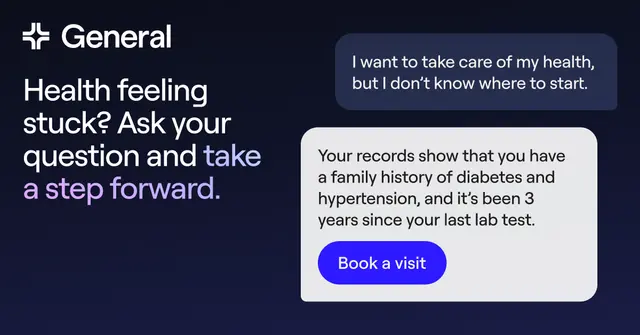
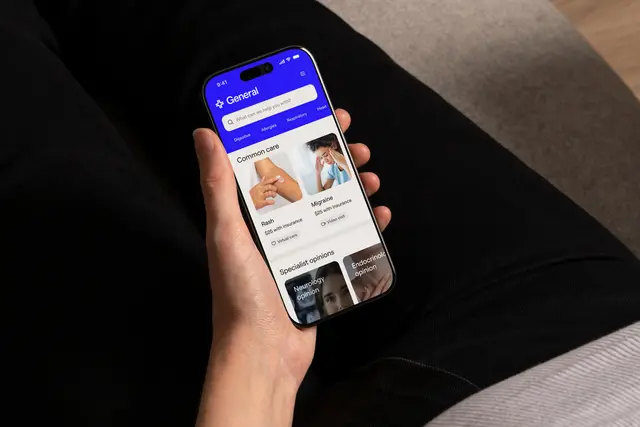
You can now compare what a medication costs at different pharmacies, fill it wherever you like, and pay ahead at eligible retail pharmacies. We can manage medications you're already taking and those you're just starting —and you can easily order refills, review medication details, or message us from your account.
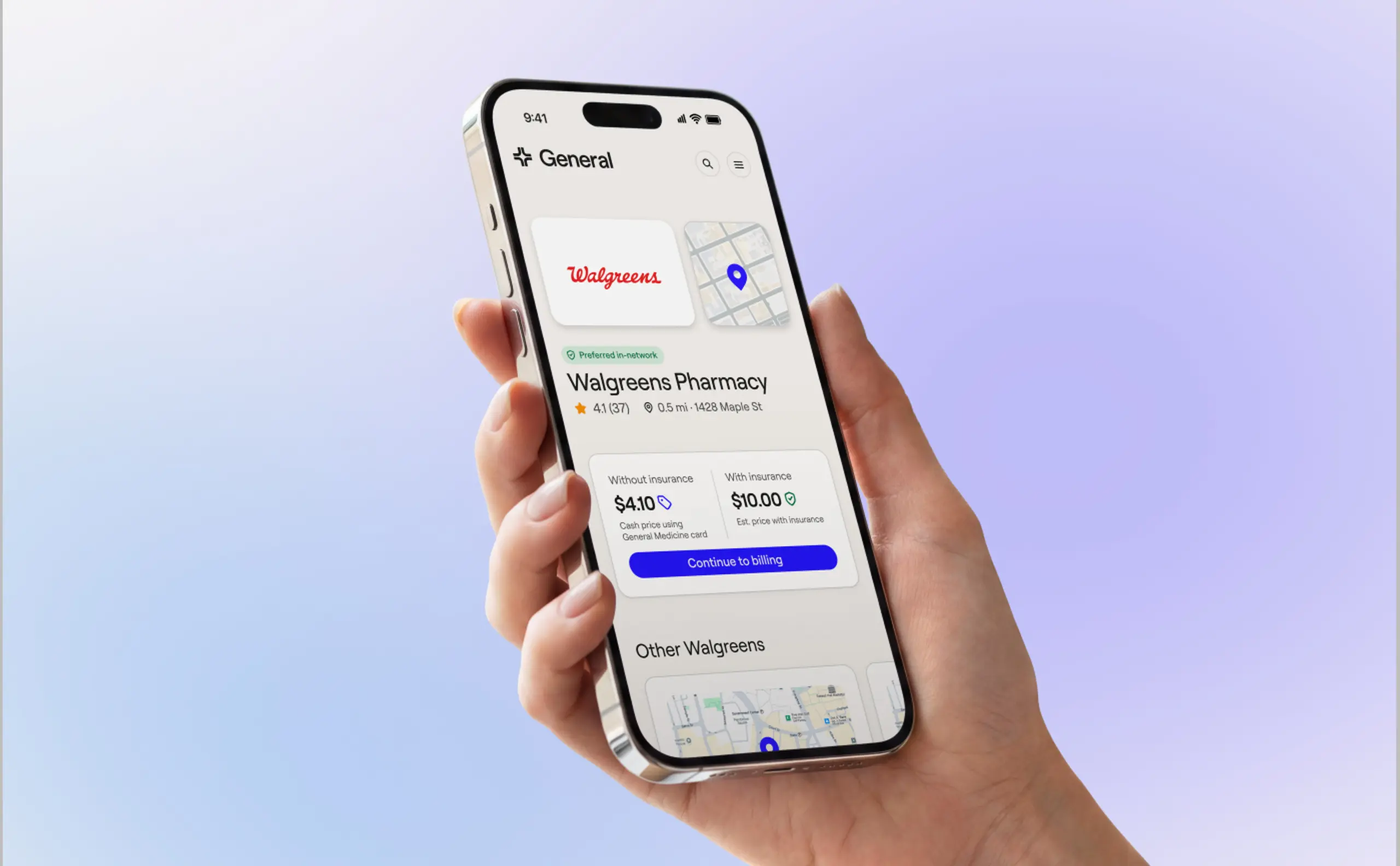
Prices show up before you decide where to fill. The choice of pharmacy stays yours, including after the first fill. And if you pay ahead, you can skip the payment step at the counter.
Why compare pharmacy prices
The same medication can cost different amounts from one pharmacy to the next, and the differences are hard to predict from the outside. A national analysis of retail drug prices covering more than 58,000 pharmacies found that neither local competition nor neighborhood income reliably explained what a drug cost, and noted that these prices aren't widely available to consumers.
Insurance adds another number to check. One JAMA analysis of 9.5 million insurance claims found that nearly one in four involved a copay higher than what the insurer typically paid the pharmacy for the drug, and that this was more common with generics. The data are from 2013, so read it as a reason to look at both numbers, not a prediction for your medication.
Prices also move. The drug pricing benchmark list from Centers for Medicare & Medicaid Services (CMS) is updated weekly, and manufacturers can change list prices at any time, so the pharmacy with the best price this fill may not be the same next time.
Price is only one reason to pick a pharmacy. Some people go where the pharmacist knows them, where it's close, or where they can get in and out quickly, and seeing prices doesn't change any of that. It means the choice is yours to make with the numbers in front of you.
How to use General medicine for your medications
Start by searching for your medication on the prescriptions page to see prices across pharmacies, then choose where to fill.
You can renew your prescription you're already taking — or discuss a new medication with a clinician who'll help you decide what's clinically appropriate before prescribing. You can always compare prices before you order. And if it's an ongoing prescription, General Medicine makes refills as easy as a tap.
Pharmacy flexibility
You can fill at your corner CVS, a Walgreens in a city you're visiting, or a mail-order pharmacy, and you can change pharmacies whenever it suits you. Before you place a refill order, you can also change your pharmacy or payment method.
Moving a prescription to a new pharmacy has often meant phone calls or logins to several different portals. Here you choose the pharmacy each time, and the prescription stays in your control.
How paying ahead works
When you pay without insurance, you can pay for your prescription through General Medicine before you go to a retail pharmacy, so there's nothing left to pay at the counter. You'll see the price without insurance next to your price with insurance when you compare, so you can pick whichever works for you.
Here's how it works:
- Choose your pharmacy and review the price. Pick a retail pharmacy and compare your price with insurance to your price with the card. You'll see the pay-ahead option when it's available for your medication and pharmacy.
- Check out with General Medicine. You pay at checkout, and we send your prescription to the pharmacy and let them know it's prepaid. We'll text you when it's sent, with your card attached.
- Pick up your prescription. Nothing is due at the counter. If the pharmacy asks for payment, you can show the payment card you’ll receive via text message.
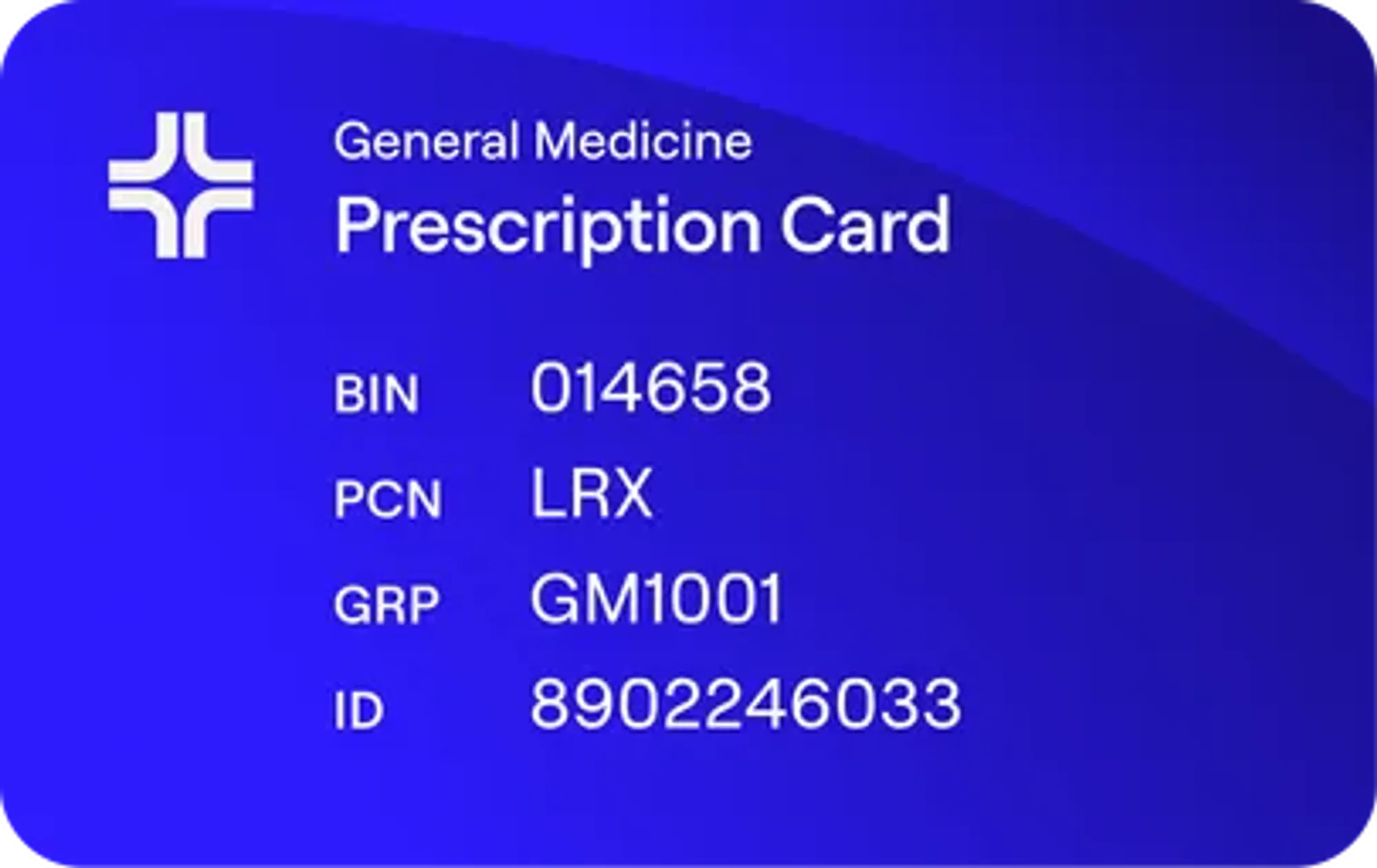
General Medicine card
Pay ahead works at eligible retail pharmacies and isn't available at mail-order pharmacies. When pay ahead applies to an order, your payment card is on that order's detail page in your account.
Frequently asked questions
Do I need an existing prescription?
No. A clinician can meet with you, talk through what you need, and prescribe when it's clinically appropriate. If you already have a prescription, you can bring it in and manage it with General Medicine too: compare pharmacy prices, refill it, or switch where it's filled.
Will it be cheaper than my current pharmacy?
It depends on your medication, your insurance, and where you live. You'll see prices across pharmacies before you decide, with and without insurance, but we can't promise it will always beat your current pharmacy.
Do I need insurance?
No. You'll see your price with insurance and your price with the General Medicine card, so you can compare before you decide. Paying ahead is the card option.
Can I use HSA or FSA funds?
Yes. General Medicine card purchases are HSA/FSA eligible. Your plan administrator can confirm the details for your account.
Does paying ahead work at every pharmacy?
No. It works at eligible retail pharmacies and isn't available at mail-order pharmacies. You'll see the option when it's available for your medication and pharmacy.
Does paying ahead mean I'm charged for refills automatically?
No. Ordering a refill takes a few taps, but it's always your step to take. We'll notify you when it's time to order, and if you choose not to continue refills, that's your choice too.
What happens if my prescription has run out of refills?
A clinician reviews your history and renews it when it's clinically appropriate, so you won't need to start over. Where possible we try to avoid unnecessary visits, so we may ask you to fill out a questionnaire or get labs first. Some medications do require a visit. Either way, we'll reach out well in advance with clear action steps so you're not left without your medication.
Are there medications General Medicine can't fill?
Yes. We can't fill controlled substances, and what else is available varies by state because prescribing laws differ by location. We'll always be upfront about what we can and can't prescribe, and if the right medication for you is one we can't provide, we'll help connect you with someone who can.
Getting started
Comparing prices, choosing your pharmacy, and paying ahead now work together in one place. Start with a search on the prescriptions page, or [open your dashboard]([dashboard URL pending]) if you already have a prescription with us.
Sources
- "Trends and determinants of retail prescription drug costs." National Library of Medicine (PMC), https://pmc.ncbi.nlm.nih.gov/articles/PMC9108059/. Accessed October 4, 2026.
- "Frequency and Magnitude of Co-payments Exceeding Prescription Drug Costs." JAMA, https://jamanetwork.com/journals/jama/fullarticle/2674655. Accessed October 4, 2026.
- "Pharmacy Pricing." Centers for Medicare & Medicaid Services (Medicaid.gov), https://www.medicaid.gov/medicaid/prescription-drugs/pharmacy-pricing. Accessed October 4, 2026.
- "Changes in the List Prices of Prescription Drugs." U.S. Department of Health and Human Services, Assistant Secretary for Planning and Evaluation, https://aspe.hhs.gov/reports/changes-list-prices-prescription-drugs. Accessed October 4, 2026.
Our editorial standards
At General Medicine, we cut through the clutter to make health care clearer, faster, and easier to navigate. Every article is grounded in evidence-based research and peer-reviewed journals, reviewed by medical professionals, and written in accessible language that helps you make health decisions with confidence. We’re committed to ensuring the quality and trustworthiness of our content and editorial process by providing information that is up-to-date, accurate, and actually useful. For more details on our editorial process, see here.