General
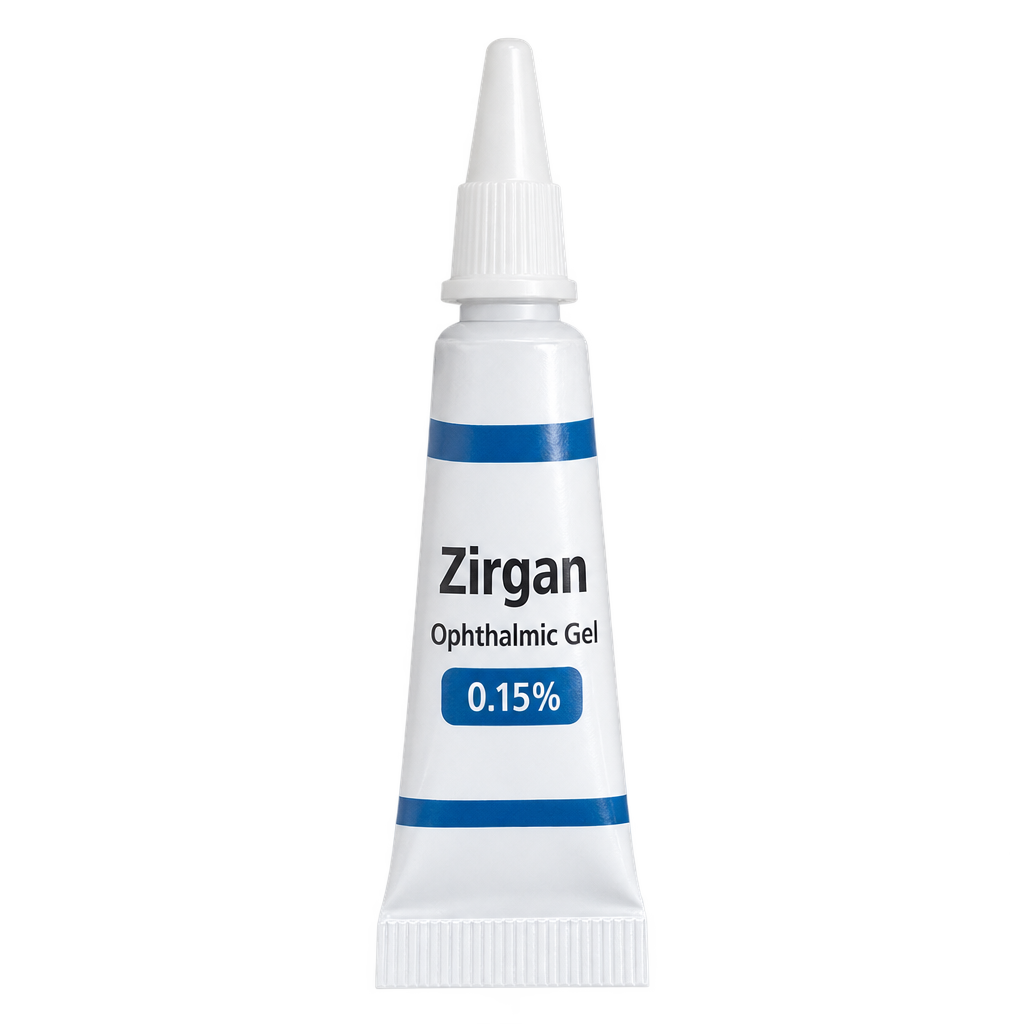
Zirgan (Ganciclovir)
Virtual visit

Zirgan (Ganciclovir)

With our quick and easy online prescription process, you can manage your health effortlessly — whether you need a first-time prescription for Zirgan (Ganciclovir) or a refill of an existing one.

Licensed providers in all 50 states

Expert-guided, evidence-based treatments

Skip the trip to the doctor's office

Visit options

Costs shown are for the visit only. You'll pay for medication at your preferred pharmacy.

Video Visit

$25

Est. or $100 w/o insurance

Chat Visit

$30

w/o insurance

Most insurance accepted

Board-certified

No hidden fees

Available nationwide

What is Zirgan (Ganciclovir)?

Zirgan is a prescription antiviral ophthalmic gel used to treat acute herpetic keratitis—corneal ulcers and dendritic lesions caused by herpes simplex virus in the eye. Unlike many eye drops, it's formulated as a gel that stays in contact with the ocular surface longer, providing sustained antiviral drug delivery with each application. Ganciclovir works by blocking viral DNA polymerase, preventing the herpes virus from replicating within infected corneal cells. It's applied five times daily until the ulcer heals, then three times daily for an additional week, and is the only antiviral gel approved for this indication in the United States.

Viral DNA polymerase inhibition

Ganciclovir is phosphorylated by viral kinase inside HSV-infected cells and then blocks viral DNA polymerase—halting viral DNA replication and preventing the spread of herpes simplex virus through corneal tissue.

Gel formulation for sustained ocular contact

Unlike aqueous eye drops that drain quickly from the eye surface, Zirgan's gel vehicle maintains prolonged contact with the cornea—improving drug residence time and antiviral exposure at the site of infection.

Corneal ulcer healing support

By suppressing viral replication in infected corneal epithelium, Zirgan stops the active herpetic lesion from expanding and allows corneal epithelial cells to heal—reducing the risk of vision-threatening corneal scarring from recurrent herpetic keratitis.

Virtual visit with clinician

Ongoing support, always available.

You’ll be supported by experienced clinicians who care for a wide range of health needs, from everyday concerns to more complex conditions.

Our clinicians track your progress over time and adjust your care as needed. If medication is prescribed, we’ll manage dosing and monitor for side effects. If lab testing is recommended, we review results and refine your plan accordingly. You’re never left to navigate care on your own.

All your care in one place. That’s the General Medicine difference.

We help you understand your options, connect you to the right clinicians, manage prescriptions, coordinate any needed evaluations, and keep an eye on your overall health along the way. It’s comprehensive care that looks at the full picture — your goals, your history, your lifestyle — and makes it simple to move forward with confidence.

Your care plan
Clinician

What our customers have to say

I feel like I’m finally on the right path to improving my health with the right support now! It’s so refreshing and reassuring.

Emerald

My experience with General Medicine was amazing. The understanding and care that was taken to figure out what is exactly going on with me. I feel like a weight has been lifted off of me.

Kaylee

I couldn’t be happier with my experience with General Medicine! They are fast, responsive, kind and knowledgeable. It is much easier, more affordable and faster.

Nika

Get the care you need, without the wait.

Frequently Asked Questions

What eye condition is Zirgan used for?

Zirgan is a prescription antiviral gel used to treat acute herpetic keratitis — corneal ulcers and dendritic lesions caused by herpes simplex virus affecting the eye's corneal surface.

Why is Zirgan a gel rather than a drop?

The gel formulation stays on the eye surface significantly longer than aqueous drops — providing more sustained antiviral drug contact with the infected corneal tissue and improving overall treatment effectiveness.

How often do I need to apply Zirgan?

Apply five times daily (approximately every 3 hours while awake) until the corneal ulcer heals, then three times daily for 7 additional days to prevent recurrence. Your clinician will confirm healing before reducing frequency.

What side effects might I experience?

Blurred vision immediately after application is expected from the gel formulation. Eye irritation, punctate keratopathy (fine corneal surface changes), and conjunctival hyperemia (redness) are the most commonly reported effects.

Why is treating herpetic keratitis important?

Untreated or inadequately treated herpetic keratitis can cause corneal scarring — the leading infectious cause of corneal blindness in developed countries. Prompt and complete treatment with Zirgan is essential to protect vision.
Logo

© 2026 Path Healthcare Systems Corp.