General
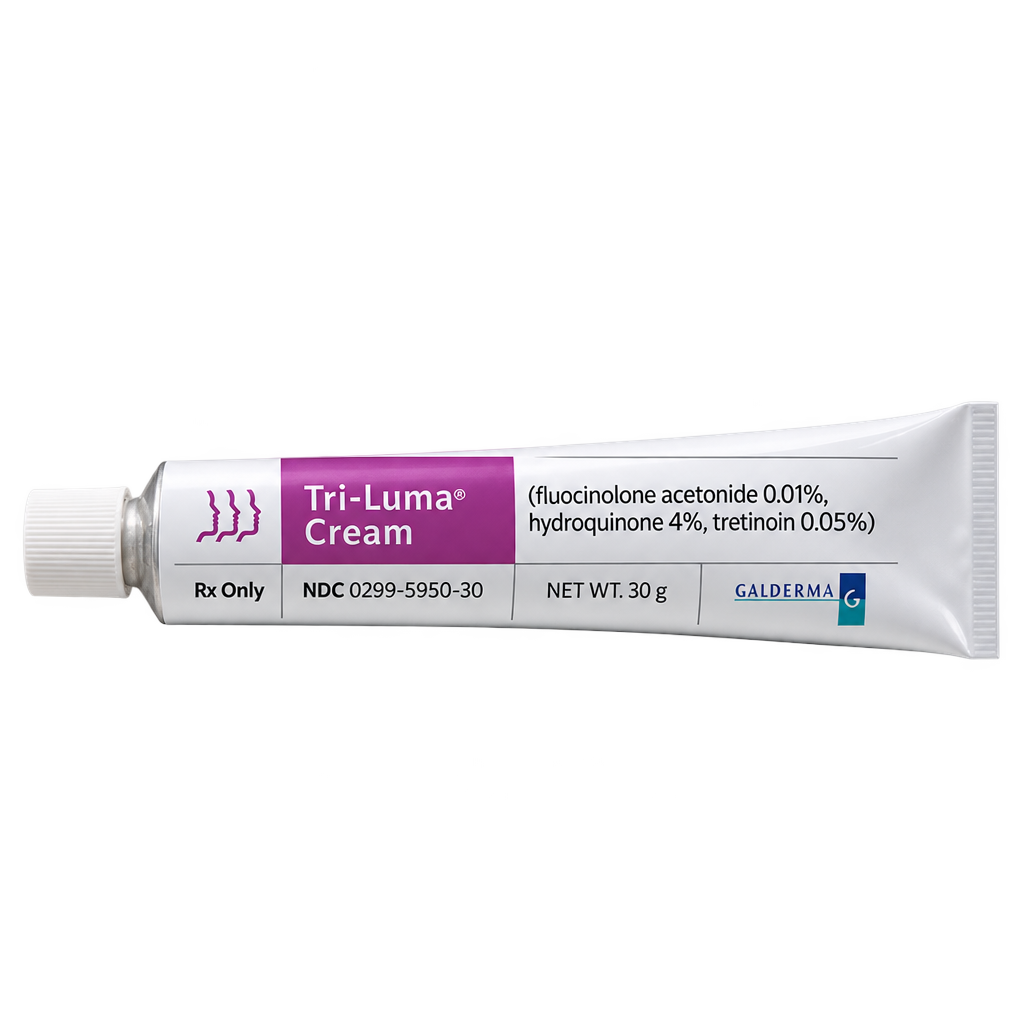
Tri-Luma (fluocinolone/hydroquinone/tretinoin)
Virtual visit

Tri-Luma (fluocinolone/hydroquinone/tretinoin)

With our quick and easy online prescription process, you can manage your health effortlessly — whether you need a first-time prescription for Tri-Luma (fluocinolone/hydroquinone/tretinoin) or a refill of an existing one.

Licensed providers in all 50 states

Expert-guided, evidence-based treatments

Skip the trip to the doctor's office

Visit options

Costs shown are for the visit only. You'll pay for medication at your preferred pharmacy.

Video Visit

$25

Est. or $100 w/o insurance

Chat Visit

$30

w/o insurance

Most insurance accepted

Board-certified

No hidden fees

Available nationwide

What is Tri-Luma?

Tri-Luma is a prescription topical cream containing three active ingredients—fluocinolone (a corticosteroid), hydroquinone (a skin lightener), and tretinoin (a retinoid)—specifically formulated to treat melasma, a condition that causes brown or gray-brown patches on the face. Each ingredient addresses a different aspect of the condition: hydroquinone reduces melanin production, tretinoin increases skin cell turnover to fade existing pigment, and fluocinolone reduces the inflammation that can worsen discoloration. It's applied once nightly and used alongside strict sun protection.

Triple-action pigment correction

Hydroquinone inhibits the enzyme tyrosinase to reduce new melanin production, tretinoin accelerates the shedding of pigmented skin cells, and fluocinolone calms inflammation that drives melanin overproduction—all three mechanisms working together.

Retinoid-enhanced cell turnover

Tretinoin speeds up epidermal renewal, bringing fresh, less-pigmented cells to the surface faster while also enhancing penetration of the other active ingredients into the skin.

Anti-inflammatory stabilization

The corticosteroid component reduces post-inflammatory hyperpigmentation—a common driver of melasma worsening—while also helping the skin tolerate the potentially irritating effects of hydroquinone and tretinoin together.

Virtual visit with clinician

Ongoing support, always available.

You’ll be supported by experienced clinicians who care for a wide range of health needs, from everyday concerns to more complex conditions.

Our clinicians track your progress over time and adjust your care as needed. If medication is prescribed, we’ll manage dosing and monitor for side effects. If lab testing is recommended, we review results and refine your plan accordingly. You’re never left to navigate care on your own.

All your care in one place. That’s the General Medicine difference.

We help you understand your options, connect you to the right clinicians, manage prescriptions, coordinate any needed evaluations, and keep an eye on your overall health along the way. It’s comprehensive care that looks at the full picture — your goals, your history, your lifestyle — and makes it simple to move forward with confidence.

Your care plan
Clinician

What our customers have to say

I feel like I’m finally on the right path to improving my health with the right support now! It’s so refreshing and reassuring.

Emerald

My experience with General Medicine was amazing. The understanding and care that was taken to figure out what is exactly going on with me. I feel like a weight has been lifted off of me.

Kaylee

I couldn’t be happier with my experience with General Medicine! They are fast, responsive, kind and knowledgeable. It is much easier, more affordable and faster.

Nika

Get the care you need, without the wait.

Frequently Asked Questions

How long does it take Tri-Luma to fade melasma?

Most people notice meaningful improvement within 4–8 weeks of nightly use. Full benefit typically develops over 8–12 weeks. Tri-Luma is approved for short courses — ongoing use requires clinician guidance.

Do I need to wear sunscreen while using Tri-Luma?

Yes — daily broad-spectrum sunscreen is essential. Sun exposure is a primary trigger for melasma, and tretinoin increases photosensitivity. Without consistent sun protection, treatment results will be significantly limited.

Why does my skin look worse before it gets better?

Redness, peeling, and irritation in the first 2–4 weeks are normal as tretinoin accelerates skin cell turnover. This initial period of adjustment typically gives way to clearer, more even-toned skin with continued use.

What side effects might I experience?

Redness, dryness, peeling, burning, and stinging are common — especially early in treatment. These are usually manageable. Avoiding other potentially irritating products on treated areas helps reduce discomfort.

Can I use Tri-Luma indefinitely?

No. Tri-Luma is approved for short-term use — typically 8 weeks. Long-term continuous use of the corticosteroid component carries risks including skin thinning. Your clinician will advise on maintenance after the initial course.
Logo

© 2026 Path Healthcare Systems Corp.